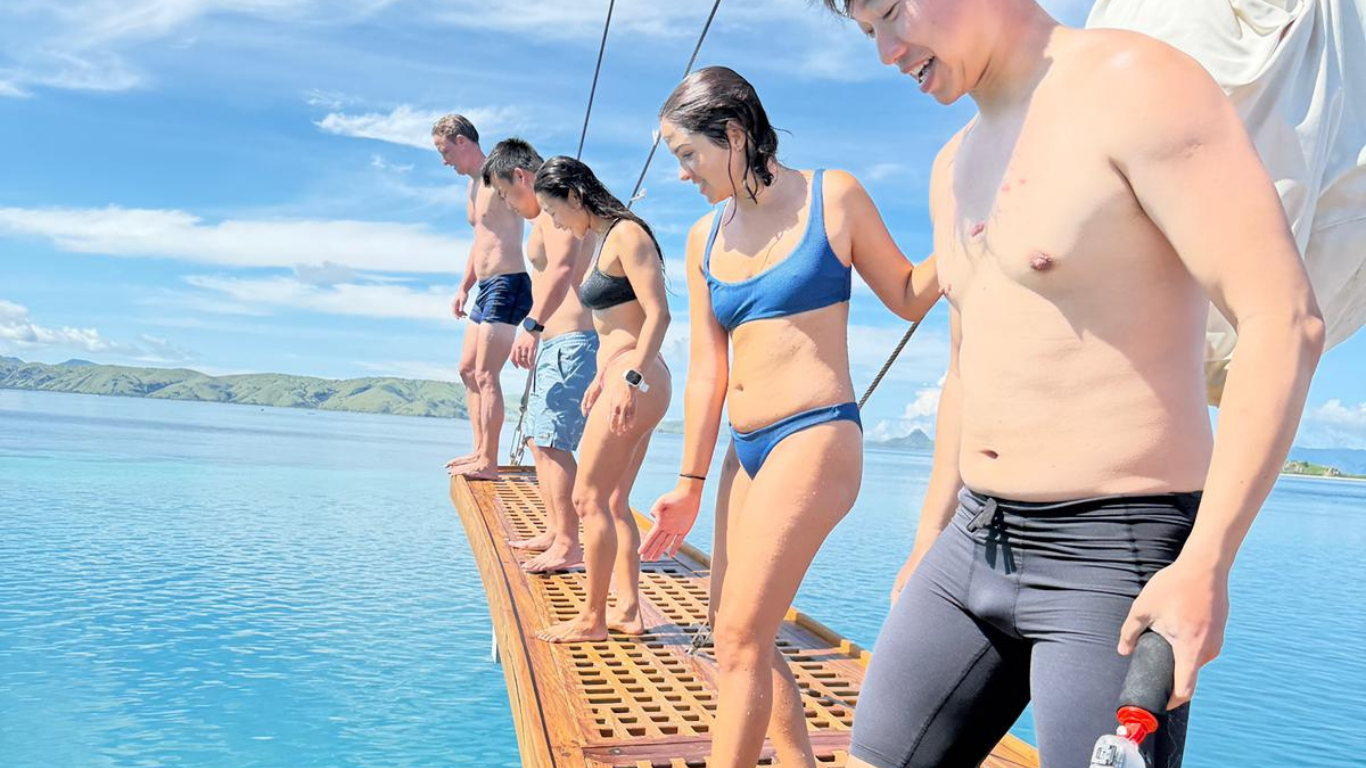
We provide Liveaboard trips in the within Indonesia. With trips to Komodo National Park, Raja Ampat & Banda Sea aboard our beautiful KLM Eliya. Come explore the beauty of some of Indonesia's best dive locations!
Looking for tips and tricks about diving, marine life or what to do in Indonesia? Follow us on our blog for weekly updates from the team!
Why Liveaboard Diving Changes the Way You Dive

Diving l Liveaboard experience l Uncategorized September 17, 2026
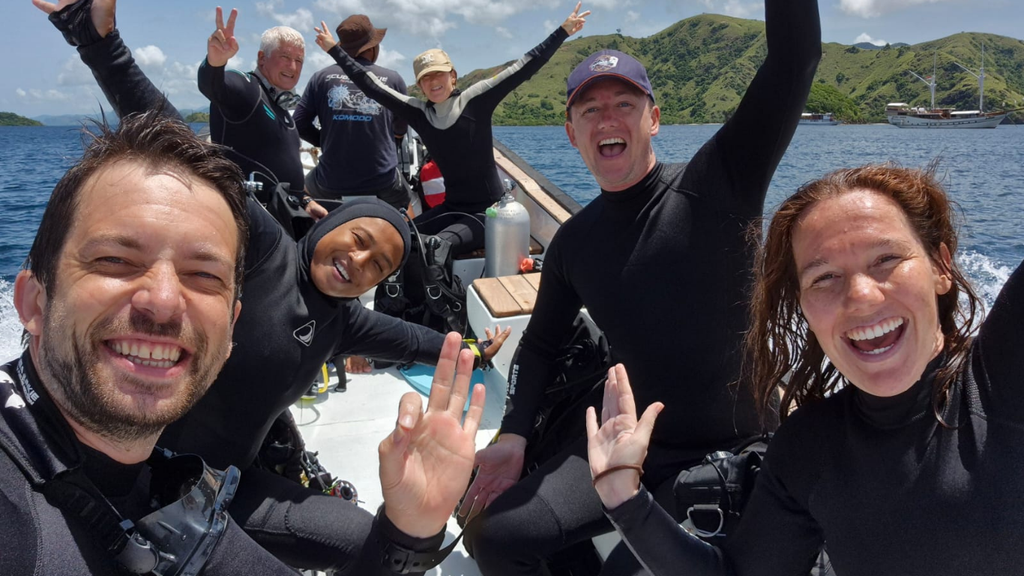
Table of Contents
Liveaboard diving changes more than the number of dives in your logbook. When the boat moves between sites, areas and even destinations, the diver has to keep adjusting too. The routine becomes familiar, but the ocean does not.
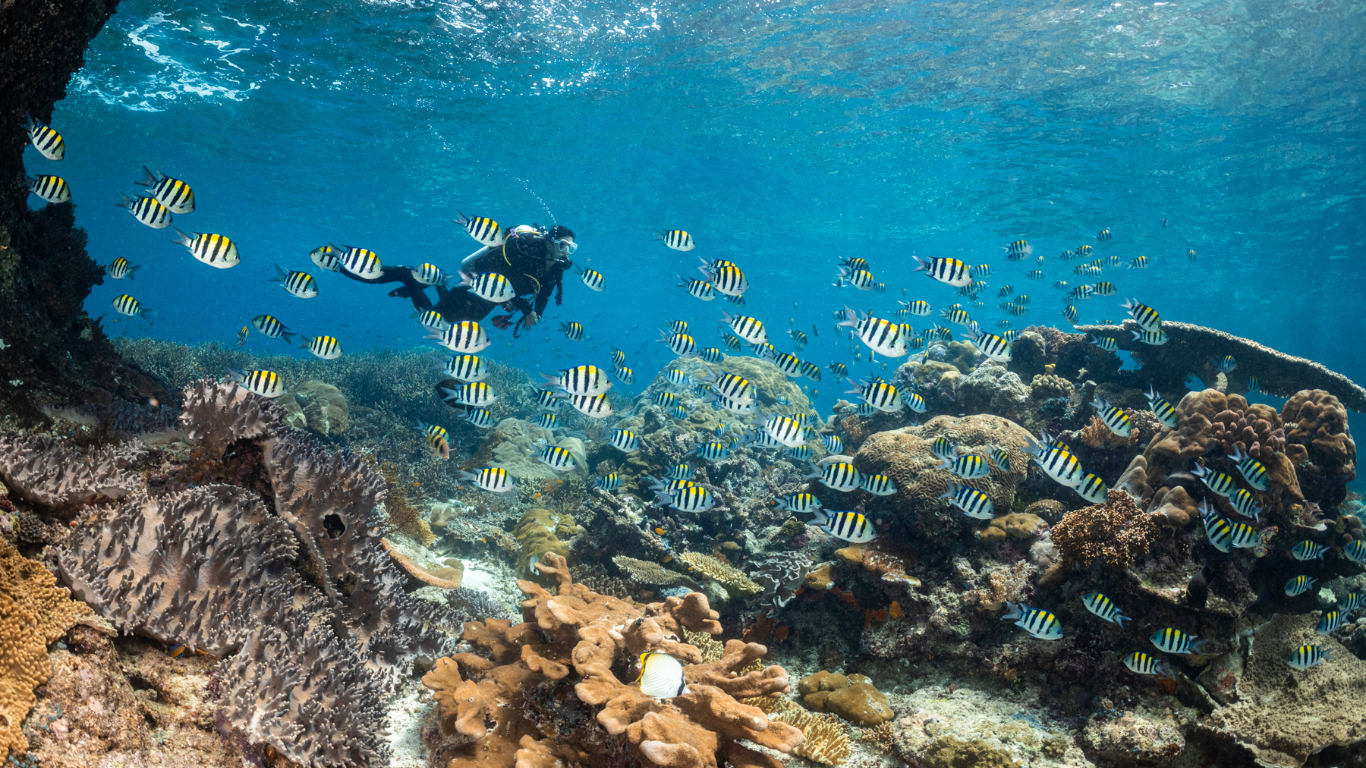
One morning may begin above a current-shaped pinnacle. The next might bring a coral garden, a sheltered bay, a cleaning station or a dive where the smallest animal becomes the main event. This variety is central to liveaboard diving. Across the season, Scuba Junkie KLM Eliya moves between Komodo, Raja Ampat and Banda Sea routes, each with its own landscapes, conditions and underwater character.
That movement changes how you approach a dive. Instead of learning one local routine and repeating it, you begin to pay closer attention to briefings, conditions, equipment, communication and your own energy. Slowly, the experience can influence the kind of diver you become.
Liveaboard diving teaches you to expect change
On a land-based trip, divers often return to the same area each day. A liveaboard keeps moving. Even within one destination, the boat can travel between different sections, bringing guests closer to sites that would be difficult or inefficient to reach through repeated day trips.
The benefit is not simply more locations. It is contrast.
A dive site shaped by current asks for a different approach from a protected macro site. A wide reef scene changes the way you position yourself compared with a close search for small marine life. A sunset dive carries a different rhythm from the first dive of the morning.
This variety means liveaboard diving rarely allows a diver to rely only on habit. You still use the same core skills, but you apply them in changing situations. The result is a stronger understanding that good diving is not about making every dive feel the same. It is about responding calmly when it does not.
You listen to the briefing differently
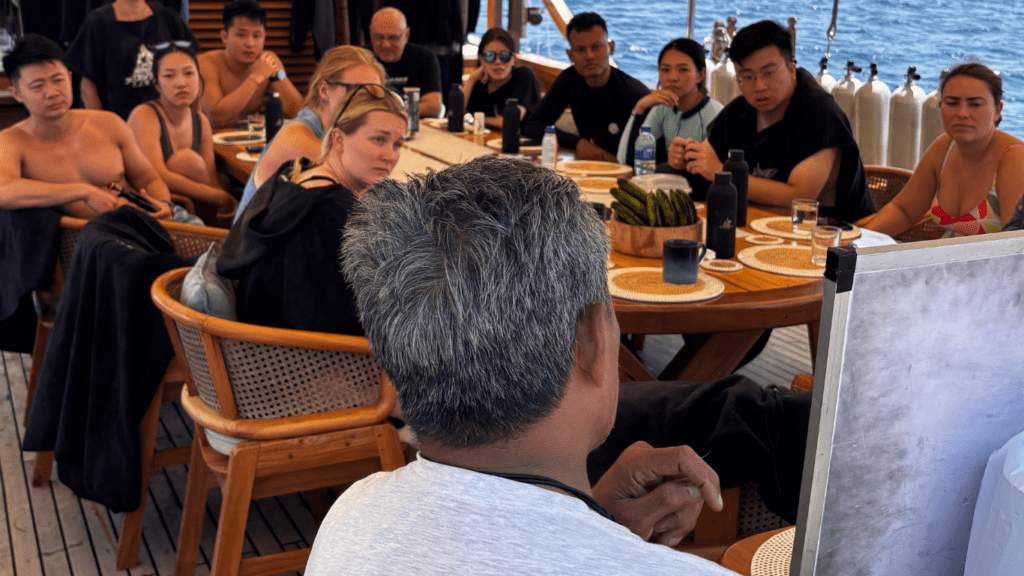
In liveaboard diving, conditions and sites change regularly, so the briefing becomes more than an introduction to a name on the map.
Current direction, entry technique, expected route, depth, signals, marine-life behaviour and the exit plan may all be different from the previous dive. Details that seemed minor on day one begin to carry more meaning after several days of seeing how they affect the dive.
You learn that a familiar-looking reef can behave differently with another tide. You understand why the group may need to descend together, why the tender position matters or why a guide changes the route after checking the water.
The itinerary aboard Scuba Junkie KLM Eliya remains flexible because site choices depend on conditions, tides, diver experience and guest requests. That does not make the trip less organised. It means the planning continues throughout the trip.
Over time, liveaboard diving can make divers better listeners because the connection between the briefing and the experience becomes immediately visible.
Repetition makes preparation more efficient
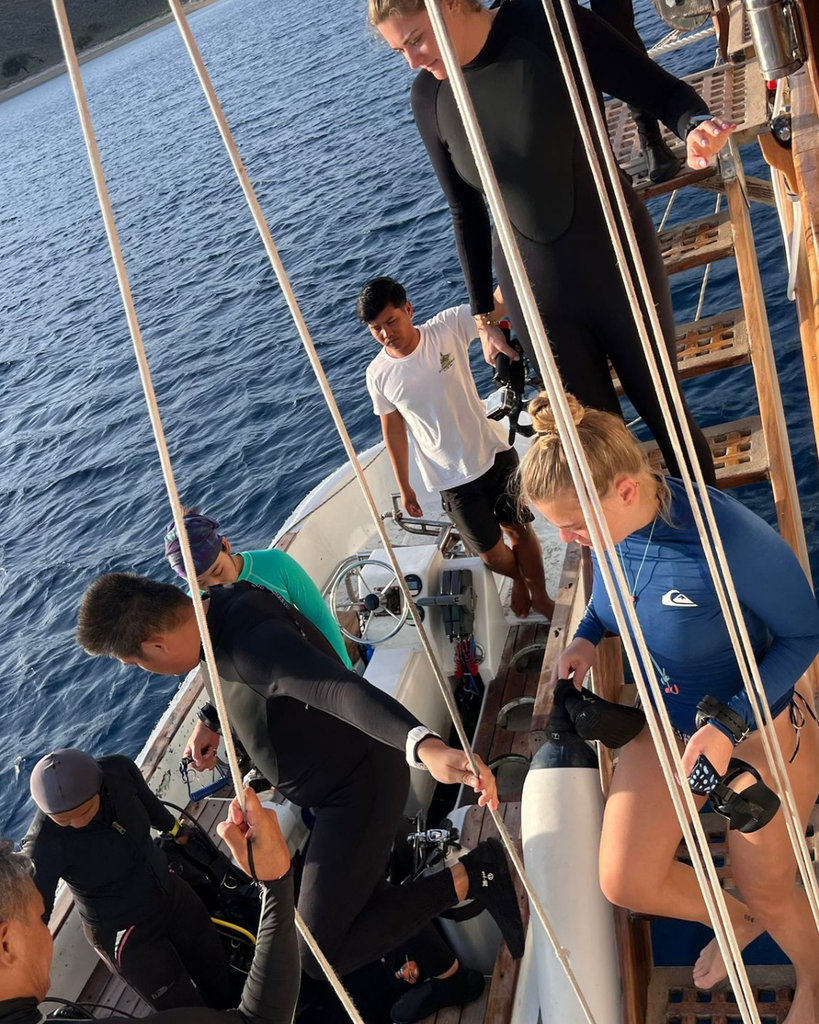
The dive sites change, but the basic rhythm repeats. Briefing. Equipment. Buddy check. Entry. Dive. Exit. Surface interval. Then preparation begins again.
At first, a full dive deck can feel busy. After a few days, most guests know where their equipment belongs, what needs to be checked and how long they need to prepare without rushing. Small habits become smoother because there is another opportunity to practise them a few hours later.
This is one of the practical strengths of liveaboard diving. Skills are not revisited months apart. Equipment setup, buoyancy checks, gas awareness and communication are repeated across several dives and several days.
Repetition alone does not automatically improve a diver. Attention still matters. But when a guest notices something that could be better, the next opportunity to adjust is close. A strap can be positioned differently, a weight check can be discussed or a buddy signal can be clarified before the next dive.
Diving with the same team improves communication
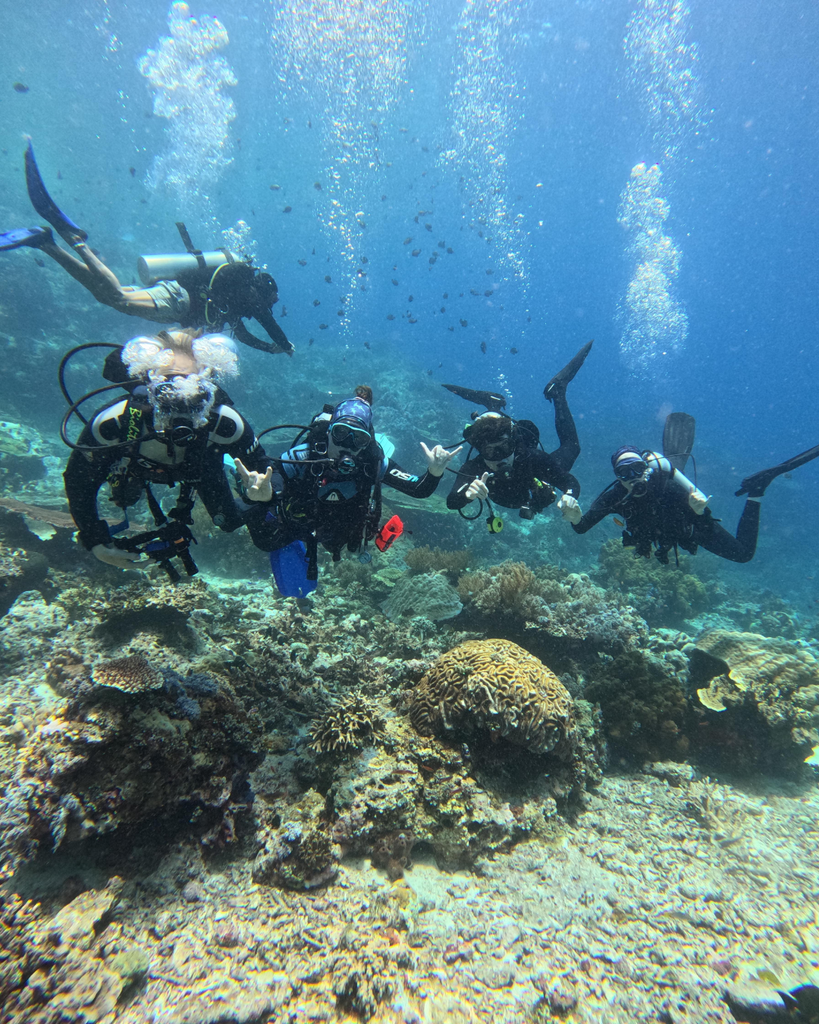
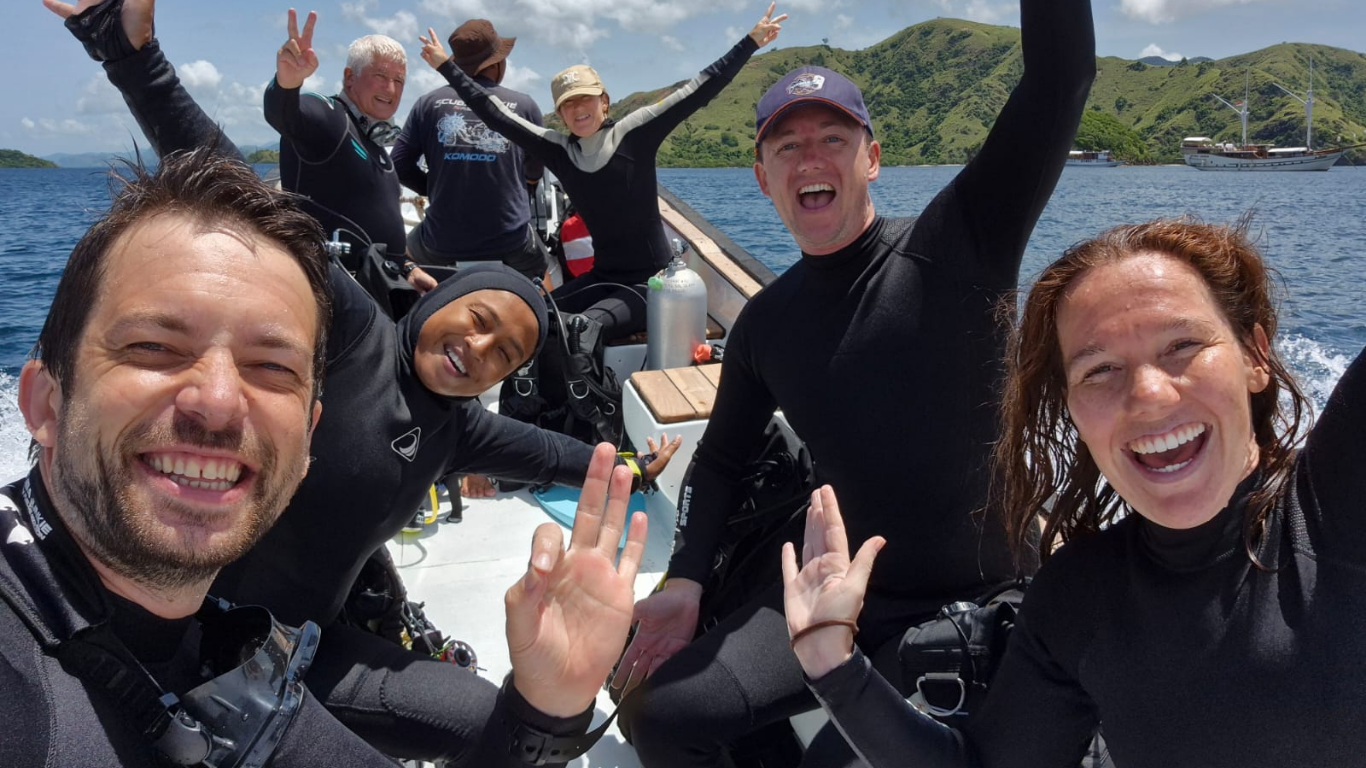
A liveaboard group spends more time together than a collection of divers meeting briefly for one day. Guests hear the same guides, use the same tenders and become familiar with the people in their dive group.
That familiarity can make communication more efficient. A guide learns who prefers more time during descent, who is carrying a large camera and who is still building confidence in current. Buddies begin recognising each other’s pace and air-consumption patterns. Questions become easier to ask because the relationship has had time to develop.
Scuba Junkie Liveaboards groups divers according to experience and comfort rather than placing everyone into one large team. The plan can still change, but the goal is to create groups that can enjoy the dives safely and at a suitable pace.
The social side matters too. After several dives together, feedback continues over meals and surface intervals. Liveaboard diving gives people time to discuss what worked, what felt difficult and what they want to try differently next time.
Different destinations reveal different habits
Part of the appeal of liveaboard diving is experiencing how much one destination can differ from another. Komodo, Raja Ampat and the Banda Sea are not interchangeable names on a schedule. The routes change, the distances change and the diving asks guests to notice different things.
Komodo often teaches respect for timing and moving water. A dive can be shaped by when the group enters as much as where. Raja Ampat draws attention to variety within the reef, where a wide scene and a tiny detail can compete for the same diver’s focus. Banda Sea routes connect remote areas over longer passages, making the journey and the transition between regions part of the experience.
Conditions vary within every destination, and no short description can define every dive. That is exactly the point. When Scuba Junkie KLM Eliya changes location, guests are not simply collecting new site names. They are learning how much good diving depends on observation and adaptability.
For some divers, liveaboard diving reveals a habit of rushing. For others, it shows that they rely heavily on the guide or become distracted by a camera. The variety makes those habits easier to notice because the environment keeps presenting them in a new way.
You become more aware of your own energy
Because liveaboard diving can involve several dives across several days, it requires honest decisions. Enthusiasm can make every dive feel essential, but rest is also part of safe and enjoyable diving.
Guests begin learning when they feel sharp, when they need more water, when equipment preparation is becoming rushed or when skipping a dive would make the rest of the day better. There is no requirement to join every entry, and there should be no embarrassment in choosing a longer surface interval.
Hydration, food, sleep and communication become part of the dive plan. Divers Alert Network recommends paying attention to hydration and sensible energy management during liveaboard trips, particularly when spending several days diving and in the sun.
This self-awareness is another way liveaboard diving can change a diver. Experience is not only knowing how to continue. It is also knowing when to pause.
You stop measuring a dive only by the biggest animal
On the first day, it is easy to arrive with a mental list. Manta. Shark. Huge school of fish. Favourite site.
After several days of varied diving, attention often becomes wider. A guest who boarded hoping for one major encounter may leave talking about a night-dive animal, a coral landscape, a behaviour they had never noticed or the way one site changed completely when the current shifted.
Wildlife is never guaranteed. That can initially sound like a limitation, but it also encourages a different relationship with the ocean. The dive becomes less about receiving the expected result and more about understanding what is happening in front of you.
This may be the most lasting change created by liveaboard diving. You learn to arrive with hopes without demanding a script.
Liveaboard diving does not replace training
A week of frequent diving can build familiarity, but it does not replace a course, professional instruction or honest preparation for a demanding itinerary.
Every route has its own experience requirements. Divers should check the required certification, recent experience and conditions before booking. A refresher, Advanced Open Water course or relevant specialty may be the right step before a particular trip.
Once onboard, speak openly with the team. Mention if you have not dived recently, if a condition is new to you or if you want extra support. Good planning begins with accurate information.
The purpose of liveaboard diving is not to prove how many dives you can complete. It is to experience a destination more fully while making decisions that keep the trip comfortable, responsible and enjoyable.
The boat moves, and your diving moves with it
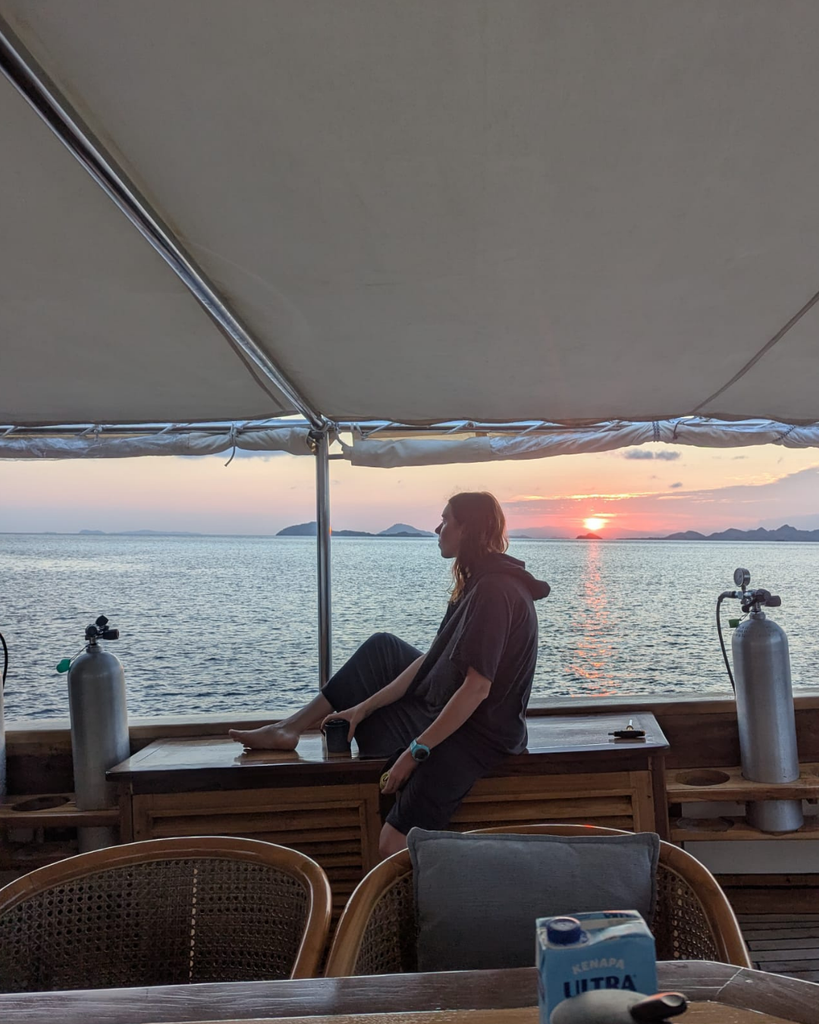
By the end of a trip, the dive deck feels familiar. You know the routine, the crew and the place where your equipment belongs. Yet the water beyond the boat continues to change.
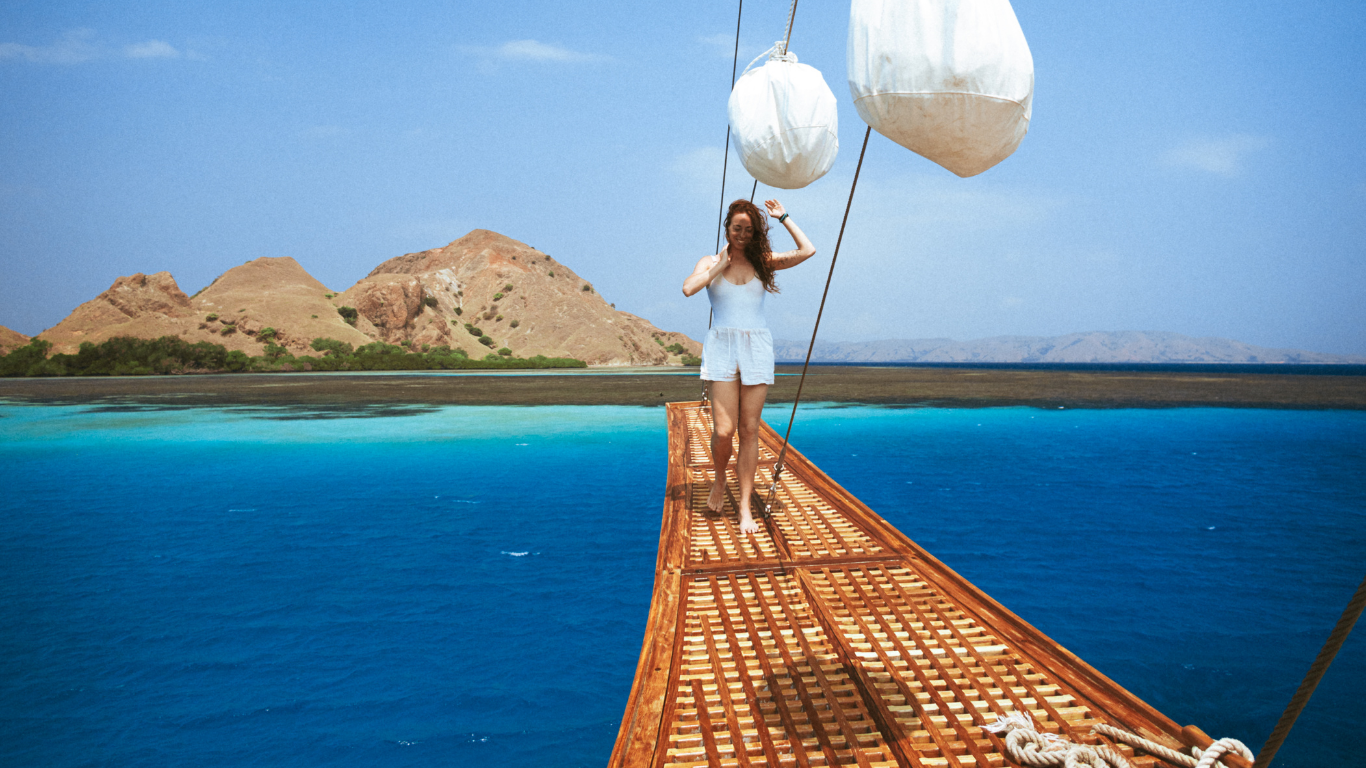
That combination is what makes liveaboard diving so effective. Scuba Junkie KLM Eliya provides a stable home while the route introduces new sites, conditions and perspectives. You have enough consistency to settle in and enough variety to keep learning.
You may leave with smoother preparation, clearer buddy communication or more confidence in unfamiliar conditions. You may simply become a little more patient and observant. None of those changes comes from the boat alone. They come from what repeated, varied diving asks you to notice.
Liveaboard diving takes you to different destinations. Somewhere along the way, it can also change the way you enter the water.
Frequently asked questions about liveaboard diving
Does liveaboard diving make you a better diver?
It can create frequent opportunities to practise preparation, buoyancy, communication and awareness in different conditions. Improvement is not automatic, however. It depends on attention, feedback, appropriate training and a willingness to skip a dive or ask for support when needed.
Do I need to be an experienced diver?
Requirements depend on the destination and itinerary. Some routes are suitable for a wider range of certified divers, while others require an Advanced Open Water certification, a Deep Specialty or recent experience. Always check the specific trip requirements before booking.
Do I have to complete every planned dive?
No. Guests can skip any dive. Rest, hydration and honest communication are important during multi-day diving, and choosing a longer surface interval can improve the rest of the trip.
How many dives are planned on a Komodo trip?
The standard 6D5N Komodo itinerary aims for up to 20 dives. The final schedule depends on conditions and any land excursions included during the trip.
Why can the itinerary change?
Site choices and timing respond to currents, tides, weather, diver experience, guest requests and operational decisions. Flexibility allows the team to select the most suitable plan for the conditions at the time.