
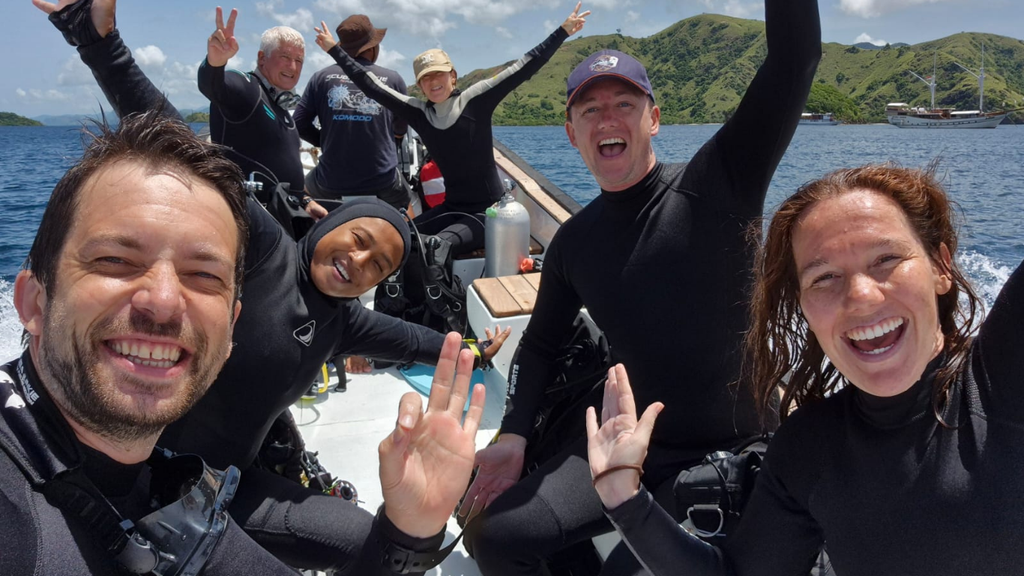
Liveaboard diving changes more than the number of dives in your logbook. When the boat moves between sites, areas and even destinations, the diver has to keep adjusting too. The routine becomes familiar, but the ocean does not.
One morning may begin above a current-shaped pinnacle. The next might bring a coral garden, a sheltered bay, a cleaning station or a dive where the smallest animal becomes the main event. This variety is central to liveaboard diving. Across the season, Scuba Junkie KLM Eliya moves between Komodo, Raja Ampat and Banda Sea routes, each with its own landscapes, conditions and underwater character.
That movement changes how you approach a dive. Instead of learning one local routine and repeating it, you begin to pay closer attention to briefings, conditions, equipment, communication and your own energy. Slowly, the experience can influence the kind of diver you become.
On a land-based trip, divers often return to the same area each day. A liveaboard keeps moving. Even within one destination, the boat can travel between different sections, bringing guests closer to sites that would be difficult or inefficient to reach through repeated day trips.
The benefit is not simply more locations. It is contrast.
A dive site shaped by current asks for a different approach from a protected macro site. A wide reef scene changes the way you position yourself compared with a close search for small marine life. A sunset dive carries a different rhythm from the first dive of the morning.
This variety means liveaboard diving rarely allows a diver to rely only on habit. You still use the same core skills, but you apply them in changing situations. The result is a stronger understanding that good diving is not about making every dive feel the same. It is about responding calmly when it does not.
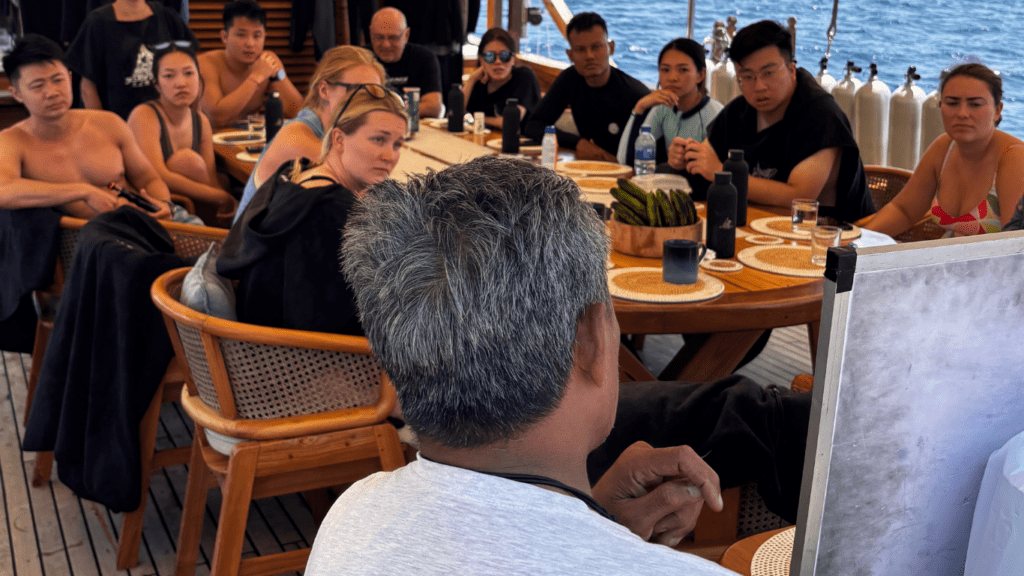
In liveaboard diving, conditions and sites change regularly, so the briefing becomes more than an introduction to a name on the map.
Current direction, entry technique, expected route, depth, signals, marine-life behaviour and the exit plan may all be different from the previous dive. Details that seemed minor on day one begin to carry more meaning after several days of seeing how they affect the dive.
You learn that a familiar-looking reef can behave differently with another tide. You understand why the group may need to descend together, why the tender position matters or why a guide changes the route after checking the water.
The itinerary aboard Scuba Junkie KLM Eliya remains flexible because site choices depend on conditions, tides, diver experience and guest requests. That does not make the trip less organised. It means the planning continues throughout the trip.
Over time, liveaboard diving can make divers better listeners because the connection between the briefing and the experience becomes immediately visible.
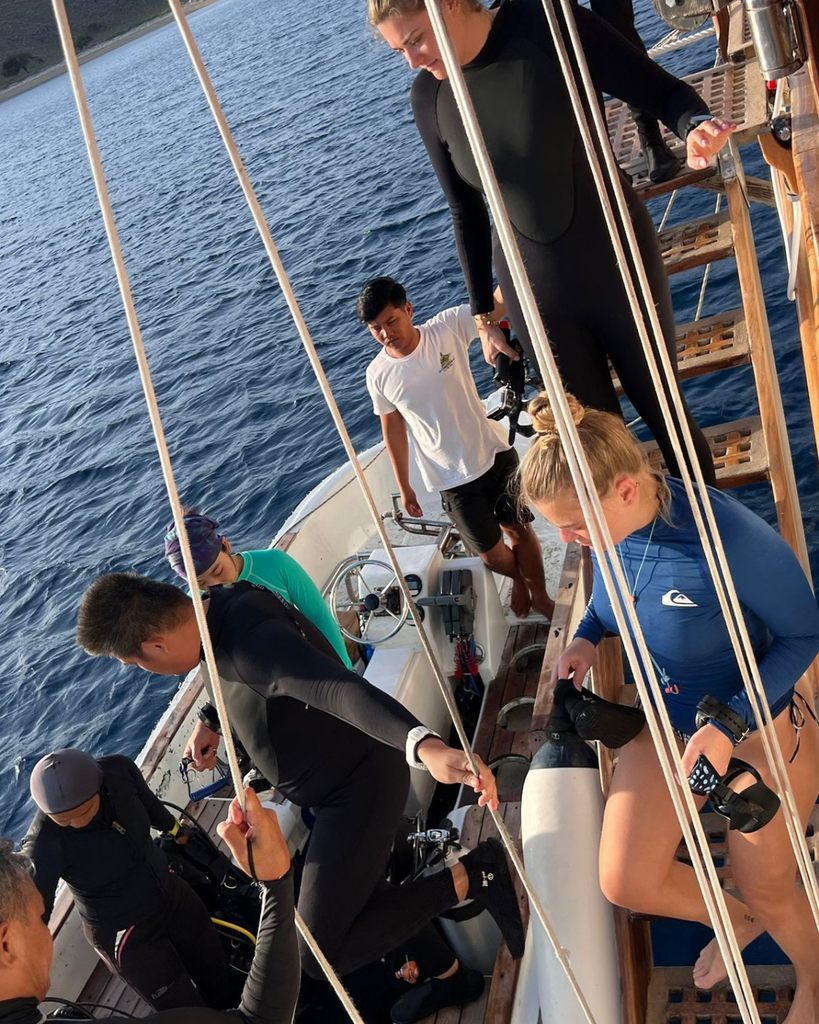
The dive sites change, but the basic rhythm repeats. Briefing. Equipment. Buddy check. Entry. Dive. Exit. Surface interval. Then preparation begins again.
At first, a full dive deck can feel busy. After a few days, most guests know where their equipment belongs, what needs to be checked and how long they need to prepare without rushing. Small habits become smoother because there is another opportunity to practise them a few hours later.
This is one of the practical strengths of liveaboard diving. Skills are not revisited months apart. Equipment setup, buoyancy checks, gas awareness and communication are repeated across several dives and several days.
Repetition alone does not automatically improve a diver. Attention still matters. But when a guest notices something that could be better, the next opportunity to adjust is close. A strap can be positioned differently, a weight check can be discussed or a buddy signal can be clarified before the next dive.
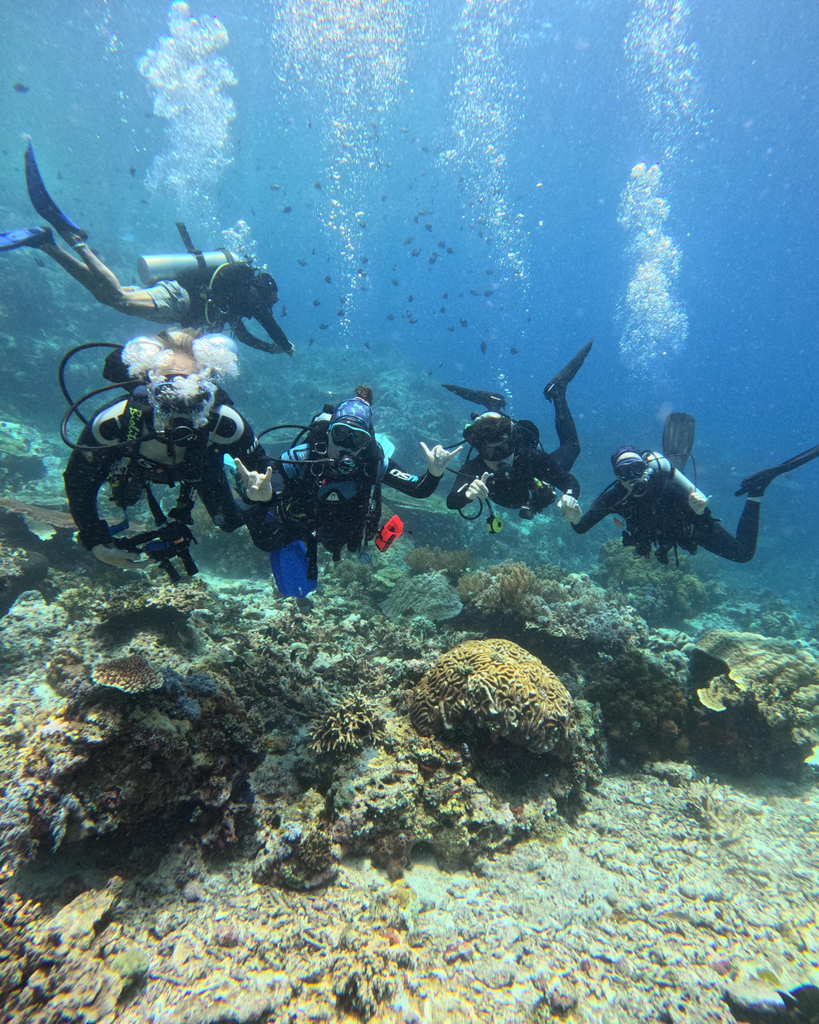
A liveaboard group spends more time together than a collection of divers meeting briefly for one day. Guests hear the same guides, use the same tenders and become familiar with the people in their dive group.
That familiarity can make communication more efficient. A guide learns who prefers more time during descent, who is carrying a large camera and who is still building confidence in current. Buddies begin recognising each other’s pace and air-consumption patterns. Questions become easier to ask because the relationship has had time to develop.
Scuba Junkie Liveaboards groups divers according to experience and comfort rather than placing everyone into one large team. The plan can still change, but the goal is to create groups that can enjoy the dives safely and at a suitable pace.
The social side matters too. After several dives together, feedback continues over meals and surface intervals. Liveaboard diving gives people time to discuss what worked, what felt difficult and what they want to try differently next time.
Part of the appeal of liveaboard diving is experiencing how much one destination can differ from another. Komodo, Raja Ampat and the Banda Sea are not interchangeable names on a schedule. The routes change, the distances change and the diving asks guests to notice different things.
Komodo often teaches respect for timing and moving water. A dive can be shaped by when the group enters as much as where. Raja Ampat draws attention to variety within the reef, where a wide scene and a tiny detail can compete for the same diver’s focus. Banda Sea routes connect remote areas over longer passages, making the journey and the transition between regions part of the experience.
Conditions vary within every destination, and no short description can define every dive. That is exactly the point. When Scuba Junkie KLM Eliya changes location, guests are not simply collecting new site names. They are learning how much good diving depends on observation and adaptability.
For some divers, liveaboard diving reveals a habit of rushing. For others, it shows that they rely heavily on the guide or become distracted by a camera. The variety makes those habits easier to notice because the environment keeps presenting them in a new way.
Because liveaboard diving can involve several dives across several days, it requires honest decisions. Enthusiasm can make every dive feel essential, but rest is also part of safe and enjoyable diving.
Guests begin learning when they feel sharp, when they need more water, when equipment preparation is becoming rushed or when skipping a dive would make the rest of the day better. There is no requirement to join every entry, and there should be no embarrassment in choosing a longer surface interval.
Hydration, food, sleep and communication become part of the dive plan. Divers Alert Network recommends paying attention to hydration and sensible energy management during liveaboard trips, particularly when spending several days diving and in the sun.
This self-awareness is another way liveaboard diving can change a diver. Experience is not only knowing how to continue. It is also knowing when to pause.
On the first day, it is easy to arrive with a mental list. Manta. Shark. Huge school of fish. Favourite site.
After several days of varied diving, attention often becomes wider. A guest who boarded hoping for one major encounter may leave talking about a night-dive animal, a coral landscape, a behaviour they had never noticed or the way one site changed completely when the current shifted.
Wildlife is never guaranteed. That can initially sound like a limitation, but it also encourages a different relationship with the ocean. The dive becomes less about receiving the expected result and more about understanding what is happening in front of you.
This may be the most lasting change created by liveaboard diving. You learn to arrive with hopes without demanding a script.
A week of frequent diving can build familiarity, but it does not replace a course, professional instruction or honest preparation for a demanding itinerary.
Every route has its own experience requirements. Divers should check the required certification, recent experience and conditions before booking. A refresher, Advanced Open Water course or relevant specialty may be the right step before a particular trip.
Once onboard, speak openly with the team. Mention if you have not dived recently, if a condition is new to you or if you want extra support. Good planning begins with accurate information.
The purpose of liveaboard diving is not to prove how many dives you can complete. It is to experience a destination more fully while making decisions that keep the trip comfortable, responsible and enjoyable.
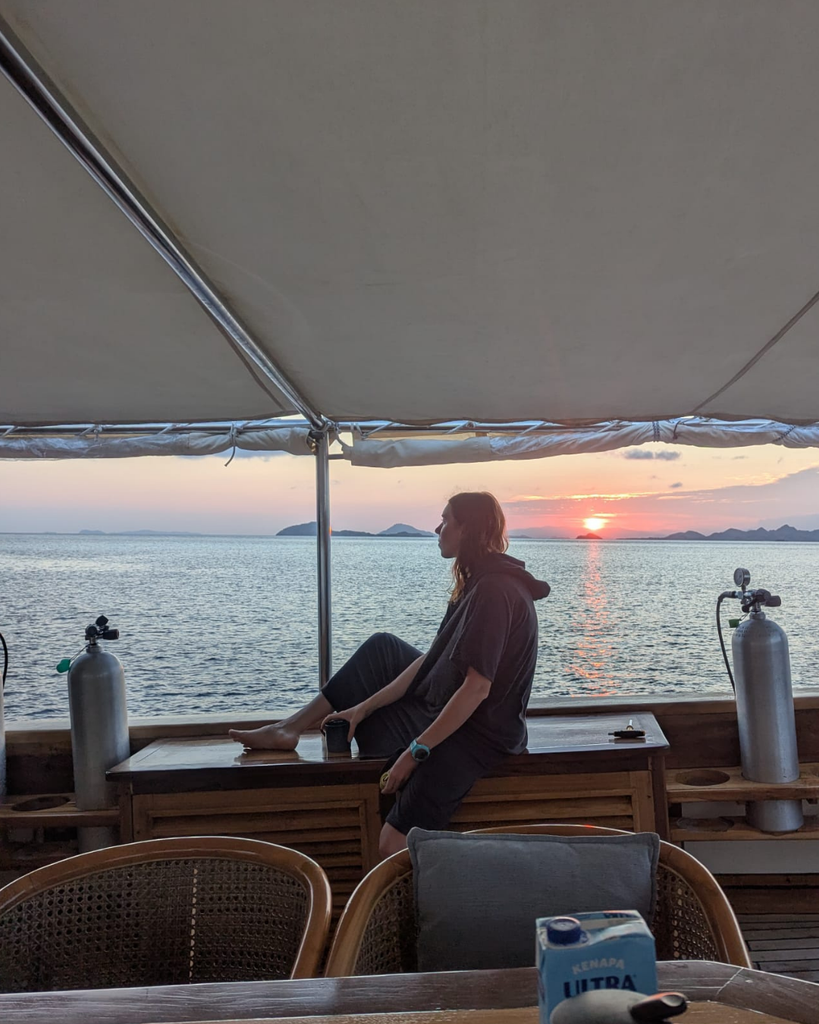
By the end of a trip, the dive deck feels familiar. You know the routine, the crew and the place where your equipment belongs. Yet the water beyond the boat continues to change.
That combination is what makes liveaboard diving so effective. Scuba Junkie KLM Eliya provides a stable home while the route introduces new sites, conditions and perspectives. You have enough consistency to settle in and enough variety to keep learning.
You may leave with smoother preparation, clearer buddy communication or more confidence in unfamiliar conditions. You may simply become a little more patient and observant. None of those changes comes from the boat alone. They come from what repeated, varied diving asks you to notice.
Liveaboard diving takes you to different destinations. Somewhere along the way, it can also change the way you enter the water.
It can create frequent opportunities to practise preparation, buoyancy, communication and awareness in different conditions. Improvement is not automatic, however. It depends on attention, feedback, appropriate training and a willingness to skip a dive or ask for support when needed.
Requirements depend on the destination and itinerary. Some routes are suitable for a wider range of certified divers, while others require an Advanced Open Water certification, a Deep Specialty or recent experience. Always check the specific trip requirements before booking.
No. Guests can skip any dive. Rest, hydration and honest communication are important during multi-day diving, and choosing a longer surface interval can improve the rest of the trip.
The standard 6D5N Komodo itinerary aims for up to 20 dives. The final schedule depends on conditions and any land excursions included during the trip.
Site choices and timing respond to currents, tides, weather, diver experience, guest requests and operational decisions. Flexibility allows the team to select the most suitable plan for the conditions at the time.
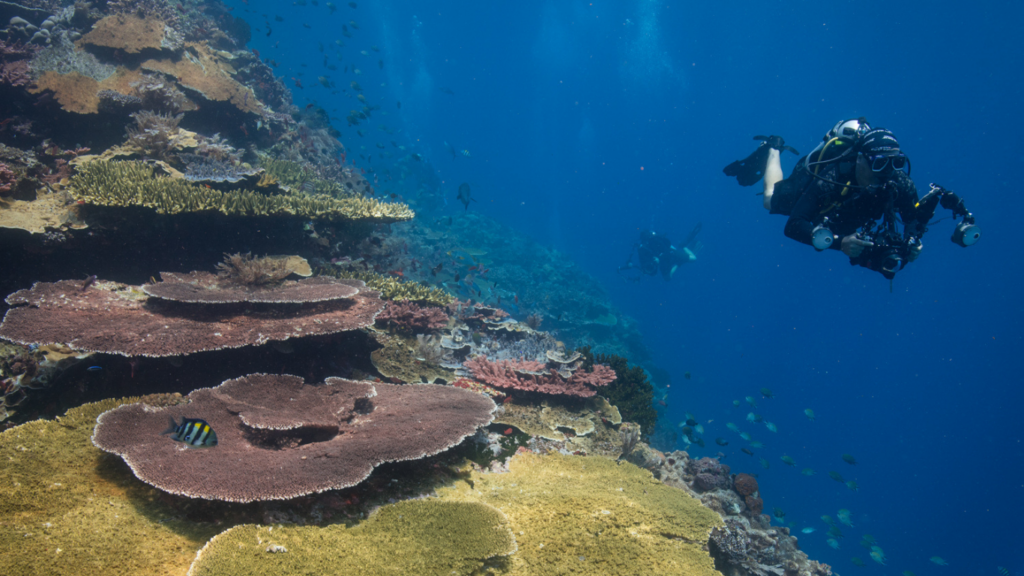
Ask a group of divers how they felt before their first drift diving experience and you’ll probably hear the same answer more than once.
“I was nervous.”
It’s a completely normal reaction.
From the very beginning of our diving journey, we’re taught to control our movements underwater. We learn buoyancy, finning techniques and navigation, so the idea of diving in moving water can seem intimidating at first. The word current often sounds like something to avoid rather than something to enjoy.
Then comes that first drift dive.
Instead of fighting the water, you realise the current is carrying you effortlessly across the reef. Your breathing slows down, your finning becomes lighter, and before you know it, you’re gliding over coral gardens while schools of fish move alongside you.
That’s usually the moment divers understand why drift diving has become one of the most enjoyable ways to explore the underwater world.
Simply put, drift diving is a dive where the natural movement of the water becomes part of the journey.
Rather than swimming long distances, divers allow the current to carry them across the reef while the dive boat follows from the surface. The route, speed and distance covered all depend on the strength and direction of the current, making every drift dive slightly different from the last.
The goal isn’t to fight the current.
It’s to work with it.
When done correctly, drift diving often feels surprisingly effortless. Instead of focusing on swimming, divers can spend more time observing marine life, enjoying the scenery and maintaining good buoyancy.
It’s one of the reasons experienced divers often describe it as feeling more like flying than swimming.
One of the biggest surprises for new drift divers is how relaxing it can be.
As the current carries you along, the reef unfolds naturally beneath you. Large coral bommies appear one after another, schools of fish move in and out of the blue, and the dive becomes a continuous journey rather than swimming from one point to another.
Because you’re covering a larger area, every few minutes the underwater landscape changes. A colourful coral garden may give way to a dramatic wall, followed by a sandy channel or a reef slope full of marine life.
Many of the world’s most famous dive destinations are known for drift diving because currents bring nutrients into the ecosystem. Those nutrients support healthy coral reefs and attract the incredible diversity of marine life that divers travel across the world to see.
In many cases, the current itself is one of the reasons these reefs are so alive.
Not necessarily.
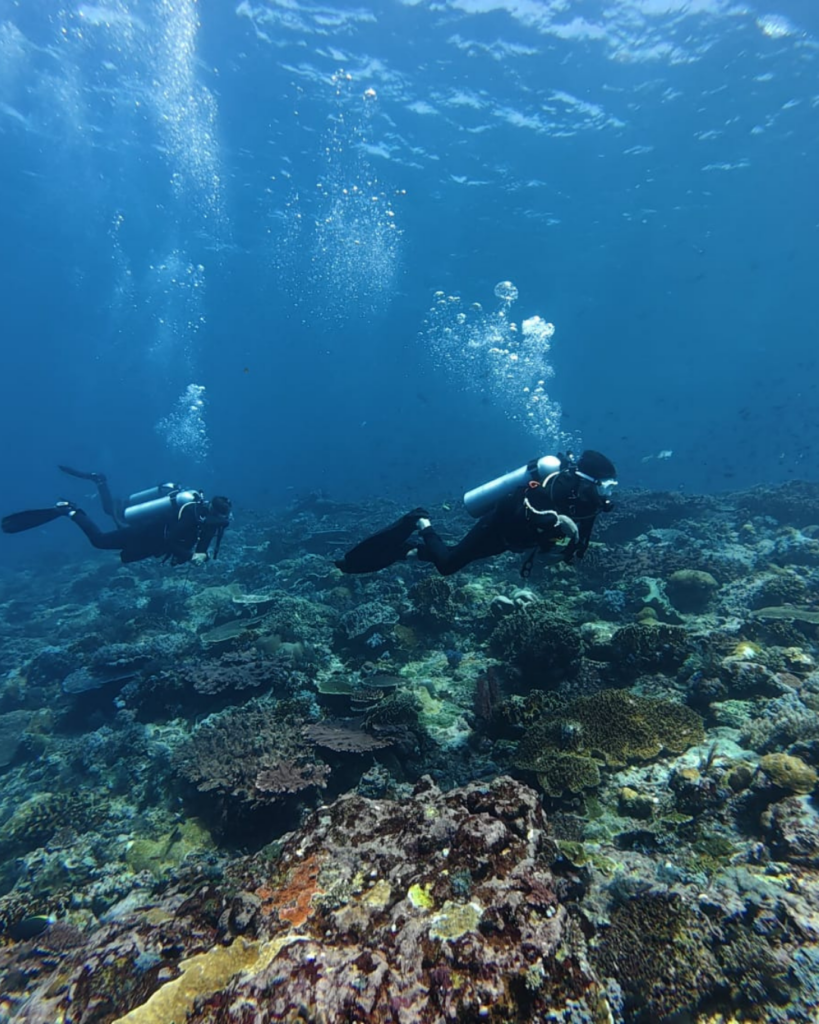
This is probably the biggest misconception surrounding drift diving.
A drift dive simply means the current is carrying you during the dive. Sometimes that movement is so gentle you barely notice it. Other times, the current is stronger and requires more experience, careful planning and close communication with your guide.
Every dive site is different, and currents can change with the tides, the moon phase and local topography.
This is why two dives at exactly the same site can feel completely different, even if they happen only a few hours apart.
Understanding these changes is one of the reasons local knowledge is so valuable.
Long before divers enter the water, a great deal of planning has already taken place.
Your guide will consider the tide, wind direction, swell, current strength and the experience level of the group before deciding whether a drift dive is appropriate.
At Scuba Junkie Liveaboards, divers are grouped according to their experience and comfort level. This allows every group to enjoy the best possible dive while maintaining high safety standards.
Sometimes this means choosing a gentle drift that’s perfect for building confidence. Other times, experienced divers may explore sites where stronger currents create spectacular underwater conditions.
The decision is never based on finding the strongest current.
It’s about finding the right conditions for that particular group.
The good news is that you don’t need to be an expert to enjoy drift diving, but a few good habits will make your experience much more comfortable.
The most important skill is buoyancy. A diver who is comfortable maintaining neutral buoyancy will find drift diving far easier than someone relying on constant finning to control their position.
Good communication with your buddy and guide is equally important. Before entering the water, make sure you understand the dive plan, entry technique and how the group will stay together throughout the dive.
Finally, remember to relax.
Many new drift divers instinctively try to swim against the current. In reality, allowing yourself to move naturally with the water is usually the most efficient and enjoyable approach.
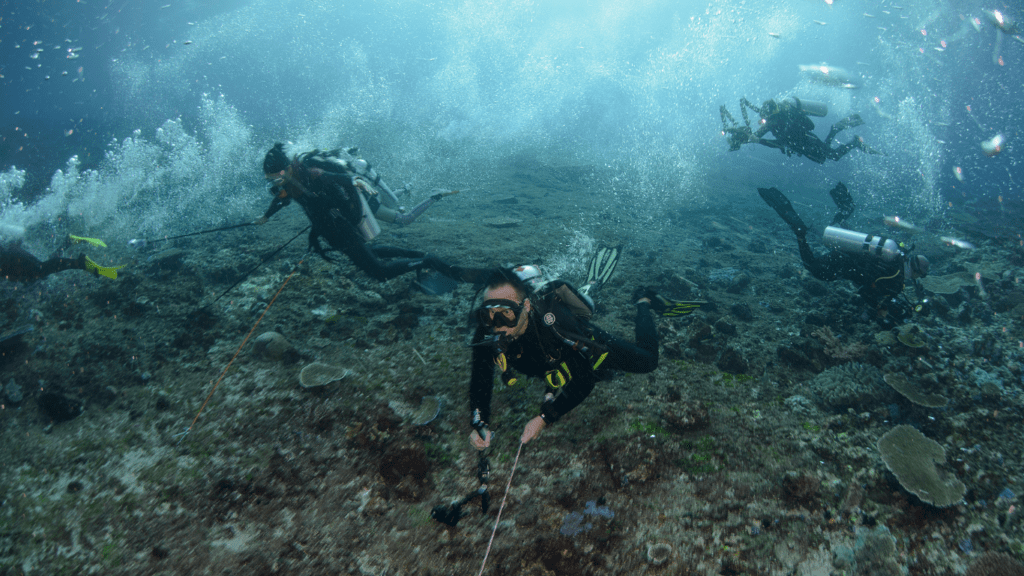
If you’ve researched diving in Indonesia, you’ve probably heard that Komodo National Park is famous for its currents.
There’s a good reason for that.
Komodo sits between the Indian Ocean and the Flores Sea, where enormous volumes of water move through narrow channels as the tides change. This constant movement brings nutrient-rich water into the park, supporting one of the most productive marine ecosystems on the planet.
The result is healthy coral reefs, incredible fish biomass and frequent encounters with larger marine life.
Of course, not every dive in Komodo is a drift dive, and not every drift dive involves strong currents. Conditions vary from site to site and throughout the day, which is why experienced guides carefully choose dive sites based on the conditions and the experience of each dive group.
It’s also worth remembering that at Scuba Junkie Liveaboards, divers are never mixed across very different experience levels. Groups are planned according to certification, experience and confidence in the water, allowing everyone to enjoy Komodo in conditions that suit them.
Perhaps the biggest lesson drift diving teaches us is that not everything underwater needs to be controlled.
Instead of resisting the ocean, we learn to understand it.
We begin to notice the direction of the current, the behaviour of fish and the shape of the reef. We trust our guide, refine our buoyancy and allow the ocean to do much of the work for us.
It’s a different way of diving.
And for many people, after that first drift dive, it’s difficult to imagine diving any other way.
Drift diving is a type of scuba dive where divers allow the current to carry them naturally across the reef instead of swimming long distances.
Yes. When properly planned and conducted with experienced guides, drift diving is a safe and enjoyable style of diving.
Not always. Gentle drift dives are suitable for many certified divers, while stronger currents require more experience. Your dive guide will always select sites appropriate for your group’s experience level.
Komodo’s unique geography creates nutrient-rich currents that support extraordinary marine life, making it one of the world’s best destinations for drift diving.
In most drift dives, no. Divers are encouraged to relax, maintain good buoyancy and move naturally with the current while following the dive plan.
Yes. With the right conditions and experienced guides, many newer divers discover that gentle drift diving is much easier and more enjoyable than they expected.
Planning your next adventure? You might also enjoy:
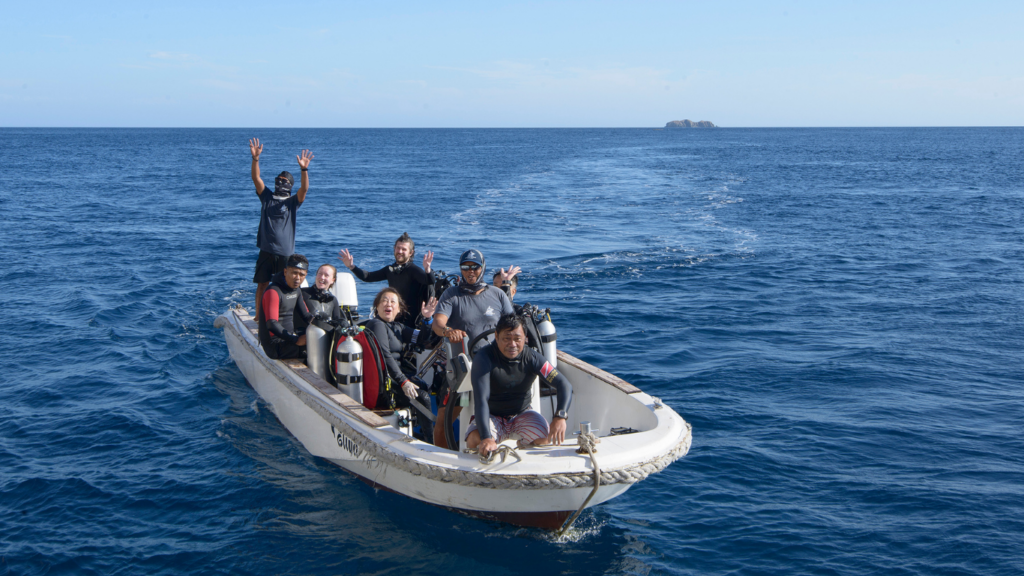
There’s something special about the rhythm of life on a liveaboard.
You wake up with the ocean. Slip into the water as the day begins. Come back to a warm breakfast, a quiet deck, and the feeling that there’s nowhere else you need to be.
And then you do it all again.
Three, sometimes four dives a day — it sounds like a dream. And it is. But like most good things, it comes with a balance.
These liveaboard diving tips aren’t about doing less. They’re about helping you feel better, so you can enjoy every single dive from start to finish.
Diving once or twice a day feels manageable. Add a third or fourth dive, and your body starts working in a different way.
You’re waking up earlier. Moving more. Spending more time in the water. Repeating the cycle day after day.
It’s not difficult — but it is demanding in a quiet, cumulative way.
That’s why experienced divers don’t just focus on the dives themselves. They pay attention to everything around them: what they eat, how they rest, how they feel.
That’s where the difference lies.
It sounds simple, but it’s the one thing people underestimate the most.
Diving — especially multiple times a day — is dehydrating. Between saltwater exposure, sun, and repeated immersion, your body loses more fluid than you realise.
And the tricky part? You don’t always feel thirsty until you’re already behind.
Keeping a water bottle nearby and sipping throughout the day makes a noticeable difference. Not just for how you feel on the surface, but also for how comfortable you are underwater.
Onboard KLM Eliya, this becomes part of the rhythm. Water is always available, and having your own bottle with you makes it easy to stay consistent without thinking about it.
After a dive, it’s tempting to just relax and skip a proper meal. But when you’re diving multiple times a day, food becomes part of your recovery.
Balanced meals help restore energy, stabilise blood sugar, and prepare you for the next dive.
Fresh fruit, vegetables, and warm meals between dives aren’t just nice to have — they’re part of what keeps you feeling steady throughout the day.
It’s one of those small details that quietly shapes the whole experience.
One of the best parts of liveaboard life is that you’re allowed to slow down.
Between dives, there’s time to stretch out on deck, close your eyes for a short nap, or simply sit and watch the sea go by.
And that time matters.
Your body is processing multiple dives, adjusting to pressure changes, and working continuously in the background. Giving it time to rest means you show up to the next dive feeling ready, not drained.
The rhythm isn’t rush–rush–rush.
It’s dive, rest, repeat.
There’s a quiet shift that happens after a few days onboard.
At the start, it’s about how many dives you can do.
By the end, it’s about how good each dive feels.
This is where small decisions come in:
These aren’t big changes — but together, they transform the experience.
If you’re Nitrox certified, this is where it often becomes especially valuable.
With lower nitrogen absorption compared to standard air, many divers find that using Nitrox helps them feel more comfortable across multiple dives — particularly on a schedule of three or four dives per day.
It’s not about extending limits or pushing boundaries. It’s about feeling better, dive after dive.
And if you haven’t tried it before, a liveaboard is often the perfect place to learn.
Every diver is different.
Some people feel energised all week. Others need a slower pace. Most fall somewhere in between.
The key is simple: pay attention.
If you feel great — enjoy it.
If you feel tired — adjust slightly.
There’s no pressure to “keep up.” The goal is to feel good in the water, not just to tick off dives.
Because the best dives aren’t the ones you count.
They’re the ones you remember.
Typically 3 to 4 dives per day, depending on conditions and itinerary.
It can be, especially over multiple days, which is why pacing, hydration, and rest are important.
If you are certified, many divers find it beneficial for comfort across multiple dives.
No — you can always choose what feels right for you.
Liveaboard diving is one of the most rewarding ways to experience the ocean.
It’s immersive, unhurried, and deeply connected to the rhythm of the sea.
These liveaboard diving tips aren’t about doing less. They’re about making sure you feel your best — so every dive, from the first to the last, is one you truly enjoy.
Because in the end, it’s not about how many dives you do.
It’s about how good they feel.
If you’ve been researching diving in Indonesia, you’ve probably heard about one thing again and again: currents.
And naturally, questions follow.
Are they strong?
Are they unpredictable?
Is Komodo currents diving only for advanced divers?
Let’s talk about it openly and honestly.
At Scuba Junkie Liveaboards, we believe awareness builds confidence. Yes — there are currents in Komodo. Yes — sometimes they can be strong. And yes — they are part of what makes this place so extraordinary.
But currents are not something to fear. They are something to understand.
Komodo National Park sits between the Indian Ocean and the Pacific Ocean. This region forms part of the Indonesian Throughflow — a major ocean current system where massive volumes of water move between ocean basins.
Now combine that with Komodo’s geography:
When tides move through tight passages between islands, water accelerates — much like wind speeding up when it passes through a mountain gap. This is why certain sites can experience powerful water movement.
It’s not random. It’s geography and physics working together.
And that water movement is exactly why Komodo is so rich in marine life.
Currents bring nutrients.
Nutrient-rich water feeds plankton. Plankton feeds small fish. Small fish attract larger predators. That’s why Komodo is known for:
Without currents, Komodo would not be the world-class dive destination it is today.
So when we talk about Komodo currents diving, we’re really talking about the engine behind the ecosystem.
But not everywhere, and not all the time.
Currents in Komodo depend on:
Some dives feel like gentle drift dives where you simply glide along. Others can have more noticeable flow, especially in channels or exposed sites.
A well-known example is “The Cauldron” (often called Shotgun). This site sits in a narrow channel where tidal water funnels through, creating acceleration — particularly during peak tide. When conditions align, divers may experience a fast but controlled drift through a sandy channel.
But here’s the important part: dives like this are only done when conditions are suitable and when the group’s experience level matches the site.
They can change — yes.
Tides are predictable. But wind, swell, and micro-conditions can influence how a site feels on a given day. That’s why flexibility is key in Komodo.
At Scuba Junkie Liveaboards, we do not follow rigid dive schedules. Instead, our Cruise Director and dive guides evaluate:
Dive sites are selected accordingly.
If a site is too challenging for the group that day, we simply choose another one. Komodo offers plenty of options.
Safety always comes first.
This is one of the most common concerns — especially for:
The truth is, you do not need to be an “extreme diver” to enjoy Komodo.
Many dives are manageable and suitable for intermediate divers. And even when currents are present, they are often:
Our guides are in the water with you. They monitor the group carefully, assist when needed, and make calm, proactive decisions.
Our philosophy is simple:
Respect the ocean.
Plan carefully.
Adapt constantly.
Before every dive, you’ll receive a detailed briefing covering:
Groups are matched by experience level. If needed, dives are adjusted. If conditions change, plans change.
There is no pressure to prove anything.
The goal is enjoyment — not adrenaline.
Even if you don’t have much experience in currents, a few simple techniques make a big difference:
Often, once divers complete their first drift dive in Komodo, they realise it feels far more controlled and enjoyable than expected.
Many even come to love it.
This is just as important to say clearly.
There are days when conditions are not right.
In those moments, we choose differently. Komodo is vast and diverse. There is always another option that offers:
No single dive site is worth compromising safety.
Fear often comes from uncertainty.
When divers understand that currents are:
The anxiety fades.
Komodo currents diving is not about battling the ocean. It’s about working with it.
Newly certified divers can join, but comfort level and experience matter. We assess each group and plan dives accordingly.
No. Some sites have minimal movement. Others are known for stronger flow during certain tides.
Our guides stay close and assist immediately if needed. Your safety and comfort are always prioritised.
Yes — if conditions are not suitable, we choose alternative sites.
They sit in narrow channels where tidal water accelerates due to topography.
Yes, Komodo has currents.
Yes, sometimes they are strong.
But they are also the reason Komodo is alive with marine energy and biodiversity.
At Scuba Junkie Liveaboards, we respect those currents, plan around them, and adapt to them — always putting safety first, and always ensuring the experience remains enjoyable.
Understanding replaces fear.
And once you experience a well-planned drift dive in Komodo, you may find it becomes one of your favorite memories of the trip.
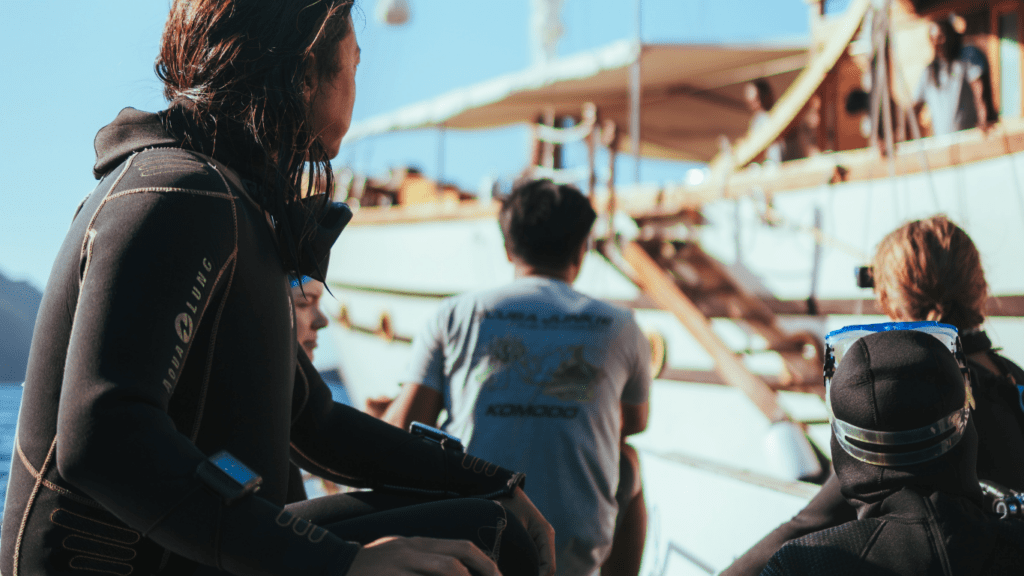
Planning a liveaboard trip can feel like standing at the edge of something exciting — flights to check, bags to pack, park fees to understand, arrival times to get right.
So we’ve put together this Komodo 6D5N liveaboard guide to make everything simple before you step aboard KLM Eliya with Scuba Junkie Liveaboards.
Think of this as your calm, clear walkthrough — from the moment you book, to the moment you cross the street for a celebratory ice cream at the end.
Most guests reach out to us by email (liveaboards@scubajunkie.com), through social media, or via the contact form on our website. From there, our team walks you through availability, cabin options, and next steps.
To secure your space, a 50% non-refundable deposit confirms your booking. The remaining balance is due 60 days before departure. If your booking is made within 61 days of the trip, full payment is required at reservation. All details are clearly outlined in our official Terms & Conditions .
We always recommend comprehensive travel insurance — and dive insurance is compulsory due to the remote nature of diving in Komodo.
Once that’s done, the adventure starts to feel very real.
Your journey will bring you to Komodo International Airport (LBJ) in Labuan Bajo.
There are now direct flights from:
From Bali, the flight is around one hour — short, scenic, and often the moment it really sinks in that you’re headed somewhere special.
We recommend arriving the day before embarkation if possible. It gives you time to settle in, adjust, and avoid any stress if flights are delayed.
On Day 1, we meet at our office in Labuan Bajo between 08:00 and 08:30am. There’s always a buzz in the air — new faces, excited conversations, gear being double-checked.
At 09:00am, we walk together to the harbour and step aboard KLM Eliya. A welcome drink is served, cabins are shown, and our Cruise Director guides you through safety procedures and the plan for the week ahead.
Then, just like that, you’re on your way.
The first day typically includes two afternoon dives and a sunset or night dive. Sometimes, depending on conditions and planning, it may include two dives and a visit to Rinca Island to see the Komodo dragons. The exact flow is explained once onboard — flexibility is part of the magic.
By the second morning, you’re already in rhythm.
You’ll wake around 6:00am to light snacks, tea, and coffee before your first dive. There’s something special about slipping into the water as the day begins — Komodo often feels at its most alive in the early morning.
The days flow gently:
Dive.
Breakfast.
Dive.
Lunch.
Rest.
Dive.
Sunset or night dive.
Dinner under the stars.
Up to 20 dives across the trip, all guided, with full equipment rental included (excluding dive computer). Meals, tea, coffee, drinking water, towels, toiletries — everything is taken care of so you can focus fully on the experience.
And it’s not only about diving.
Komodo National Park is just as dramatic above the surface.
During the trip, depending on where we are diving and the conditions at the time, we may visit:
These excursions are never forced into a rigid schedule. We choose them based on tides, weather, and what will create the best overall experience for everyone onboard.
There is a daily national park fee for activities within the park, payable in cash (IDR).
For foreign nationals:
For Indonesian citizens (KTP holders):
Fees are subject to change.
Cash is also useful for:
There are plenty of ATMs in Labuan Bajo before boarding.
Komodo is tropical, but evenings can feel cool after multiple dives.
Bring:
Reusable water bottles are encouraged — each cabin has one onboard that you can keep as a souvenir.
SMBs are advisable but not required. Reef hooks are not required.
Wetsuits are available onboard.
On Day 6, there’s one final early morning dive (or two morning dives if the Dragon Tour happened earlier). After breakfast and lunch, KLM Eliya returns to harbour around 14:30.
Back at the office, our team assists with remaining payments and arranges taxis to your hotel or the airport.
Because of the 18-hour no-fly rule after diving, we strongly recommend flying the following day.
And this is where we always suggest something simple.
Cross the street.
Treat yourself to a well-earned ice cream at Maison Belmont.
Sit down. Take a breath. Let it sink in.
The dives, the dragons, the sunsets, the early mornings — it all settles into memory right there.
If you’re staying an extra night, Labuan Bajo is relaxed and easy to explore.
Some guest favourites include:
Whether you choose something vibrant or simple, it’s a lovely way to ease back into land life.
We hope this Komodo 6D5N liveaboard guide makes planning your trip feel smooth and straightforward.
Komodo is powerful, unpredictable, and unforgettable. Once you’re onboard KLM Eliya, the logistics fade away and the experience takes over.
We’ll handle the details.
You just show up ready for the adventure.
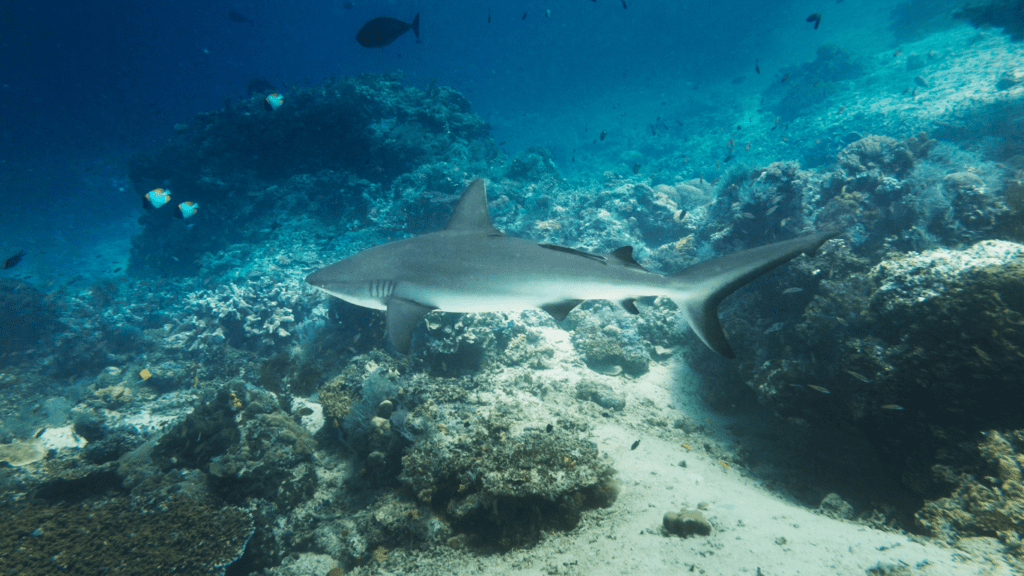
Few experiences compare to drifting effortlessly through crystal-clear water while sharks glide calmly past you. Sharks in Komodo National Park are not only one of the region’s greatest underwater highlights, but also a powerful reminder of why healthy oceans matter. For divers exploring Indonesia aboard a liveaboard like the KLM Eliya, encounters with sharks are often profound, inspiring, and unforgettable.
Komodo National Park is famous for its dramatic landscapes above water, but beneath the surface lies one of the richest marine ecosystems on Earth. Strong currents, thriving coral reefs, and protected waters create the perfect conditions for sharks to flourish — and where sharks thrive, the ocean is doing well.
Sharks play a critical role in maintaining balance in marine ecosystems. As apex predators, they regulate fish populations, prevent overgrazing of coral reefs, and help maintain biodiversity.
Without sharks:
In Komodo, the presence of sharks is a sign of resilience. These waters are protected, carefully managed, and respected by local communities and dive operators — allowing marine life to thrive naturally.
Divers exploring sharks in Komodo National Park are often surprised by both the diversity and frequency of encounters. Depending on conditions and dive sites, you may see:
These encounters are calm, natural, and awe-inspiring — offering a rare opportunity to observe sharks behaving exactly as they should: confident, curious, and completely uninterested in humans.
Komodo’s unique geography creates strong currents that bring nutrient-rich water to the reefs. This fuels plankton growth, attracts smaller fish, and in turn supports larger predators like sharks.
Key reasons Komodo stands out:
For divers, this means thrilling drifts, vibrant marine life, and frequent shark encounters — all in one destination.
A liveaboard is the best way to fully experience Komodo’s remote dive sites, and the KLM Eliya offers an experience that blends comfort, style, and adventure.
Unlike day trips, a liveaboard allows you to:
The rhythm of liveaboard diving creates space for meaningful encounters — not rushed moments, but real connections with the underwater world.
The KLM Eliya is designed for divers who appreciate both adventure and comfort. With spacious decks, thoughtfully designed cabins, and attentive service, the experience feels personal and relaxed — without sacrificing authenticity.
After an exhilarating dive with sharks, you can unwind on deck, enjoy freshly prepared meals, and watch Komodo’s dramatic landscapes pass by. It’s a gentle luxury that enhances, rather than distracts from, the natural beauty around you.
At Scuba Junkie Liveaboard, shark encounters are always conducted responsibly. Respectful diving ensures both diver safety and animal well-being.
Best practices include:
These simple behaviors allow sharks to remain relaxed, resulting in more natural and rewarding encounters.
Responsible dive tourism plays a vital role in protecting sharks. By choosing ethical operators and protected destinations like Komodo, divers help demonstrate that live sharks are worth far more alive than fished.
Shark-focused tourism:
Every dive becomes part of a bigger story — one where exploration and protection go hand in hand.
No. Sharks in Komodo are accustomed to divers and rarely show aggressive behavior. Calm, respectful diving ensures safe encounters.
Sharks can be seen year-round, but sightings are especially common during periods of stronger currents.
Some sites require experience due to currents, but Scuba Junkie offers guidance to match dives with skill levels.
Sharks regulate fish populations, which helps prevent coral overgrowth and reef degradation.
Yes. Liveaboards provide access to remote sites, flexible schedules, and a more immersive experience.
Through responsible diving practices, education, and support for marine protection initiatives.
Learn more about shark conservation at https://www.sharktrust.org
Encountering sharks in Komodo National Park is more than a thrilling dive — it’s a reminder of how powerful and delicate ocean ecosystems are. Aboard the KLM Eliya, divers don’t just visit Komodo; they become part of it.
With thoughtful luxury, responsible practices, and world-class diving, Scuba Junkie Liveaboard offers an experience that inspires respect for the ocean — and the incredible sharks that call it home.
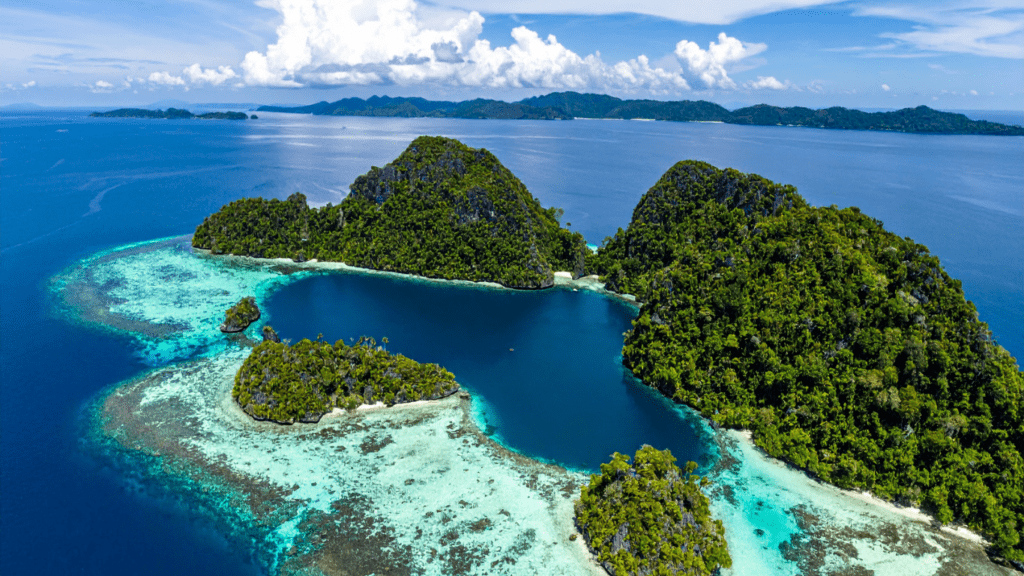
If you’ve been dreaming of visiting one of the world’s most extraordinary marine environments, Raja Ampat marine park is the name that appears again and again—and with good reason. Known for unmatched biodiversity, deep-rooted cultural traditions, and some of the clearest waters on Earth, the region stands as a reminder of how vibrant and delicate our oceans truly are.
This blog offers a gentle introduction to the marine park, its people, and its cultural landscape, while sharing a little Scuba Junkie excitement—because our upcoming Raja trips are nearly sold out, and November 2026 will mark Eliya’s very first journey to Raja Ampat. With only a few spots left on two departures, this feels like the perfect moment to help divers understand the magic of where they’re headed.
Raja Ampat sits at the center of the Coral Triangle, the world’s most biodiversity-rich marine region. Scientists consider it a global priority for conservation due to its high coral cover, fish abundance, and healthy reef systems.
The Raja Ampat marine park holds:
This combination creates a dreamscape for divers: colorful, calm, and alive at every depth.
The marine park isn’t just a tourist attraction—it’s a formally managed conservation zone designed to protect marine life for future generations. Visitors contribute directly to preservation through park fees and low-impact tourism practices.
Raja Ampat is home to Indigenous Papuan groups whose lives are closely linked to the sea. Their knowledge of tides, reefs, and seasonal shifts is passed down through generations and deeply respected by conservationists.
Visitors may notice:
Respecting privacy, modest dress near villages, and polite interaction goes a long way. A friendly smile is always returned with one.
Being mindful of local customs keeps tourism harmonious. Basic guidelines include:
These small gestures ensure that tourism remains beneficial and respectful.
The Raja Ampat marine park is divided into zones that regulate fishing, diving, and boating. These rules help fish populations recover and reefs remain healthy.
Local communities play a major role in patrolling the waters, reporting illegal fishing, and ensuring their environment is preserved. Their involvement is one reason the region remains so pristine.
Responsible operators, divers, and travelers are essential. By following regulations and supporting ethical tourism, visitors help keep the ecosystem thriving.
The Scuba Junkie family has shown incredible enthusiasm for our Raja Ampat trips—so much so that most departures are already fully booked. Your trust, excitement, and loyalty mean everything, and we can’t wait to share these experiences with you.
At this point, only two trips still have a few available spots. If Raja Ampat has been on your bucket list, now is the moment before everything fills up.
A special note: November 2026 marks Eliya’s very first venture to Raja Ampat, making the upcoming seasons feel even more exciting. Sharing knowledge about the area feels important as we prepare for this milestone.
Small actions make a big difference:
These habits help keep the Raja Ampat marine park thriving.
Choosing local services, respecting cultural spaces, and acknowledging the park fee system all contribute to community livelihoods and conservation funding.
Its location within the Coral Triangle and strong ocean currents create ideal conditions for marine life.
Yes. The Raja Ampat Marine Park Entry Fee supports conservation and community projects.
Due to the more advanced nature of some of the sites within the Raja Ampat Marine Park, we require all divers to be Open Water with a minimum Deep certification.
Conditions are excellent year-round, with November–April offering some of the calmest seas.
Yes, with respect for customs. Always dress modestly and ask before taking photos.
Through park fees, ethical diving, and supporting community-led initiatives.
The Raja Ampat marine park is more than a destination—it’s a living ecosystem intertwined with culture, tradition, and community-led conservation. For divers, it offers unmatched biodiversity and a powerful reminder of why protecting our oceans matters.
As we prepare for upcoming Scuba Junkie trips—with only two departures still holding a few spots—and with Eliya joining her first Raja adventure in November 2026, we hope this guide helps guests understand the beauty and responsibility of exploring this extraordinary region.
Komodo National Park is so well known as being the region where the prehistoric Komodo Dragons can be found, but for the divers among us what we can see underwater is truly breathtaking! Let’s talk more about the Mantas of Komodo and when is the best time to see them!
Komodo National Park is home to healthy, vibrant reefs and hugely diverse marine life, but one of the absolute favourite animals on every divers bucket list are the majestic Mantas of Komodo!!!
Mantas are a very common sight here in Komodo with a recorded population of over 1200. New individuals are sighted every year thanks to citizen science (which we will tell you a little bit about later).
Mantas of Komodo fall into different categories of adventurer! Some love to travel long distances and have been noted to spend their lives covering wide expanses of the ocean. Some of the Mantas of Komodo have even been seen as far away as Nusa Penida. That is over 400km away! While others prefer to ‘stay near home’ and spend the majority of their life around Komodo National Park just moving between the different sites in the area.
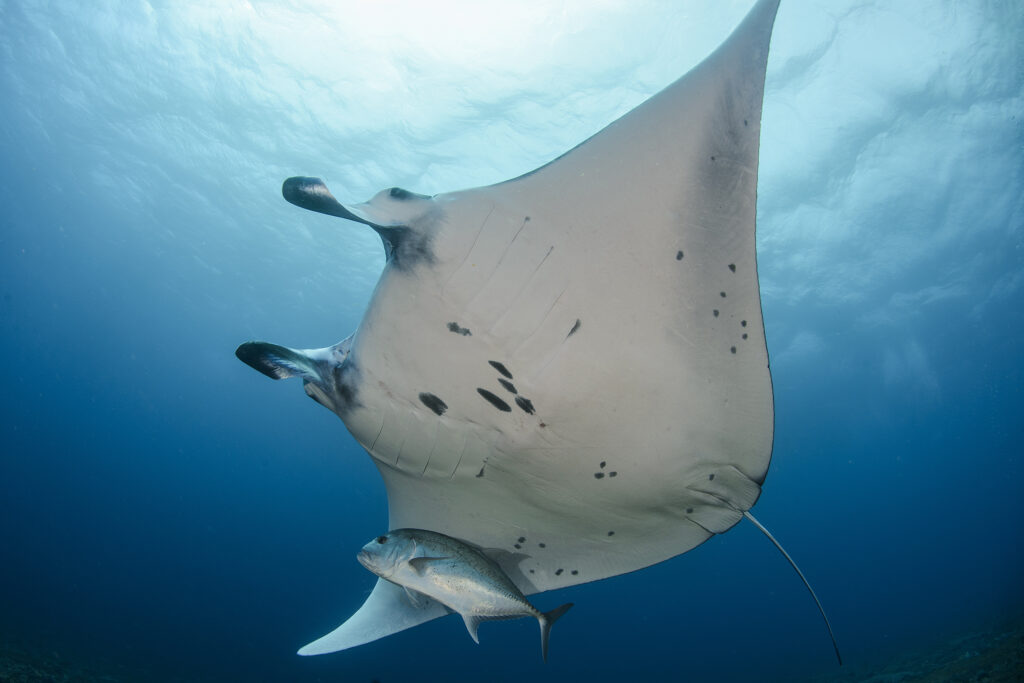
What are Mantas?
Mantas are part of the Elasmobranch Family – the same as sharks and skates. Sharks have been around for over 500 million years while these “younger” Mantas are believed to have been around for about 5 million years.
The majestic mantas live in perpetual motion – meaning they always have to keep moving. The heaviest known manta specimen weighed approximately 2 tonnes and due to their physiological make up they are negatively buoyant so if they stop moving they start to sink.
There are currently 2 types of Mantas – the Manta Alfredi or the Reef Manta and the Manta Birostris or Oceanic Manta.
Although Oceanic Mantas have been seen here in Komodo it is highly unusual. Our main interactions here are with the Reef Mantas! Reef Mantas have an average wing span of 3-4 metres and can be identified by the spot pattern on their belly.
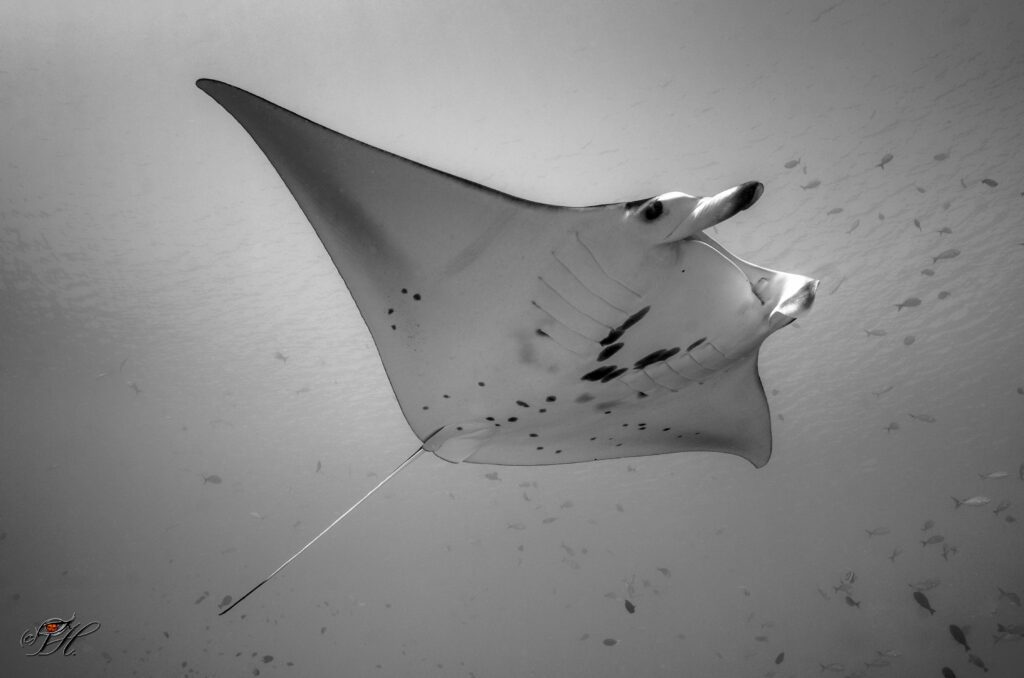
The underside of mantas are white with navy / black spots. These spots are unique to every individual which is why we are able to tell which manta is which and where they move to! If you chat with your dive guide onboard KLM Eliya they will be able to tell you about the different Mantas of Komodo and which ones they see more often than others. Many even have names when they have been adopted. The name is theirs for life.
Manta Matcher is a fantastic online resource where you can upload your images of different manta bellies & the information will be added to the database to help track the different individuals.
The spot patterns on manta bellies are what is used to identify and track individuals. This is why citizen science and photos / videos are so so important. Scientists use this information to identify, track and monitor individuals and populations.
The Best Time for the Mantas of Komodo
We are lucky enough to see mantas all year a round here in Komodo, but what many people don’t realise is that the BEST time to see mantas is actually in the quieter months! Low season for visitors is high season for our flappy friends!
If you really want to increase your chances of seeing these magnificent giants in big numbers the best time to visit is September – April. These months are considered ‘low season’ in Komodo as there are a lot less visitors around. This does mean that the dive sites are a lot quieter and there are less boats around too.
November – March is considered rainy season here and people are often concerned about the weather. The great thing about this region is that it is usually very arid and even in rainy season we do not tend to get the monsoon style rains that are common in other Asian countries. It is more common here for it to rain in the afternoons / evenings and overnight, but still be dry and sunny in the day time.
This also does mean that at this time of year the visibility in some part of the National Park can be reduced. In the months of July – August underwater visibility can be 30 metres on a good day, but probably averaging around 20 metres. In the low season months visibility at the central sites is usually averaging 10-15 meters and 20 + metres at the Southern sites.
The reason for the drop in visibility is not just because of the weather conditions, but also because at this time of year the currents running through the region are much more nutrient rich. This means much more plankton and smaller organisms in the water. This may mean visibility is a little reduced for divers, but it does mean there is a lot more food in the water for the mantas of Komodo!!
It is not uncommon in these months to see more than 20+ mantas on a single dive. Our guests and dive guides have regularly done dives with possibly 50-60 individuals all around them! It gets to the point that there are so many it is simply impossible to keep count!!
These dives really are incredible moments that will leave you in a state of awe. It is not uncommon for our divers to get to the surface screaming in joy or just simply be quietly in disbelief after one of these epic manta dives!!!
They can still be seen throughout the rest of the year of course, but November – March really is the very best time to visit for these special animals.
July – September is considered high season in Komodo and during this time we usually get clear conditions with flat seas and great visibility. We dive the Central and Northern dives sites in these months so we visit the famous dive sites such as Crystal Rock, Castle Rock, the Cauldron (aka Shotgun) in the North of the National Park.
These sites are famous for strong currents, schooling fish, schooling reef sharks and, of course, the occasional manta!!
The younger mantas also seem to enjoy the strong currents of the Cauldron! As divers we will be working hard to hold our position while the majestic mantas will just give small tiny flicks of their fins to maintain there place in the current line.
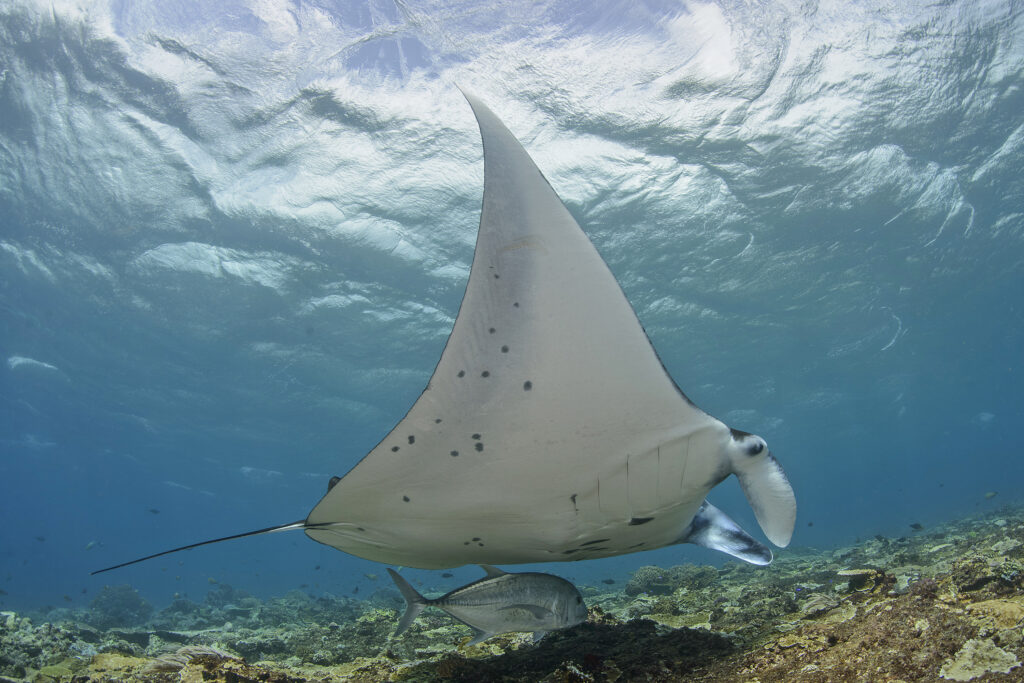
The Main Manta Dive Sites
Mantas can be seen at any of the dive sites in Komodo and are quite often seen breaching or jumping out of the water between the months of November – March.
We regularly encounter mantas at sites such as The Cauldron (aka Shotgun), Tatawa Besar, Tatawa Kecil, Siaba Besar along with others, but there are 3 main dive sites where we can be pretty sure of seeing the mantas of Komodo on an almost daily basis – but it is the ocean so there is no guarantee of course!
What makes these 3 dive sites so popular for mantas is that they have lots of “cleaning stations” Take a look at our previous blog about mantas if you are not sure what a cleaning station is.
Mawan – Central Dive Site
Mantas seen here all year around.
Biggest numbers between November – March.
Mawan is a stunning island located in the centre of the National Park and plays host to a number of manta cleaning stations. What makes Mawan special is that the cleaning stations are all relatively shallow. A long reefy plateau extends from the shore line to 26-27 metres before dropping deeper. Cleaning stations can be found at 3 – 6 – 9 – 18 – 22m with the majority of ‘action’ usually happening in the shallower water. It is easy to spend an entire dive here in less than 8m of water while you watch the mantas flying overhead and have the rays of sunshine breaking the surface. It is truly spectacular.
Karang Makassar – Central Dive Site
aka Manta Point – not to be mistaken with Manta Point at Nusa Penida)
Mantas seen here all year around.
Biggest numbers between November – March.
This dive site is the longest in the National Park and runs North – South. Manta Point is usually dived as a drift dive and we start at either the Southern end or the Northern end depending on the direction the current is running. We regularly drift 3km during this dive.
The topography of this dive site is very unusual with many divers describing it as a moon-scape! The rubble bottom is dotted with cleaning stations where the mantas will come into clean. Some of our guests most favourite dive site is Manta Point for the shear numbers of mantas you can see here!! You can be watching 2 at a cleaning station and suddenly you will see a flash in the corner of your eye as 4 more fly past! The average depth of Manta Point is 12-13 metres. So again a very shallow dive site making long dives and amazing manta interactions easy!
Manta Alley – Southern Dive Site
Mantas seen here all more often in the summer months of June – September.
Biggest numbers July – September.
Manta Ally is similar to Manta Point in that it is a long drift dive. It has a gently sloping rocky bottom that levels out at a sandy area around 20 metres. The cleaning stations here tend to be found in the sandy area so this is a little deeper than the other sites. However the shallower rocky section and small channel is where the mantas tend to feed and hangout while playing in the current!! Manta Alley is famous for the mantas of course, but it does also get quite cold here with temperatures averaging 22-23 degrees whereas the other sites at the is time of year will average 24-26 degrees.
The Mantas of Komodo really are here all year around, but if you really want to maximise your chances of seeing these magical animals in big numbers then the best time to visit is between September & April, with even better chances mid November – mid / end of March.
Not only will you increase your likelihood of seeing the Mantas of Komodo, but there are less boats around, dive sites are quieter and some days you really will feel like you have the Komodo National Park all to yourself!
Scuba Junkie are running a very Special Low Season Promo at the time of writing this blog. From now until 30 April 2025 you can book and pay for any trip onboard KLM Eliya and we will give you a 30% discount on our published prices – YES – 30%!!!!
If you combine KLM Eliya with one of our other locations we can offer you 25% discount on the second location.
What better time to book your holiday for your next Manta adventure! Get in touch now to find out more about our availability and our low season Mantas of Komodo Promo Deal!
Booking Period: Now until 30 April 2025
Travel Period: 1 November 2025 – 31 March 2026
If you would like to take advantage of our Special Low Season Promo then please get in touch here.
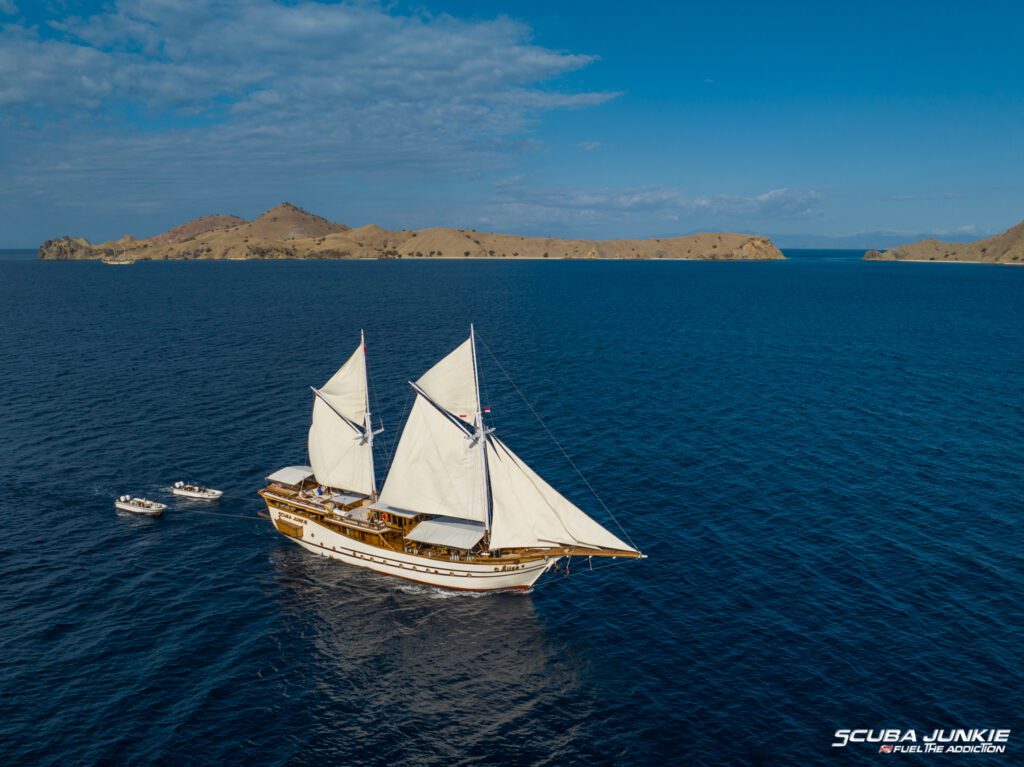
Komodo National Park sits in The Coral Triangle between the islands of Flores & Sumbawa in the Indonesian archipelago. The National Park is made up of 3 main islands – Komodo Island, Rinca Island and Padar Island as well as a number of smaller islands. This area is on the line of two continental plates and has been recognised by UNESCO as a “global conservation priority area” with unparalleled terrestrial and marine ecosystems.
The National Park covers nearly 2000 km2 with much of that being made up of the marine waters.
History of Komodo National Park
Komodo National Park was established in 1980 by the Indonesian Government as a sanctuary to protect the endangered Komodo Dragons. The Komodo Dragons or Varanus Komodoensis are the world’s largest lizard and are endemic to this area (can not be found anywhere else in the world!).
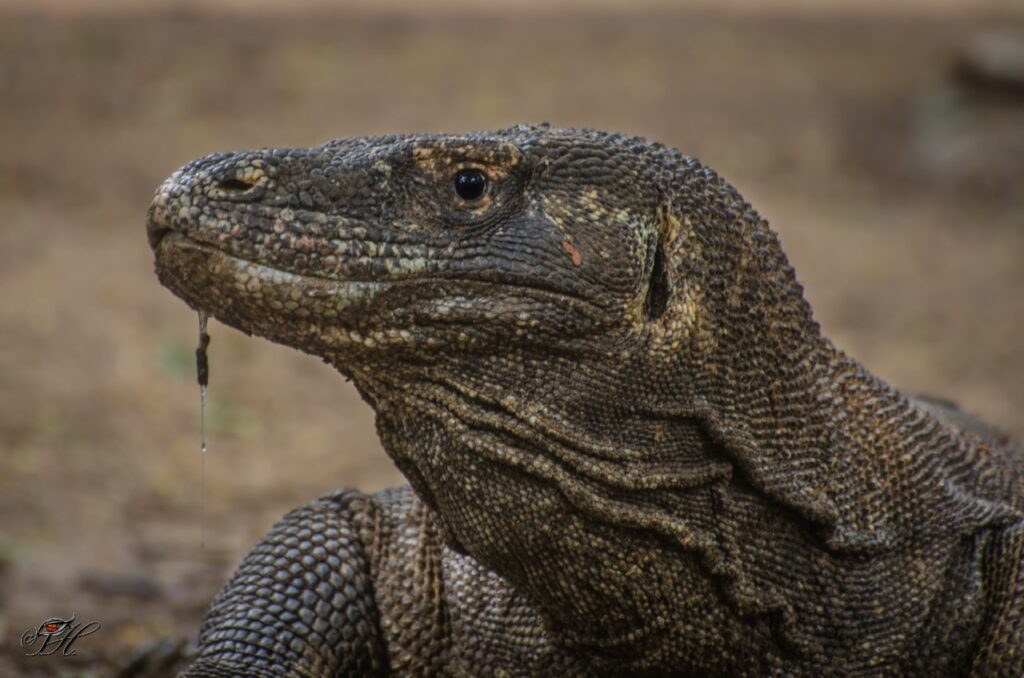
As part of your trip onboard KLM Eliya our Crew will take you to one of the Ranger Stations to give you the opportunity to spot these incredible beasts in their natural habitat.
In 1991, Komodo National Park was declared a UNESCO World Heritage Site and a Man and Biosphere Reserve. It is considered one of the world’s 25 biodiversity hotspots. A biodiversity hotspot is a region with significant levels of biodiversity that is threatened by human habitation.
Komodo National Park was initially protected because of the Komodo Dragons, but it was not long before people started to appreciate the shear beauty of what was under the surface of the ocean as well!
The Coral Triangle
Komodo National Park sits within the boundaries of The Coral Triangle. This is the world’s richest area for marine life. Often referred to as the ‘Amazon of the Ocean’ the Coral Triangle is home to over 6,000 fish species & 76% of the world’s coral species. 6 of the world’s 7 marine turtles are found here as well as an abundance of other popular marine animals such as mantas, sharks, molas, frogfish, blue ring octopus and much much more!
The Coral Triangle has 15 regionally endemic coral species (species found nowhere else in the world), and shares 41 regional endemic species within Asia.
This region covers a 6 million km2 area encompassing Indonesia, Malaysia, the Philippines, Papua New Guinea, Timor Leste and the Solomon Islands.
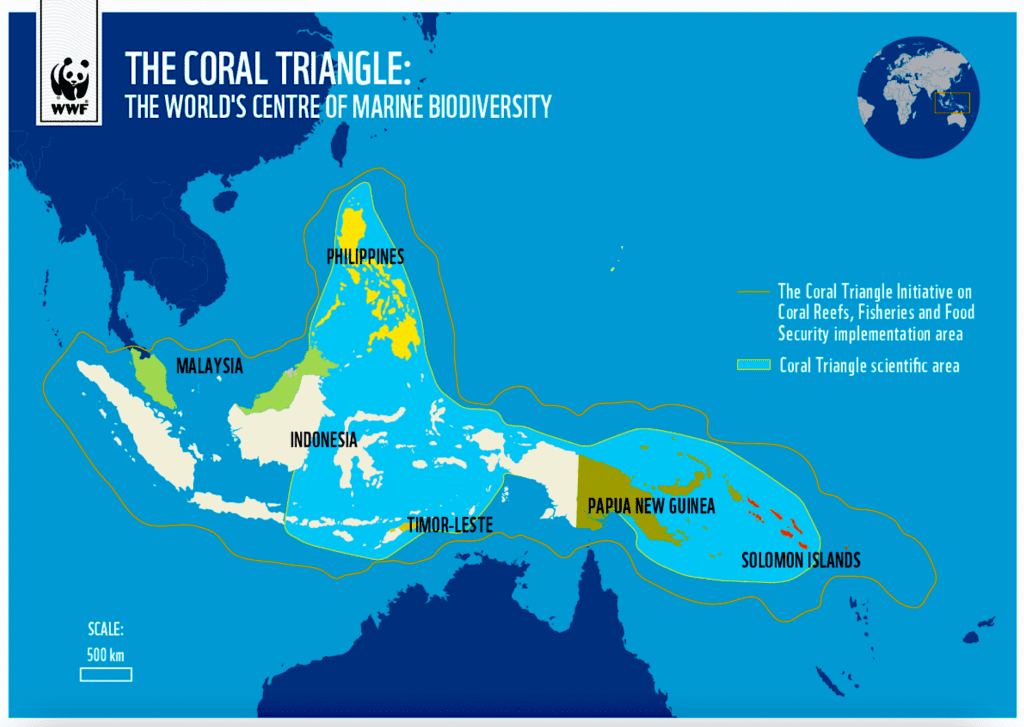
The Impact of Water Movement
The Coral Triangle is hit by two nutrient rich currents – the North Equatorial Current and the South Equatorial Current. These feed the coral reefs and the thousands of marine animals that live here, from the tiniest creature to the largest animal.
Komodo National Park is widely considered to have some of the world’s most challenging diving due to the currents that we get here. The strong currents are caused by the Indonesian Throughflow (ITF).
Trade winds and ocean currents run in opposite directions here, so the Pacific Ocean, to north east of Indonesia, is 20 cm above average sea level, while the Indian Ocean, in the southwest, is 10 cm lower than the average sea level. This 30 cm difference results in a massive movement of water from the “higher” Pacific Ocean through the archipelago’s complex underwater topography out into the “lower” Indian Ocean.
All of this runs through the narrow passages between the islands of Bali & Lombok, Lombok & Sumbawa, Sumbawa & Flores.
If we narrow this further to the Komodo National Park we have:
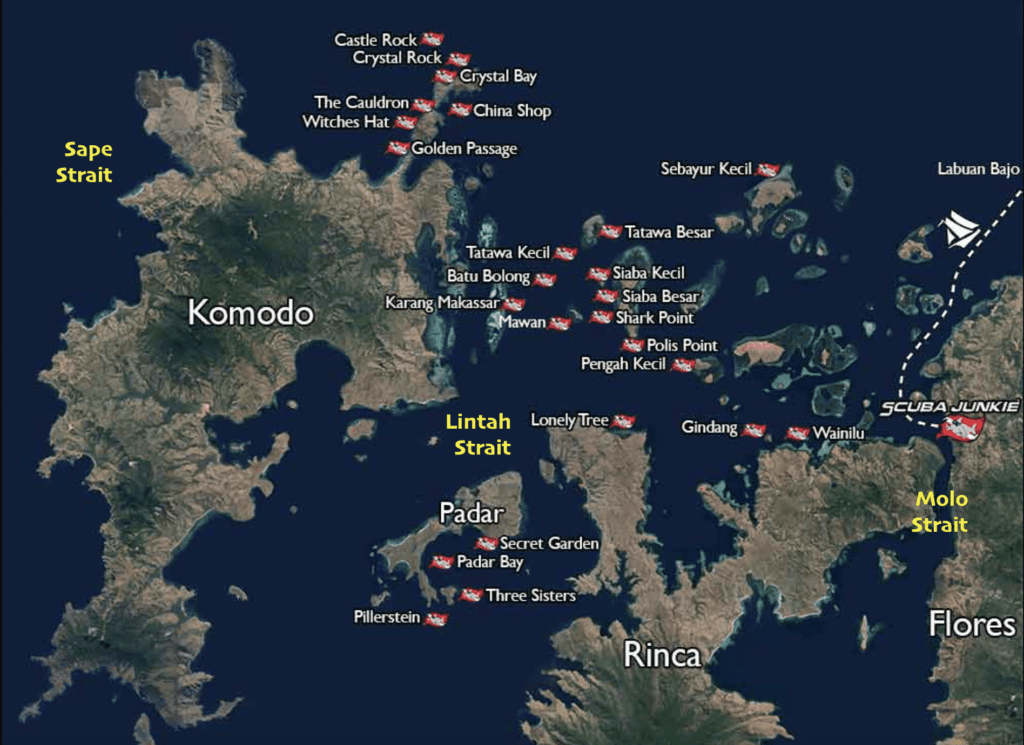
This island top0graphy as well as the dramatic ocean floor of deep trenches and shallow banks result in, not just fantastically fun diving(!!), but a rich and diverse area that results in some of the very best coral coverage and marine life diversity that you will see anywhere in the world!
KLM Eliya offers 6 Day / 5 Night Trips in the Komodo National Park and our Dive Guides onboard have worked in the area for many years. So feel free to ask them lots of questions when you are onboard!
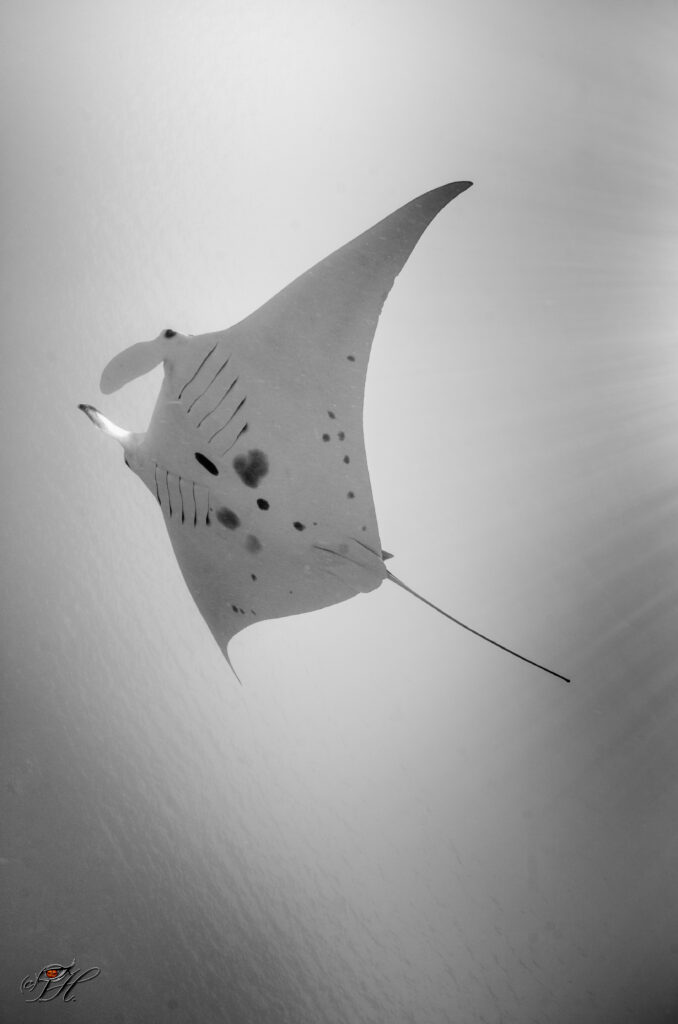
Manta Rays are majestical creatures that are on many divers’ bucket list! Here in Komodo the resident population sits at about 1200 identified individuals and scuba divers travel from all over the world to dive with these amazing animals. Manta etiquette and the right way to behave underwater is hugely important for all of us, as divers, to understand.
You may or may not know that individual mantas are identified by the pattern on their bellies! The belly spots on each manta are totally unique like the human fingerprint so each time a new manta is identified it is logged in the Marine Megafauna database which is why we can state with confidence there are over 1200 different individuals in Komodo National Park!
Why Komodo?
The fast currents and nutrient rich waters of Komodo help to keep our resident population happy and full! Mantas can be found at many of the dive sites in Komodo, but are most commonly found at Karang Makassar (a.k.a Manta Point), Mawan and Manta Alley. These dive sites in particular have Cleaning Stations that mantas enjoy to spend time at.
Manta Etiquette
Mantas are majestic, intelligent creatures and it is important that our interaction with them (as well as all forms of marine life) is as un-intrusive and respectful as possible!
Dive Guides will tell you during the dive briefings that it is important that we do not touch and do not chase the marine life. This goes for all creatures from the biggest manta to the smallest nudibranch.
Our interaction with mantas is often talked about and organisations such as the Marine Megafauna Foundation (MMF) offer specific guidance on how we should act while in the presence of these awesome animals.
Let’s take a look at some of the important points to remember below:
First of all what is a Cleaning Station?
Cleaning Stations are locations where different marine life will come to be cleaned by smaller creatures. Cleaning Stations can be found in both freshwater and marine environments and are used by a wide variety of animals.
Cleaning Stations are great examples of mutualism. This refers to a mutually beneficial ecological relationship between different creatures.
Mantas love Cleaning Stations!! They have often been shown to spend up to 8 hours per day cleaning and incredibly have also been shown to have favourite stations. Individuals have actually been recorded choosing one Cleaning Station over another!
As a manta approaches a Cleaning Station they slow their approach and will often look like they are “hovering” in one spot. Smaller creatures such as cleaner wrasse and butterfly fish will then approach the manta and help to clean the external surfaces by removing dead skin and and parasites they may find. As mentioned this process can sometimes last for hours and the manta will move in and out of the Cleaning Station in a loop pattern to make the most of the experience!
Cleaning Stations are an integral part of a manta’s life cycle and play a huge role in ensuring their health and wellbeing.
If you have been lucky enough to see mantas while cleaning you will see how elegant and “polite” the process is.
If there are multiple individuals at one Cleaning Station they will patiently wait and take turns moving in and out of the area. This process can last for hours with each looping around to the Cleaning Station pausing over the reef for moments at a time until they move out and the next individual will move in.
As scuba divers it is very important for us to be respective of this behaviour and ensure we don’t interrupt the line! This is why we recommend that all divers stay at least 3 metres away from the Cleaning Station area. If we are to encroach on this area the mantas will move away quite quickly to give us – the human – space to be cleaned! The smaller creatures doing the cleaning will also move away and hide among the coral and rocks as they are fearful of quick and sudden movements.
Your Dive Guides will always be keeping on eye on the group to ensure that an over excited diver isn’t getting too close and we will give you a little tap to call you back. If everyone follows this simple rule it means we can enjoy the show for the duration of the dive as it is likely we will be ready to leave due to air consumption before the mantas are finished cleaning!
Other important things to note:
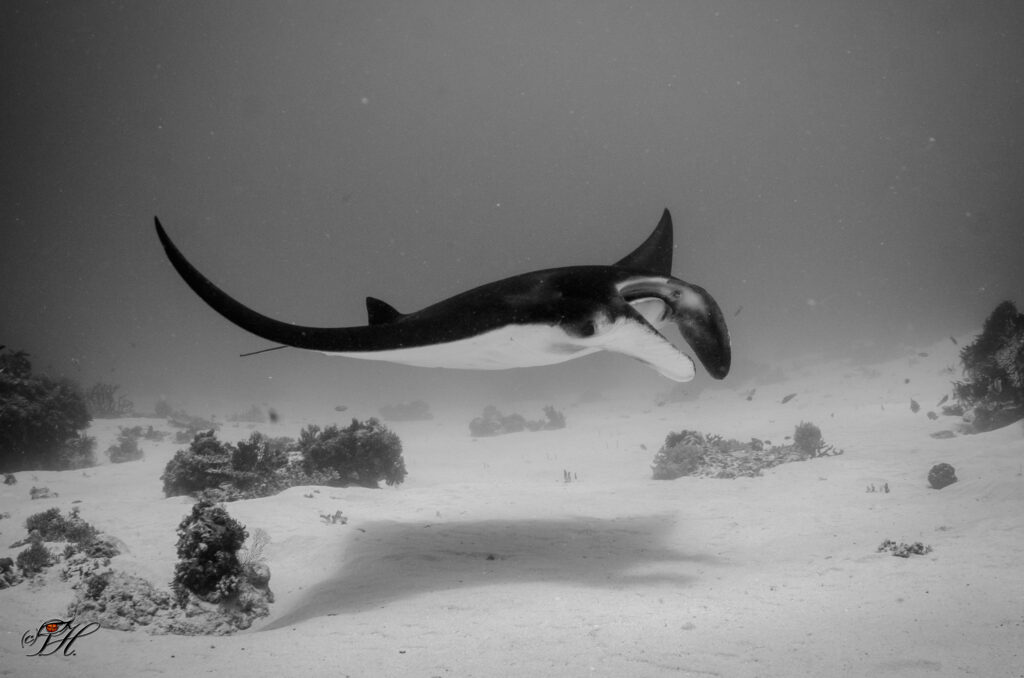
Mantas are large animals with the Reef Manta (aka Manta Alfredi) reaching a wingspan of 3-4 metres on average. It is important that we don’t chase or approach mantas from behind as they will often interpret this as predatory behaviour and swim away. With their large wingspan they are much faster than we are!
It is important also not to approach from above (especially so for snorkellers) as again they will interpret this as danger and move away.
Mantas do not respond well to divers who are moving quickly so being slow and remaining still is the best option.
It is vital that we never attempt to touch any marine life. A manta, if feeling secure and confident, is very inquisitive and there are many individuals here in Komodo that like to come in close and have a look at us divers! Mantas can come within centimeters of the a diver and it is so important that we do not try to touch them (although we understand the temptation!). Mantas have a protective film on their skin and human oils (even underwater) from our fingertips can be damaging to this.
The best advice we can give you
Let the mantas control the interaction! You will hear our Dive Guides say this a lot and we can promise you that this approach will give you the very best opportunity to enjoy magical experiences with these animals underwater.
Mantas are smart and intelligent, if they feel in control and not threatened they will often come closer and stay around for longer. We tell our divers to stay relaxed, stay calm, don’t move too much, don’t try to chase or touch or get close and they are more likely to come to you!
A quick recap:
If you would like to find out more about the Mantas of Komodo and the best time to dive here please get in touch now!