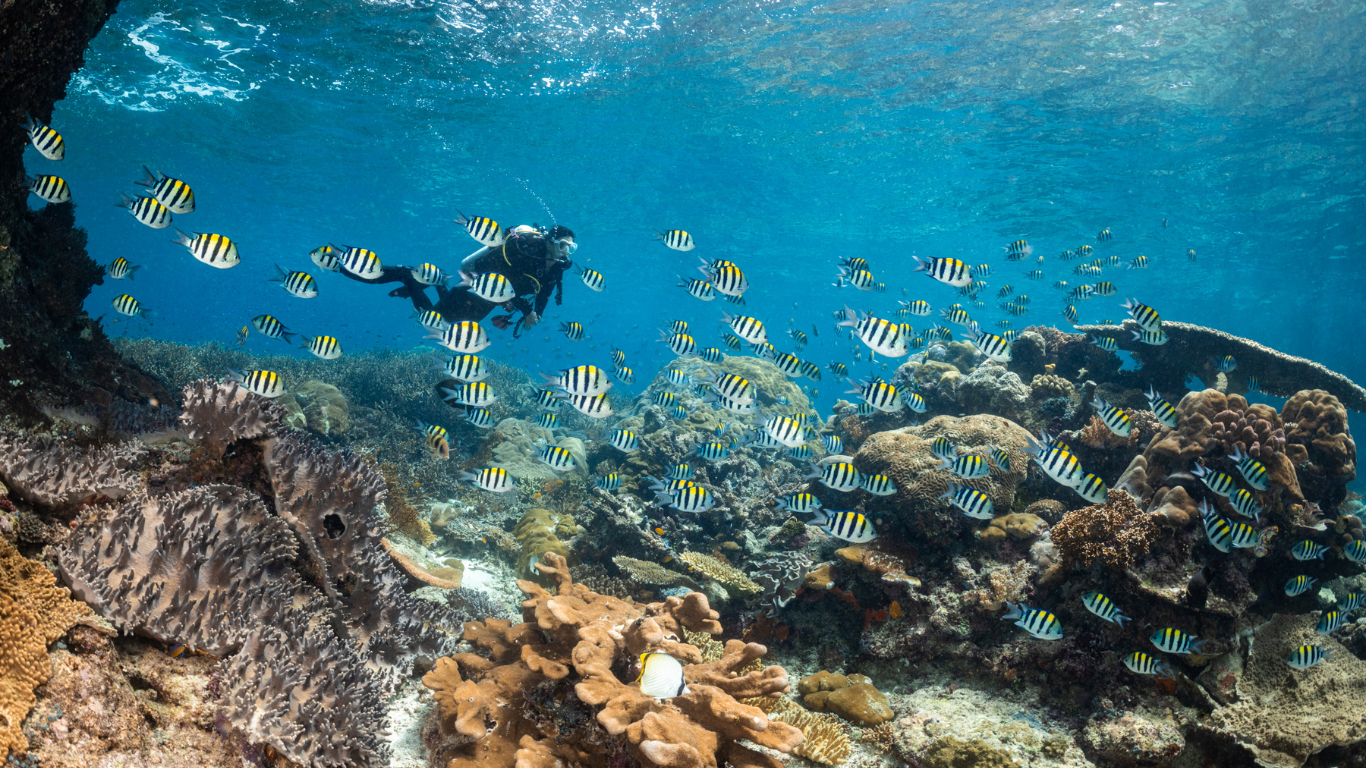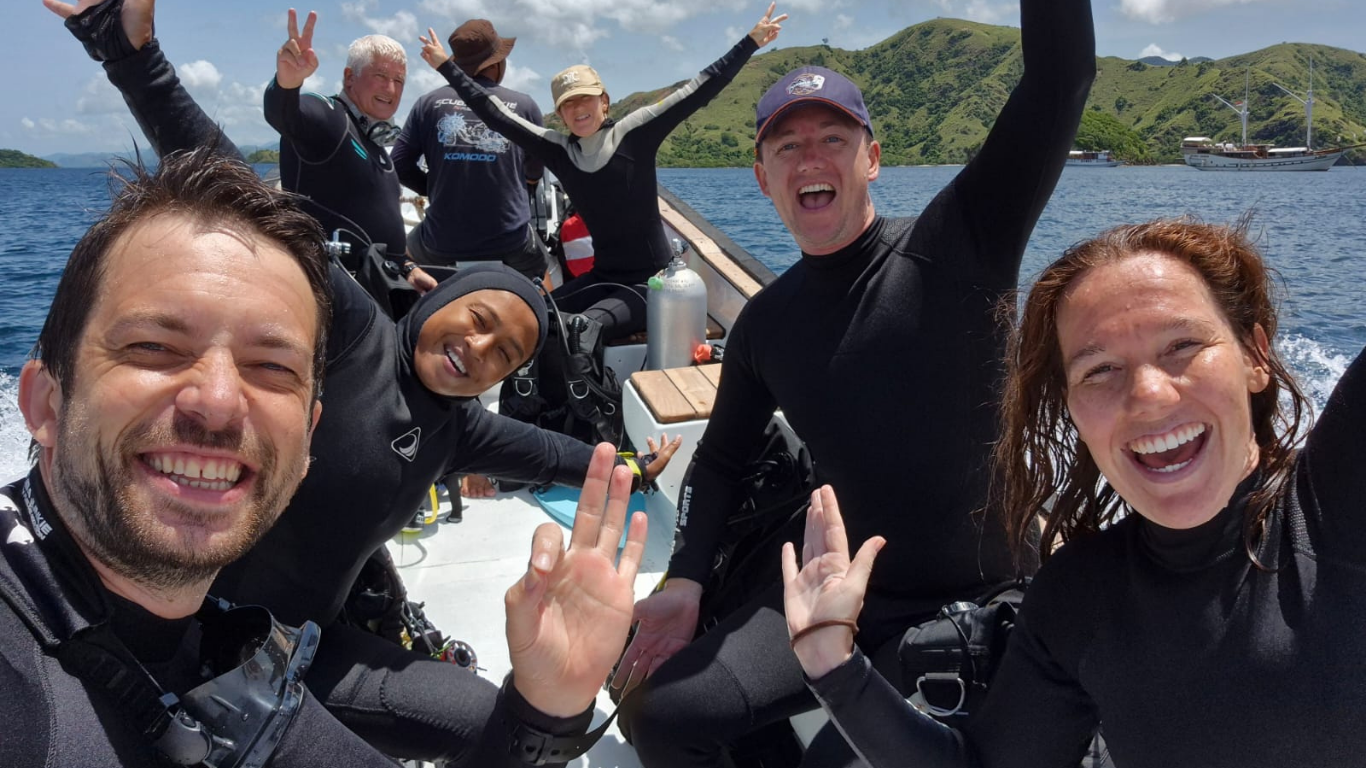
We provide Liveaboard trips in the within Indonesia. With trips to Komodo National Park, Raja Ampat & Banda Sea aboard our beautiful KLM Eliya. Come explore the beauty of some of Indonesia's best dive locations!
Looking for tips and tricks about diving, marine life or what to do in Indonesia? Follow us on our blog for weekly updates from the team!
Nitrox Upgrade: Is It Really Worth It on a Liveaboard Trip?

Uncategorized October 14, 2025

Table of Contents
Let’s be honest: liveaboards are incredible, but they can be tiering.
Four dives a day. Six days in a row. Surface intervals. Early wake-ups. Sunset dives. Repeat.
By the third or fourth day, even the most passionate divers start to feel it a mix of underwater bliss and fatigue. You’re diving some of the world’s best sites, but also giving your body (and your dive computer) plenty to keep up with.
So, that brings us to the question many divers ask themselves just before they click “book”:
Is the Nitrox upgrade worth it?
Let’s explore the science, the myths, the price tag — and the reality of diving with Nitrox on a liveaboard.
1. What Exactly Is Nitrox?
Nitrox (also known as Enriched Air Nitrox, or EANx) is a blend of air that has more oxygen and less nitrogen than regular compressed air.
Standard air = 21% oxygen / 79% nitrogen
Nitrox = 32% or 36% oxygen (most common blends)
By reducing nitrogen content, Nitrox slows down nitrogen absorption, allowing you to stay within your no-decompression limits (NDL) longer.
2. A Quick Science Dive: Nitrogen and Decompression
When you scuba dive, the pressure underwater causes nitrogen from your tank to dissolve naturally into your blood and tissues.
As you ascend and the pressure reduces, your body releases this nitrogen slowly through your lungs. However, if the ascent is too fast, or don’t follow your computer, this process can be disrupted. The nitrogen may form tiny bubbles, which can affect circulation or cause discomfort — a condition known as decompression sickness (DCS) or “the bends.”
It’s not something to fear — just something to understand and manage. Diving conservatively, taking safety stops, and staying within your limits (and your guide’s) keeps your risk extremely low.
🔍 What Is NDL?
NDL stands for No-Decompression Limit — the amount of time you can stay at a given depth without having to make mandatory decompression stops during your ascent.
When you reach your NDL on a dive, it’s time to ascend slowly and safely. Nitrox helps extend this limit at moderate depths by reducing the nitrogen you’re absorbing, giving you longer dive times and a greater safety buffer.
3. Adds a Safety Buffer
Even if you don’t dive to the longer limits, the reduced nitrogen gives you a greater margin of safety.
PADI – Things you should never do immediately after diving.
When used conservatively (diving below your maximum NDL), Nitrox can help reduce the nitrogen load across multiple dives — perfect for liveaboard-style diving.
4. What It Doesn’t Do (Officially)
There’s a widely held belief that Nitrox makes divers feel less tired — especially on long trips.
But here’s the catch: there’s no hard scientific evidence that Nitrox directly reduces post-dive fatigue. It’s a common anecdotal claim — one that may be influenced by:
- Better overall gas management
- Shallower dive profiles
- Psychological effects
Still, ask any group of divers after a long liveaboard, and chances are most Nitrox users will say, “Yeah, I felt better.”
So while it’s not a proven physiological effect, it’s a widely reported personal one.
5. Why Is a Nitrox Upgrade More Expensive?
Producing Nitrox requires:
- Special membrane or blending systems onboard
- Additional maintenance and gas testing
- Oxygen-cleaned tanks and analyzers for safety
- Higher oxygen costs than regular air
All of this adds up for the dive operator — and that gets passed to the guest.
At Scuba Junkie Liveaboards, a full-trip Nitrox upgrade for Komodo costs $120 if pre-booked for our 6D5N trips, or $13 per dive onboard.
6. When Nitrox Is Worth It
✔️ You’re doing multiple dives per day, especially over several days
✔️ You’re diving 18–30m frequently
✔️ You want to minimize nitrogen load for health or safety
✔️ You’re Nitrox-certified and want to dive to full NDLs safely
✔️ You just want that “extra edge” in how you feel after the dive
7. When It Might Not Be
✘ You’re sticking to shallow depths only
✘ You’re diving just 1–2 times a day
✘ You’re on a tight budget
✘ You’re not Nitrox certified and don’t want to take the course now
✘ Your trip is short and includes mostly land-based or snorkel days
8. So… Is It Worth It?
Most of the time — YES.
Especially on a liveaboard like KLM Eliya, where you’re diving 3–4 times a day over 6–7 days.
You’ll have more time within your no-deco limits, and that could mean:
- Staying longer with a school of barracudas
- Watching a black manta glide through a cleaning station without worrying about hitting your NDL
- Spending more time on the reef without cutting your dive short because of nitrogen exposure
It’s not about going deeper — it’s about making the most of each dive, safely and comfortably.
9. Not Certified Yet? You Can Take the Nitrox Course Onboard
If you’re not already certified, no worries — you can complete the Nitrox Specialty during your liveaboard trip.
The course is quick and theory-based, with no mandatory dives. Our instructors onboard KLM Eliya will guide you through:
- Oxygen exposure and safety
- Analyzing tanks
- Understanding MOD (maximum operating depth)
- Dive planning with Nitrox
That means you can upgrade to Nitrox mid-trip and start enjoying the benefits right away.
Ask about it during booking.
Final Thoughts: Let’s Settle the Debate
Nitrox isn’t a miracle gas. But for many divers — especially on liveaboards — it’s a smart, simple way to dive longer and (maybe) feel better.
And let’s be honest — if you’re at Manta Alley, surrounded by gliding giants, mesmerized by the loops and spirals of their dance, and your dive computer starts flashing because you’re nearing your NDL… you’ll really wish you’d upgraded to Nitrox.
That extra margin of time might not seem like much on paper — but underwater, in moments like those, it means not having to choose between safety and staying a little longer in magic. It’s the difference between surfacing early or being the last one up, eyes wide, heart full.
Do you dive with Nitrox?
Did it make a difference for you?
Would you recommend it to others on a liveaboard?
Drop your experience in the comments — let’s help other divers decide if the Nitrox upgrade is really worth it!