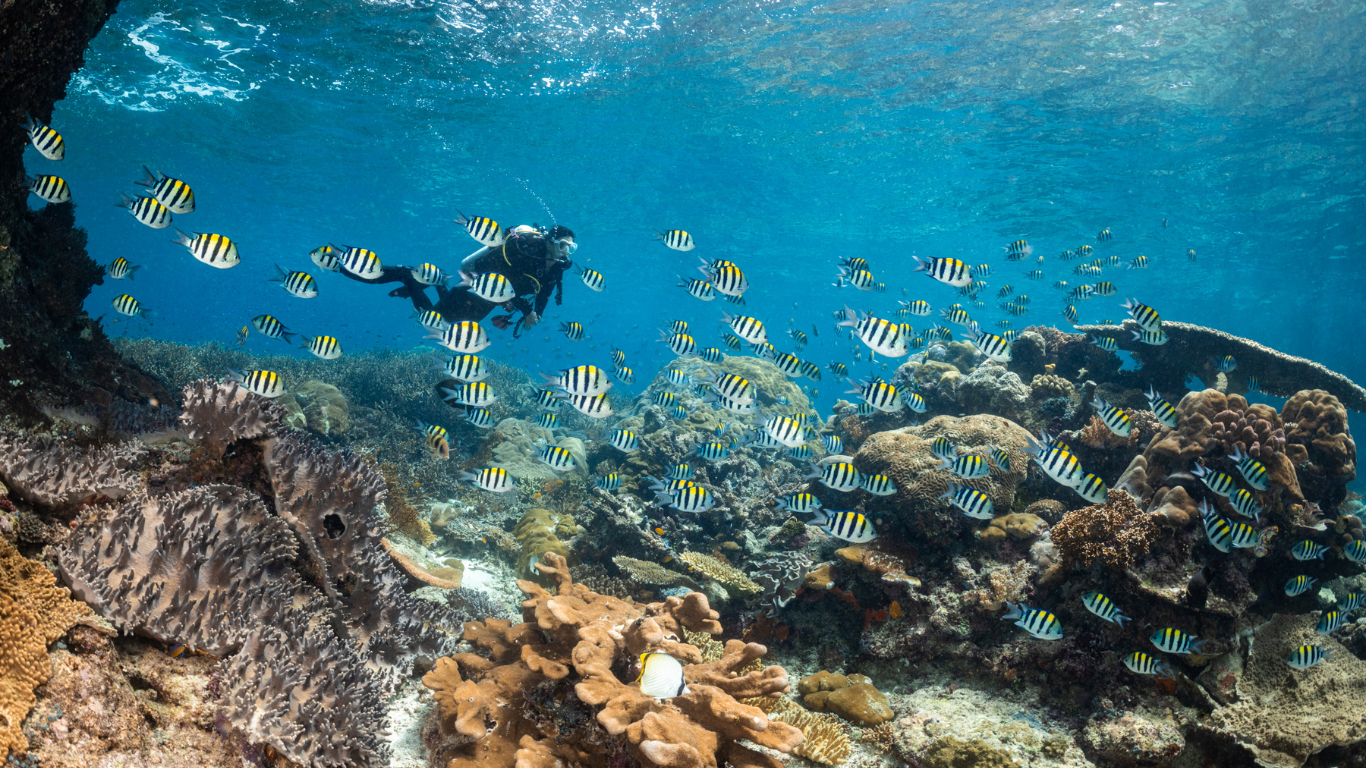
We provide Liveaboard trips in the within Indonesia. With trips to Komodo National Park, Raja Ampat & Banda Sea aboard our beautiful KLM Eliya. Come explore the beauty of some of Indonesia's best dive locations!
Looking for tips and tricks about diving, marine life or what to do in Indonesia? Follow us on our blog for weekly updates from the team!
Coral Fluorescence Explained: The Hidden Colours of the Reef After Dark

Marine Life l Uncategorized August 6, 2026
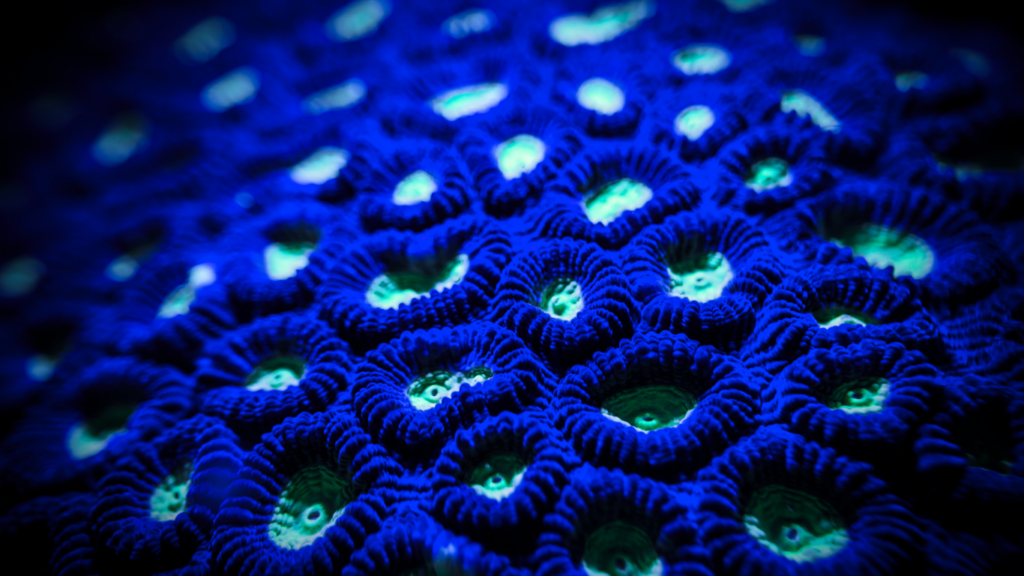
Table of Contents
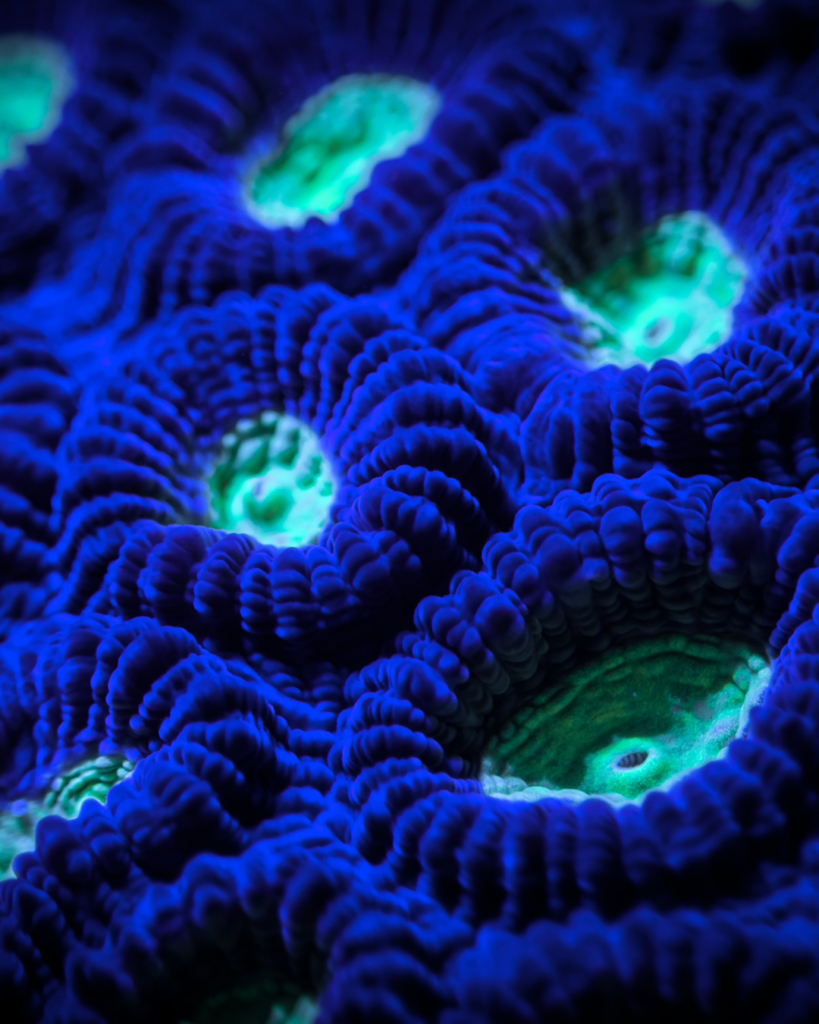
At first glance, the photographs almost looked edited.
Bright greens, electric oranges and glowing reds seemed to shine from the reef, transforming an ordinary coral into something that looked more at home in a science fiction film than beneath the ocean’s surface.
But nothing had been enhanced on a computer.
Those colours were already there.
They simply needed the right light to reveal them.
One of our guests recently shared a collection of these incredible images after a night dive, reminding us that coral reefs still have plenty of surprises waiting for those willing to explore after sunset. What many people call “glowing corals” is actually known as coral fluorescence, a natural phenomenon that has fascinated scientists, underwater photographers and divers for years.
Once you understand how it works, you’ll never look at a night dive in quite the same way again.
What Is Coral Fluorescence?
Despite the spectacular colours, corals are not producing their own light.
This is one of the biggest misconceptions about coral fluorescence.
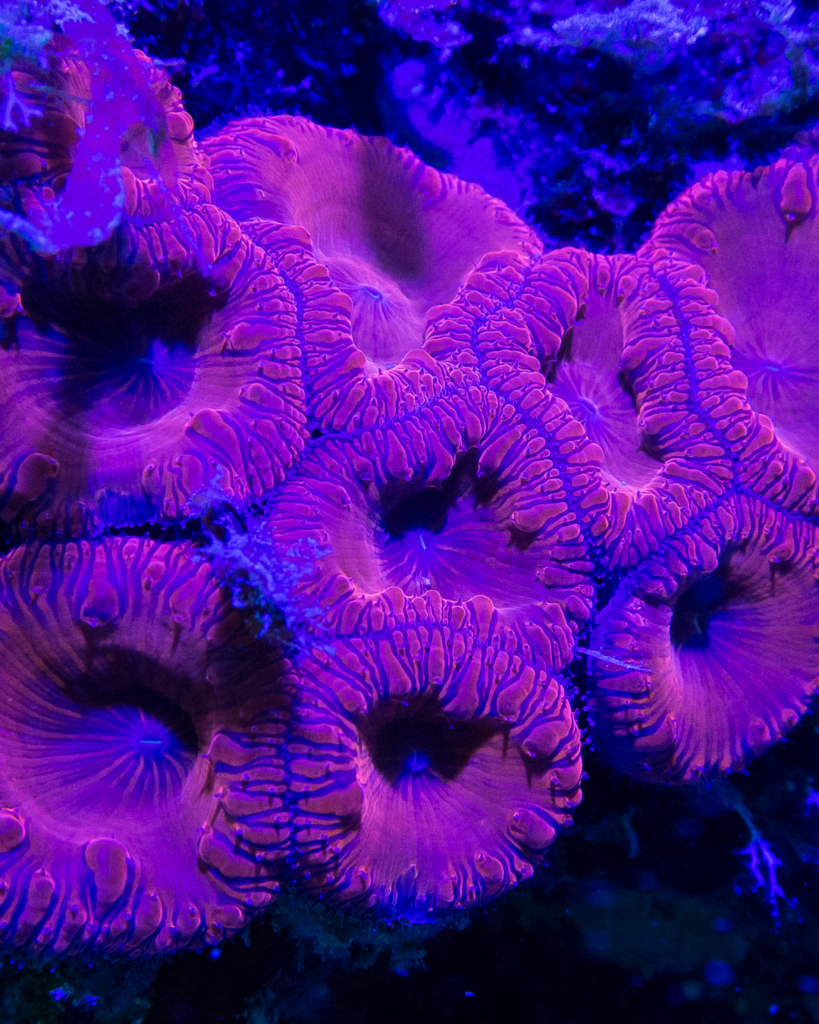
Instead, certain coral species contain special fluorescent proteins within their tissues. When these proteins are illuminated with high-energy blue or ultraviolet light, they absorb that light and immediately re-emit it at a different wavelength. This is what creates the vivid green, orange, yellow and red colours that photographers love to capture.
In other words, the coral isn’t glowing in the dark on its own. It is responding to a specific type of light, much like fluorescent ink or certain minerals under ultraviolet light.
Understanding this difference is important because coral fluorescence is often confused with another natural phenomenon: bioluminescence.
Coral Fluorescence Is Not the Same as Bioluminescence
Although both phenomena can appear magical underwater, they work in completely different ways.
Bioluminescence is the production of light through a chemical reaction inside an organism. It is the reason why some jellyfish, plankton and deep-sea animals can generate their own light.
Coral fluorescence, however, depends on an external light source. Without blue excitation light, the fluorescent colours remain hidden from our eyes.
It’s a subtle difference, but an important one.
The reef isn’t changing at night.
Our ability to see a hidden layer of colour is.
Why Do Corals Fluoresce?
This is where things become particularly interesting.
Scientists understand very well how coral fluorescence works, but they are still investigating exactly why corals produce these fluorescent proteins. Several theories have been proposed, and it is likely that different species use fluorescence for different purposes.
One leading hypothesis suggests that fluorescent proteins may help protect coral tissues from intense sunlight by absorbing high-energy light before it can cause damage. Another suggests they may help regulate the amount of light reaching the microscopic algae that live inside coral tissues and provide much of the coral’s energy through photosynthesis. Other studies indicate these proteins may also play a role in deeper reefs where sunlight is limited, helping corals make better use of the available light.
The important thing is that research is still ongoing.
Like many aspects of coral reef ecology, coral fluorescence continues to reveal new questions every year.
How Can Divers See Coral Fluorescence?
The good news is that you don’t need to be a scientist to experience it.
Special blue dive lights combined with a yellow barrier filter allow divers to see fluorescent colours that remain invisible during a normal night dive. The blue light excites the fluorescent proteins, while the yellow filter blocks most of the reflected blue light, allowing the glowing colours to stand out against the darkness.
The result is unlike anything most divers have seen before.
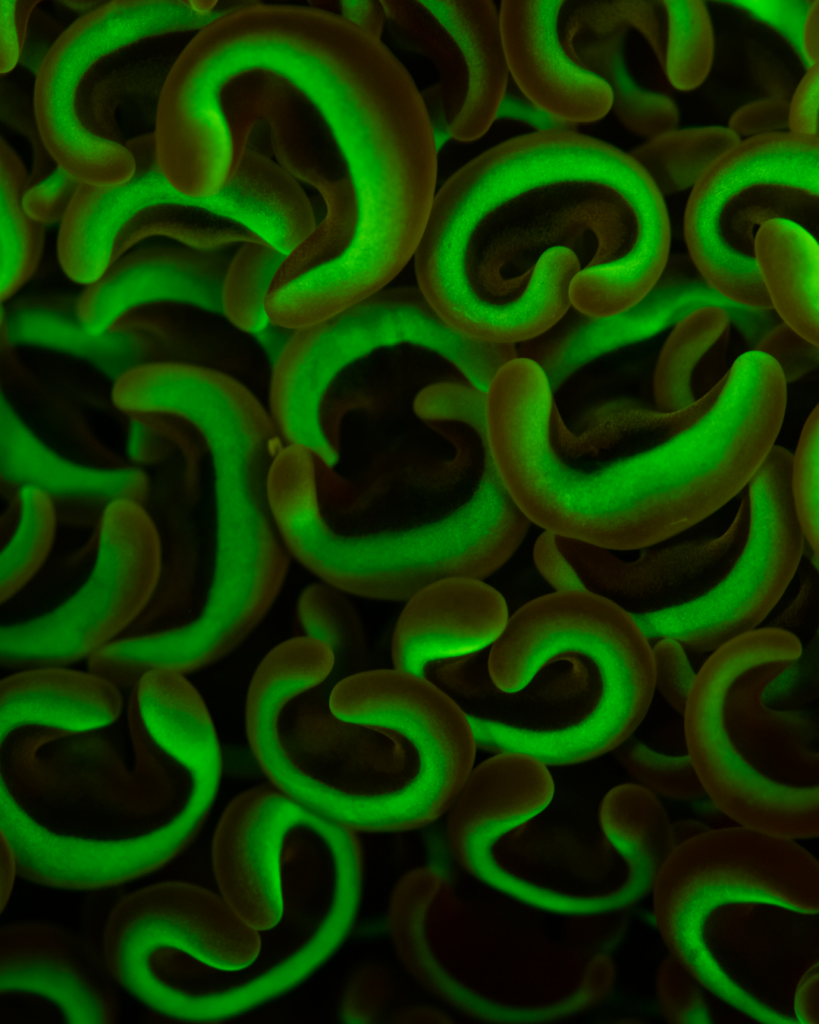
Corals that appear brown or pale during the day suddenly reveal brilliant colours, while many other reef organisms also display unexpected patterns of fluorescence.
It’s almost like discovering an entirely new reef without changing dive sites.
Where Can You Experience Coral Fluorescence?
Wherever healthy reef-building corals grow, there is a good chance that at least some species display coral fluorescence.
Indonesia’s coral reefs are no exception.
Whether you’re exploring the colourful reefs of Komodo, the extraordinary biodiversity of Raja Ampat or the remote coral gardens of the Banda Sea, fluorescent corals can be found throughout these ecosystems. The phenomenon is not unique to one destination but is instead a hidden characteristic of many reef-building coral species around the world.
Of course, seeing these colours requires the right equipment and conditions, which is why fluorescence dives have become increasingly popular among underwater photographers and curious divers alike.
A Different Way to Experience a Night Dive
Night diving already offers a completely different perspective on the reef.
Nocturnal animals emerge from their hiding places, hunting behaviour changes and familiar dive sites suddenly feel completely new.
Adding coral fluorescence takes that experience one step further.
Instead of simply exploring the reef after dark, divers are given the opportunity to see colours that remain hidden during the day. It becomes less about finding rare marine life and more about discovering details that have been there all along.
Almost every evening aboard Scuba Junkie KLM Eliya in Komodo, guests have the opportunity to enjoy a night dive. While fluorescent dives require specialised equipment, every night descent offers the chance to experience a side of the reef that many divers never forget.
The Reef Still Has Secrets
It’s easy to think we’ve already discovered everything a coral reef has to offer.
After all, millions of people dive, snorkel and photograph reefs every year.
Yet something as simple as changing the colour of a dive light can reveal an entirely different world.
Perhaps that’s one of the reasons coral reefs continue to fascinate scientists and divers alike.
The reef hasn’t changed.
We have simply learned to look at it differently.
Frequently Asked Questions
What is coral fluorescence?
Coral fluorescence is the process by which fluorescent proteins in coral tissues absorb blue or ultraviolet light and re-emit it as green, orange, yellow or red light.
Is coral fluorescence the same as bioluminescence?
No. Bioluminescence produces light through a chemical reaction, while coral fluorescence requires an external blue or ultraviolet light source.
Can you see coral fluorescence during the day?
Not usually. The effect is best observed at night using specialised blue lights and yellow barrier filters.
Why do corals fluoresce?
Scientists are still studying the exact purpose of coral fluorescence. Current research suggests it may help protect corals from excess light or regulate light reaching their symbiotic algae.
Where can divers see coral fluorescence?
Fluorescent corals can be found on healthy coral reefs around the world, including Komodo, Raja Ampat and the Banda Sea.
Can I photograph coral fluorescence?
Yes. With the correct blue excitation light, yellow filter and camera settings, underwater photographers can capture the incredible colours produced by coral fluorescence.