
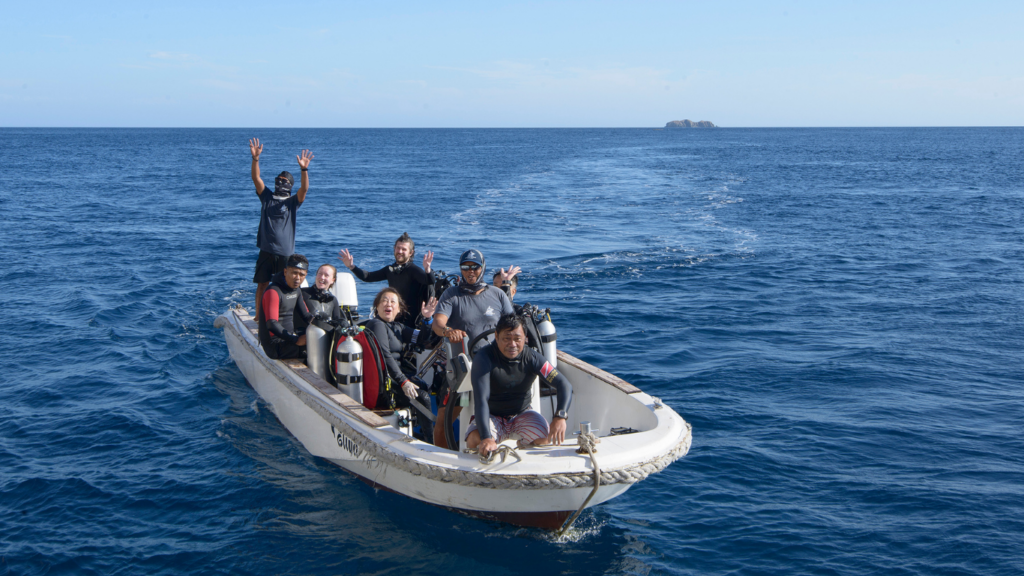
There’s something special about the rhythm of life on a liveaboard.
You wake up with the ocean. Slip into the water as the day begins. Come back to a warm breakfast, a quiet deck, and the feeling that there’s nowhere else you need to be.
And then you do it all again.
Three, sometimes four dives a day — it sounds like a dream. And it is. But like most good things, it comes with a balance.
These liveaboard diving tips aren’t about doing less. They’re about helping you feel better, so you can enjoy every single dive from start to finish.
Diving once or twice a day feels manageable. Add a third or fourth dive, and your body starts working in a different way.
You’re waking up earlier. Moving more. Spending more time in the water. Repeating the cycle day after day.
It’s not difficult — but it is demanding in a quiet, cumulative way.
That’s why experienced divers don’t just focus on the dives themselves. They pay attention to everything around them: what they eat, how they rest, how they feel.
That’s where the difference lies.
It sounds simple, but it’s the one thing people underestimate the most.
Diving — especially multiple times a day — is dehydrating. Between saltwater exposure, sun, and repeated immersion, your body loses more fluid than you realise.
And the tricky part? You don’t always feel thirsty until you’re already behind.
Keeping a water bottle nearby and sipping throughout the day makes a noticeable difference. Not just for how you feel on the surface, but also for how comfortable you are underwater.
Onboard KLM Eliya, this becomes part of the rhythm. Water is always available, and having your own bottle with you makes it easy to stay consistent without thinking about it.
After a dive, it’s tempting to just relax and skip a proper meal. But when you’re diving multiple times a day, food becomes part of your recovery.
Balanced meals help restore energy, stabilise blood sugar, and prepare you for the next dive.
Fresh fruit, vegetables, and warm meals between dives aren’t just nice to have — they’re part of what keeps you feeling steady throughout the day.
It’s one of those small details that quietly shapes the whole experience.
One of the best parts of liveaboard life is that you’re allowed to slow down.
Between dives, there’s time to stretch out on deck, close your eyes for a short nap, or simply sit and watch the sea go by.
And that time matters.
Your body is processing multiple dives, adjusting to pressure changes, and working continuously in the background. Giving it time to rest means you show up to the next dive feeling ready, not drained.
The rhythm isn’t rush–rush–rush.
It’s dive, rest, repeat.
There’s a quiet shift that happens after a few days onboard.
At the start, it’s about how many dives you can do.
By the end, it’s about how good each dive feels.
This is where small decisions come in:
These aren’t big changes — but together, they transform the experience.
If you’re Nitrox certified, this is where it often becomes especially valuable.
With lower nitrogen absorption compared to standard air, many divers find that using Nitrox helps them feel more comfortable across multiple dives — particularly on a schedule of three or four dives per day.
It’s not about extending limits or pushing boundaries. It’s about feeling better, dive after dive.
And if you haven’t tried it before, a liveaboard is often the perfect place to learn.
Every diver is different.
Some people feel energised all week. Others need a slower pace. Most fall somewhere in between.
The key is simple: pay attention.
If you feel great — enjoy it.
If you feel tired — adjust slightly.
There’s no pressure to “keep up.” The goal is to feel good in the water, not just to tick off dives.
Because the best dives aren’t the ones you count.
They’re the ones you remember.
Typically 3 to 4 dives per day, depending on conditions and itinerary.
It can be, especially over multiple days, which is why pacing, hydration, and rest are important.
If you are certified, many divers find it beneficial for comfort across multiple dives.
No — you can always choose what feels right for you.
Liveaboard diving is one of the most rewarding ways to experience the ocean.
It’s immersive, unhurried, and deeply connected to the rhythm of the sea.
These liveaboard diving tips aren’t about doing less. They’re about making sure you feel your best — so every dive, from the first to the last, is one you truly enjoy.
Because in the end, it’s not about how many dives you do.
It’s about how good they feel.
Some dive trips are built around famous sites.
Others are built around something deeper — the feeling of movement, exploration, and waking up each day somewhere new.
That is what makes a Banda Sea diving trip so different.
With Scuba Junkie Liveaboards aboard KLM Eliya, the Banda Sea is not simply a destination. It is a crossing through one of Indonesia’s most fascinating regions, linking iconic dive areas through open ocean, volcanic islands, rich reefs, and constantly changing scenery.
For divers looking for something beyond the usual routine, a Banda Sea diving trip offers exactly that.
Unlike trips that remain in one marine park or island group, a Banda Sea diving trip connects regions through a liveaboard journey.
These seasonal crossings typically operate in:
The routes may include:
Rather than staying anchored in one area, you travel through multiple environments, experiencing different coastlines, reef systems, and dive conditions along the way.
It feels less like a standard holiday, and more like an adventure shaped by the sea.
March is one of the most exciting times for a Banda Sea diving trip, as KLM Eliya transitions between Raja Ampat and eastern Indonesia.
Current March schedules include:
October crossings are also available seasonally, offering another chance to experience this remarkable route.
There is a rhythm to this kind of travel.
Some mornings begin with a dive briefing as the sun rises over a volcanic island. Some afternoons are spent crossing open water, watching the horizon shift slowly around you. Some evenings end under a sky full of stars, replaying the day’s dives with fellow guests on deck.
This is what many divers love most about a Banda Sea diving trip.
It is not only about ticking off dive sites.
It is about the full journey.
The movement.
The anticipation.
The changing scenery.
The sense that every day may bring something new.
The Banda region is known for big-water potential, healthy reefs, and variety across the route.
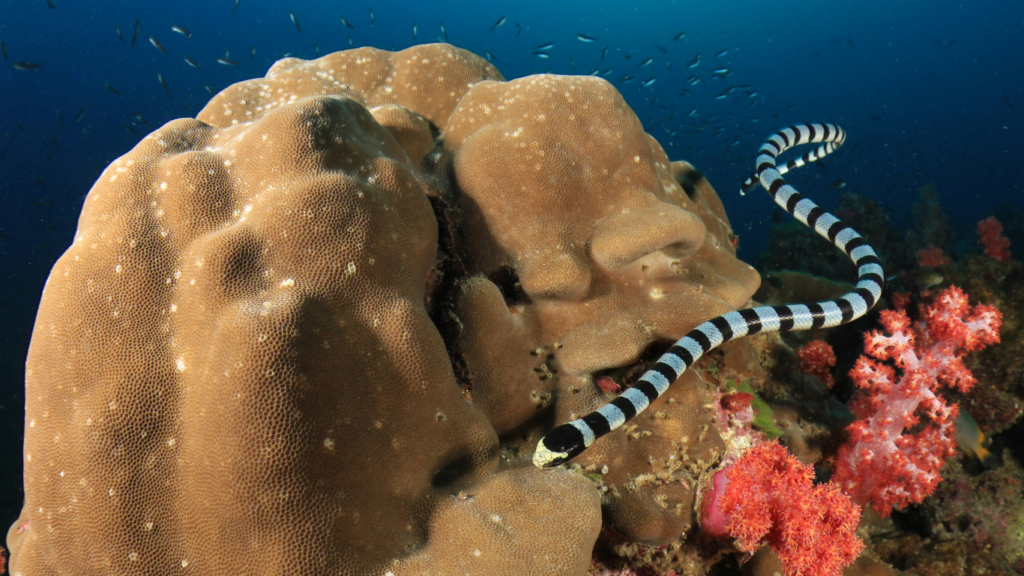
Depending on season, conditions, and exact itinerary, divers may encounter:
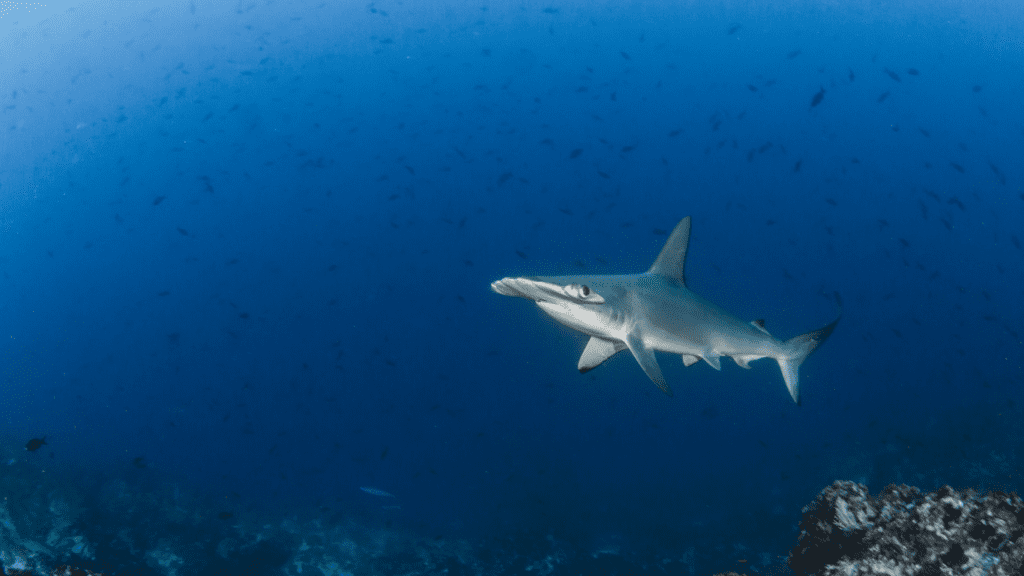
October crossings are also known for the possibility of schooling hammerheads in the right place, time and conditions.
As always with wildlife, nothing can be guaranteed — and that is part of the excitement.
Every dive holds possibility.
One of the most honest things to say about a Banda Sea diving trip is that it is not built on repetition.
Conditions can change.
Visibility may vary from one area to another. Currents can be mild one day and more dynamic the next. Some days focus heavily on diving, while others include longer travel stretches between destinations.
This is not a flaw of the trip.
It is the nature of expedition-style diving.
Guests who enjoy flexibility, variety, and a more organic journey often find this part of the appeal.
This trip is usually best suited to divers who enjoy:
It is not about needing to be the most technical diver in the group.
It is more about mindset.
Curiosity. Patience. Adventure.
While the ocean changes daily, life onboard offers consistency and comfort.
KLM Eliya was designed with divers in mind and hosts a maximum of 14 guests in ensuite cabins. Small dive groups aim for up to four guests per guide, creating a more personal experience in the water.
Days are built around diving, meals, rest, and the easy rhythm that makes liveaboard travel so enjoyable.
There is time to relax between dives, take in the view, and enjoy the journey itself.
Komodo is dynamic.
Raja Ampat is famously biodiverse.
The Banda Sea offers something different.
A sense of crossing through Indonesia rather than staying in one place.
For many experienced divers, that feeling becomes the highlight.
Not one single dive.
Not one famous site.
But the whole journey.
March and October are the main seasonal crossing months.
Depending on route, trips may offer around 25 to 28 dives.
This trip is generally better for divers comfortable with changing conditions and longer liveaboard journeys.
Yes. Guests may join individual routes such as Raja Ampat to Alor or Alor to Komodo.
A Banda Sea diving trip is not the most conventional dive holiday.
That is exactly why people love it.
It offers movement instead of routine. Variety instead of repetition. Discovery instead of predictability.
And for divers who enjoy the feeling of being on a true journey, few trips compare.
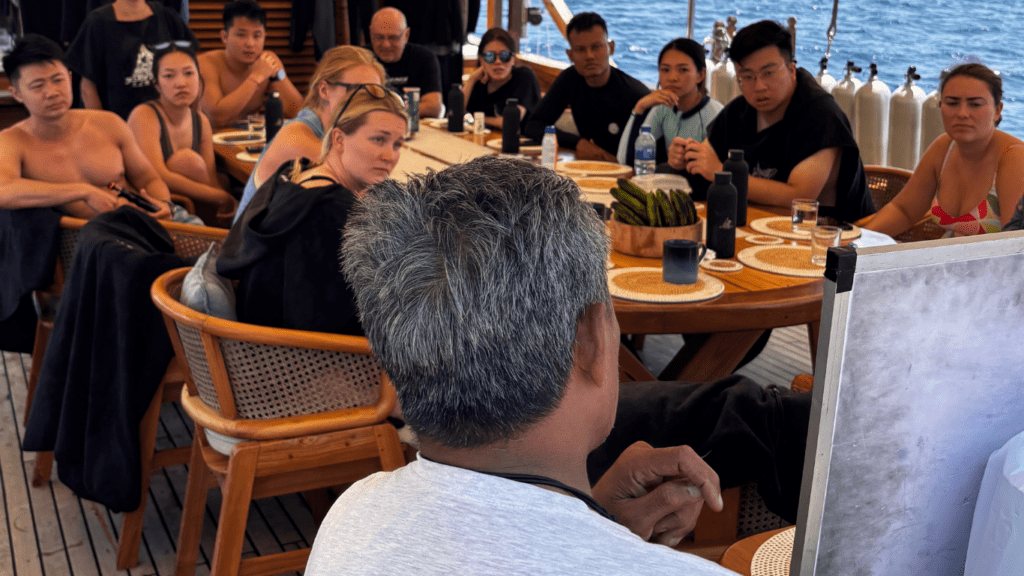
There’s a moment before every dive when everything slows down.
You’re geared up. The ocean stretches out around you. The briefing is fresh in your mind. And just before you step in, there’s one person you naturally look toward.
Your dive guide.
On a liveaboard, that role becomes something more than just leading a dive. A great liveaboard dive guide shapes the entire experience — quietly, consistently, and often without you even noticing.
At first glance, it might seem simple. The guide shows the way, points out marine life, and brings the group back safely.
But in reality, there’s much more happening beneath the surface.
A liveaboard dive guide is constantly reading the environment:
None of this is random. It’s observation, experience, and decision-making — all happening in real time.
Long before anyone enters the water, a good dive guide is already planning the dive.
Conditions in places like Komodo National Park, Raja Ampat, or the Banda Sea are never static. Tides shift, visibility changes, and currents can vary from one hour to the next.
A strong liveaboard dive guide will:
It’s not about following a fixed route. It’s about choosing the best option for that moment.
One of the key parts of a great liveaboard dive guide is not just how they guide underwater — but how dives are organised before anyone even enters the water.
At Scuba Junkie Liveaboards, divers are grouped based on experience level. This allows each dive to be planned at the right pace, depth, and conditions for the group, making the experience both safer and more enjoyable for everyone.
A strong liveaboard dive guide then focuses on guiding that specific group:
This approach keeps dives smooth, relaxed, and enjoyable — whether it’s your first liveaboard or one of many.
The best dive guides make everything feel effortless.
You descend smoothly.
The current feels manageable.
Marine life appears at just the right moment.
The dive ends exactly where it should.
But behind that simplicity is constant awareness:
A great liveaboard dive guide is always thinking a few steps ahead — so you don’t have to.
No matter the destination — whether it’s Komodo, Raja Ampat, or a Banda Sea crossing — the approach remains the same.
Safety comes first.
That means:
Sometimes, it also means changing a plan entirely. Choosing a different site. Adjusting expectations.
And that’s part of what makes a great guide — knowing when not to push a dive.
On a liveaboard, your dive guide isn’t just there underwater.
They’re part of your entire day.
From morning briefings to surface intervals, from helping with gear to sharing stories at dinner — they’re part of the rhythm of life onboard.
With Scuba Junkie Liveaboards, that connection is what turns a series of dives into a complete experience.
It’s not just about where you go.
It’s about how you experience it.
The mark of a great liveaboard dive guide is often invisible.
You don’t always notice the decisions being made. You don’t see the adjustments happening in real time.
But you feel the result:
And by the end of the trip, you realise something simple:
You didn’t just follow a guide.
You were taken care of.
A liveaboard dive guide plans dives, leads underwater, monitors safety, and adapts each dive based on conditions and the group.
Yes. They are more involved throughout the entire trip, not just during dives.
By timing dives with tides, choosing appropriate sites, and positioning divers carefully underwater.
Yes, especially in destinations like Komodo, where dives can be adapted to different levels.
A great liveaboard dive guide doesn’t just show you the ocean.
They shape how you experience it.
They turn uncertainty into confidence, complexity into simplicity, and a series of dives into something that feels seamless and memorable.
And often, the best ones are the ones you don’t notice right away — because everything just feels right.
Komodo Raja Ampat Banda Sea Diving – If yoIf you’ve been looking into diving in Indonesia, you’ve likely come across the same three destinations again and again: Komodo, Raja Ampat, and the Banda Sea.
At first, it feels like a choice.
But in reality, it’s more like a journey.
With Scuba Junkie Liveaboards, the same vessel — KLM Eliya — follows the seasons across Indonesia, exploring each of these regions at the best possible time of year.
So instead of asking which one is better, the real question becomes:
Which one feels right for you, right now?
One of the unique things about these trips is that they are not fixed in one place.
KLM Eliya moves with the seasons:
Each destination has its moment — when conditions, marine life, and overall experience align at their best.
And that’s when we go.
Komodo National Park is where many divers first experience Indonesia — and it leaves a strong impression.
This is a place shaped by currents. Nutrient-rich water flows through narrow channels, feeding an ecosystem that feels constantly alive.
Underwater, you can expect:
Every dive feels different. Some are calm, others more dynamic — but always full of life.
Komodo is surprisingly accessible. With the right planning and guidance, many divers — including those newer to currents — can enjoy it. It’s also a place where divers can continue learning, with courses available onboard.
Above the water, the experience adds another layer:
Raja Ampat feels different from the moment you arrive.
The pace slows down. The reefs become denser. Life is everywhere.
This is often considered the most biodiverse marine ecosystem on Earth — and it shows in every dive.
Marine life highlights include:
The diving here is less about intensity and more about immersion. You don’t chase the experience — you float through it.
Raja Ampat trips require a bit more experience. Divers are expected to be Advanced or hold a Deep Specialty certification, as conditions and profiles can vary.
This is not a place for courses — it’s a place to enjoy and explore.
Banda Sea is where things become more exploratory.
These trips are not just about diving — they’re about crossing a remote part of Indonesia that few divers experience.
The Banda Sea season is short and special:
The journey is divided into two legs:
Guests can join either one, or experience the full crossing.
Underwater, this is big ocean diving:
This is where the ocean feels vast.
More experienced divers who are comfortable in changing conditions and looking for something more remote and exploratory.
While each destination feels different, life onboard remains beautifully consistent.
Mornings begin early, often just before sunrise.
The day flows between dives, meals, rest, and quiet moments on deck.
Evenings slow down — sunsets, conversations, and the feeling of being far from everything else.
The boat becomes home.
And as the scenery changes — Komodo’s rugged hills, Raja Ampat’s limestone islands, Banda’s open horizons — the rhythm stays the same.
Komodo Raja Ampat Banda Sea Diving – These destinations share one thing in common: the best dive sites are not close to shore.
A liveaboard allows you to:
Because the itinerary is flexible, every trip is slightly different — shaped by the ocean, not by a fixed schedule.
Each destination offers something unique:
The good news is — you don’t have to choose forever.
Many divers come back to experience all three.
Yes. KLM Eliya moves seasonally between Komodo, Raja Ampat, and the Banda Sea.
Komodo (April–September), Raja Ampat (November–February), Banda Sea (March & October).
Komodo is generally the most accessible, with guidance and courses available onboard.
Yes, divers are required to be Advanced or have a Deep Specialty certification.
Yes, you can join either leg (Raja Ampat–Alor or Alor–Komodo) or complete the full crossing.
Komodo, Raja Ampat, and the Banda Sea are not competing destinations.
They are chapters of the same story.
Each one reveals a different side of Indonesia — its energy, its biodiversity, its remoteness.
And whichever one you choose, you’re not just visiting a place.
You’re stepping into a journey shaped by the ocean.
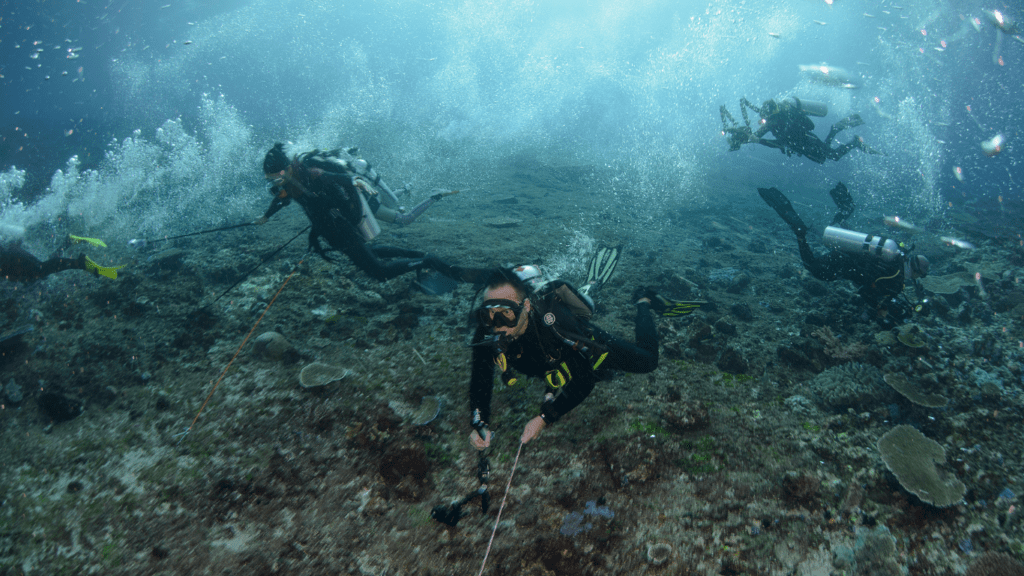
If you’ve been researching diving in Indonesia, you’ve probably heard about one thing again and again: currents.
And naturally, questions follow.
Are they strong?
Are they unpredictable?
Is Komodo currents diving only for advanced divers?
Let’s talk about it openly and honestly.
At Scuba Junkie Liveaboards, we believe awareness builds confidence. Yes — there are currents in Komodo. Yes — sometimes they can be strong. And yes — they are part of what makes this place so extraordinary.
But currents are not something to fear. They are something to understand.
Komodo National Park sits between the Indian Ocean and the Pacific Ocean. This region forms part of the Indonesian Throughflow — a major ocean current system where massive volumes of water move between ocean basins.
Now combine that with Komodo’s geography:
When tides move through tight passages between islands, water accelerates — much like wind speeding up when it passes through a mountain gap. This is why certain sites can experience powerful water movement.
It’s not random. It’s geography and physics working together.
And that water movement is exactly why Komodo is so rich in marine life.
Currents bring nutrients.
Nutrient-rich water feeds plankton. Plankton feeds small fish. Small fish attract larger predators. That’s why Komodo is known for:
Without currents, Komodo would not be the world-class dive destination it is today.
So when we talk about Komodo currents diving, we’re really talking about the engine behind the ecosystem.
But not everywhere, and not all the time.
Currents in Komodo depend on:
Some dives feel like gentle drift dives where you simply glide along. Others can have more noticeable flow, especially in channels or exposed sites.
A well-known example is “The Cauldron” (often called Shotgun). This site sits in a narrow channel where tidal water funnels through, creating acceleration — particularly during peak tide. When conditions align, divers may experience a fast but controlled drift through a sandy channel.
But here’s the important part: dives like this are only done when conditions are suitable and when the group’s experience level matches the site.
They can change — yes.
Tides are predictable. But wind, swell, and micro-conditions can influence how a site feels on a given day. That’s why flexibility is key in Komodo.
At Scuba Junkie Liveaboards, we do not follow rigid dive schedules. Instead, our Cruise Director and dive guides evaluate:
Dive sites are selected accordingly.
If a site is too challenging for the group that day, we simply choose another one. Komodo offers plenty of options.
Safety always comes first.
This is one of the most common concerns — especially for:
The truth is, you do not need to be an “extreme diver” to enjoy Komodo.
Many dives are manageable and suitable for intermediate divers. And even when currents are present, they are often:
Our guides are in the water with you. They monitor the group carefully, assist when needed, and make calm, proactive decisions.
Our philosophy is simple:
Respect the ocean.
Plan carefully.
Adapt constantly.
Before every dive, you’ll receive a detailed briefing covering:
Groups are matched by experience level. If needed, dives are adjusted. If conditions change, plans change.
There is no pressure to prove anything.
The goal is enjoyment — not adrenaline.
Even if you don’t have much experience in currents, a few simple techniques make a big difference:
Often, once divers complete their first drift dive in Komodo, they realise it feels far more controlled and enjoyable than expected.
Many even come to love it.
This is just as important to say clearly.
There are days when conditions are not right.
In those moments, we choose differently. Komodo is vast and diverse. There is always another option that offers:
No single dive site is worth compromising safety.
Fear often comes from uncertainty.
When divers understand that currents are:
The anxiety fades.
Komodo currents diving is not about battling the ocean. It’s about working with it.
Newly certified divers can join, but comfort level and experience matter. We assess each group and plan dives accordingly.
No. Some sites have minimal movement. Others are known for stronger flow during certain tides.
Our guides stay close and assist immediately if needed. Your safety and comfort are always prioritised.
Yes — if conditions are not suitable, we choose alternative sites.
They sit in narrow channels where tidal water accelerates due to topography.
Yes, Komodo has currents.
Yes, sometimes they are strong.
But they are also the reason Komodo is alive with marine energy and biodiversity.
At Scuba Junkie Liveaboards, we respect those currents, plan around them, and adapt to them — always putting safety first, and always ensuring the experience remains enjoyable.
Understanding replaces fear.
And once you experience a well-planned drift dive in Komodo, you may find it becomes one of your favorite memories of the trip.
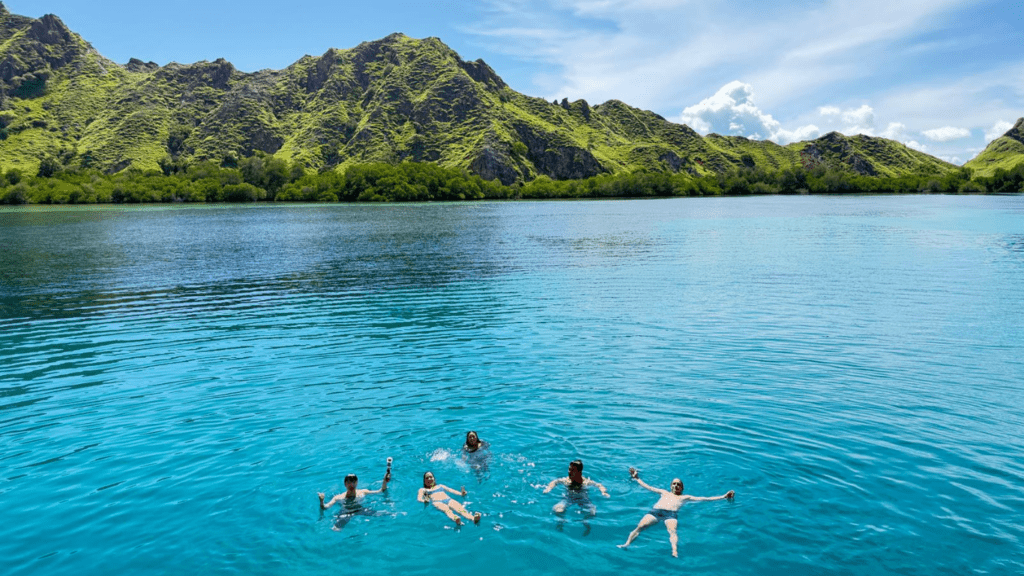
Komodo National Park visitor quota regulations will soon change how travelers visit one of the most extraordinary marine parks in the world. Starting in April 2026, the Indonesian government will introduce a new quota system limiting how many visitors can enter the park each day.
The goal behind this new regulation is clear: protect Komodo’s fragile ecosystem while maintaining sustainable tourism.
But the decision also raises an interesting question for divers, travelers, and conservationists:
Is limiting the number of visitors (carrying capacity) the best way to protect Komodo National Park?
Or could tourism itself play a bigger role in supporting conservation?
To understand the debate, it helps to look at what the new Komodo National Park visitor quota actually means.
The new Komodo National Park visitor quota will limit the number of people entering the park to 365,000 per year — or split daily — 1,000 visitors per day.
Currently, the average daily visitors is at 1,600, which meant that certain popular areas sometimes experienced significant visitor pressure. However, this 1,600 is not made up of a homogeneous group. These visitors are segmented into a few segments: cruise ship day visitors, independent land tourists, day trip divers, and liveaboard guests.
By reducing the daily limit, park authorities hope to better manage tourism and protect the natural environment that makes Komodo so unique.
Komodo National Park is globally famous for its extraordinary biodiversity. Located in the heart of the Coral Triangle, it is home to vibrant coral reefs, manta rays, sharks, turtles, and thousands of reef species.
It is also the only place on Earth where visitors can see the legendary Komodo dragons in their natural habitat.
Because of this incredible biodiversity, the park has been recognized as a UNESCO World Heritage Site by the UNESCO.
The permits required under the Komodo National Park visitor quota apply to all visitors entering the park, not only divers.
This means the permit includes:
• Diving activities within the marine park
• Snorkeling and boat visits
• Land excursions to islands such as Komodo, Padar and Rinca
• Wildlife viewing, including Komodo dragon treks
For a typical 6-day diving liveaboard itinerary, the park permit costs approximately:
IDR 1,650,000 per person
(IDR 275,000 per day)
These permits help fund conservation programs, ranger patrols, park management, and environmental protection.
If visitors plan to fly a drone while exploring the park, an additional permit is required.
The current drone permit fee is approximately:
IDR 2,000,000 per drone per day
Because permits are issued for specific travel dates under the Komodo National Park visitor quota, they now need to be arranged well in advance.
Supporters of the Komodo National Park visitor quota believe limiting visitor numbers is an important step toward protecting the park’s ecosystems.
Marine environments can be extremely sensitive to human activity. Large numbers of visitors can increase pressure on coral reefs, wildlife habitats, and popular dive sites.
By reducing the number of visitors entering the park each day, authorities hope to:
• Reduce overcrowding at popular locations
• Minimize environmental impact
• Improve visitor safety
• Maintain the quality of the experience for travelers
Many protected natural destinations around the world have introduced similar systems to protect fragile ecosystems.
The Komodo National Park visitor quota may feel like a big change, but similar systems already exist in other famous dive destinations.
One example is the Galápagos Islands, where strict regulations control how many visitors can enter protected areas.
Closer to home for us, Sipadan Island in Malaysia operates under a permit system that limits how many divers can visit the island each day. Sipadan is also home to another Scuba Junkie location, and the permit system has helped protect its reefs and marine life for many years.
These examples show that visitor limits can be an effective tool when it comes to protecting world-class dive destinations.
While government quotas are a “top-down” approach, the local diving industry, spearheaded by the Dive Operators Collaboration Komodo (D.O.C.K.) and Gahawisri, has been developing its own “water-up” solutions. A prime example is the existing government-approved framework — the 20-minute rule.
To prevent congestion at popular sites like Batu Bolong, Crystal Rock, and Castle Rock, local operators have begun self-regulating by limiting group time at a site to 20-minute intervals. By coordinating boat movements and diver flow, the industry is proving it can manage “carrying capacity” on its own.
Furthermore, many operators in the region have adopted the Green Fins Code of Conduct, including Scuba Junkie. By following these global environmental guidelines, the industry has shown that it can significantly reduce its environmental footprint. It suggests a powerful alternative: perhaps the focus shouldn’t just be on how many people visit, but on how they behave. Stricter underwater conduct and better diver education can protect the reef just as effectively as a quota.
This raises a key debate: If the industry can effectively self-manage through smarter site coordination, is a strict government-mandated cap on visitors truly necessary, or does it risk unnecessarily limiting access to the park?
While many conservationists support the Komodo National Park visitor quota, the topic still raises an interesting discussion.
Tourism is often the biggest driver for conservation.
Dive tourism generates important funding for local communities, marine protection programs, and environmental research. Visitors who experience places like Komodo often become passionate advocates for protecting the ocean.
This raises an important question:
If fewer people are able to visit, could that also reduce awareness and funding for conservation?
There no simple answer. Protecting precious ecosystems while allowing people to experience them is always a delicate balance.
What matters most is ensuring tourism remains sustainable, and supportive of conservation while protecting the livelihoods of local communities who depend on a healthy environment.
With the Komodo National Park visitor quota taking a more concrete effect in April 2026, planning ahead will become more important for visitors.
Because permits are limited and issued for specific dates, securing them early will help ensure your itinerary runs smoothly.
If you are planning a trip with Scuba Junkie Liveaboards or staying at Scuba Junkie Komodo Beach Resort, our booking team can help arrange the required permits and guide you through the process.
Our goal is to make the experience as seamless as possible so you can focus on enjoying your time exploring Komodo’s incredible underwater world.
The Komodo National Park visitor quota reflects a growing global conversation about how we protect the natural places we love to explore.
Limiting visitor numbers may help reduce environmental pressure. But tourism can also support conservation, education, and local livelihoods.
So the question remains:
Is restricting access the best way to protect Komodo National Park?
Or should the focus be more on sustainable tourism and environmental education?
We would love to hear your thoughts.
Have you ever dived in Komodo?
Do you think visitor limits help protect marine ecosystems?
Share your perspective in the comments.
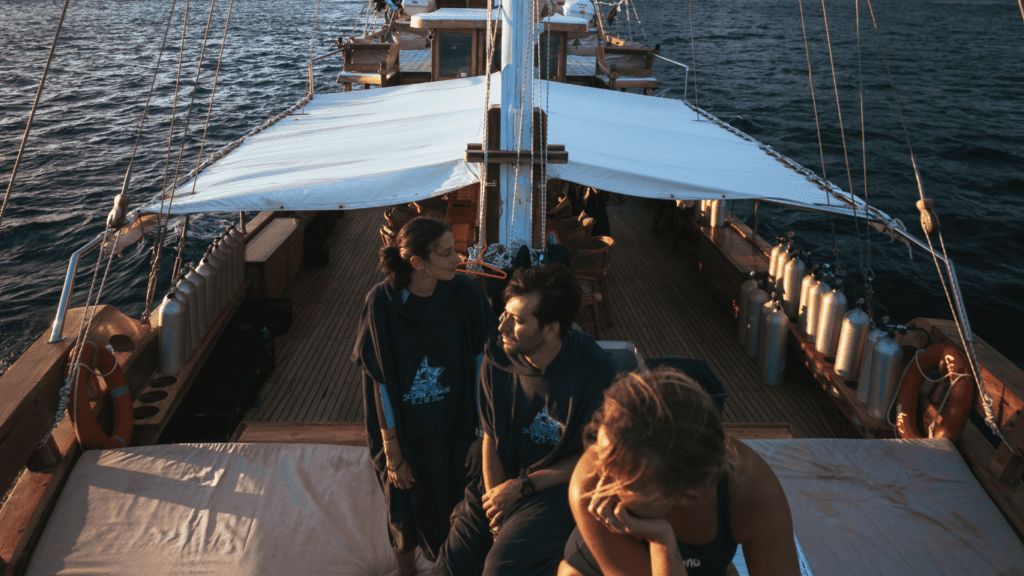
If you’re dreaming of diving in Indonesia, it’s only a matter of time before the question comes up: is a Komodo liveaboard worth it?
We hear this all the time — and honestly, it’s a very fair question.
At Scuba Junkie Liveaboards, we’ve spent years diving, guiding, and living in these waters. Komodo is not just another destination for us — it’s one of those places that reminds you why you fell in love with diving in the first place.
So let’s break it down, honestly and simply.
Komodo National Park is one of the most dynamic dive destinations on the planet. Located in the heart of the Coral Triangle, its waters are rich in nutrients, shaped by strong currents, and full of life — from tiny critters to large pelagics.
What makes Komodo stand out:
This is not “same-same” diving. Every day feels different — and that’s part of the magic.
A Komodo liveaboard with Scuba Junkie Liveaboards means living on the ocean for several days, surrounded by incredible scenery and supported by a crew that genuinely loves what they do.
Instead of planning your day around boat transfers and schedules, your days naturally flow:
It’s immersive, unhurried, and deeply rewarding.
Land-based diving can be a great option — but Komodo is one of those destinations where liveaboards truly shine.
For us, the biggest difference is freedom — freedom to be in the right place at the right time.
Komodo is famous for its currents — and yes, they can be strong. But they’re also what bring the life.
At Scuba Junkie Liveaboards, we plan dives carefully:
Advanced certification is helpful, but not always essential. Many of our guests arrive with intermediate experience and leave feeling far more confident. We focus on good preparation, honest advice, and calm guidance — never pushing divers beyond what feels comfortable.
Being on a liveaboard means we can follow the conditions instead of fighting them. That’s when Komodo truly comes alive.
Regular sightings include:
Because we’re already there, we don’t rush encounters. We let them happen naturally — and that’s when they’re most special.
A Komodo liveaboard doesn’t have to feel flashy to feel special. The experience is about comfort that supports the adventure, not distracts from it.
On board, you’ll find:
It’s the kind of comfort that lets you fully enjoy what you came for: the diving.
A Komodo liveaboard is especially worth it if you:
Many of our guests tell us it’s their favourite dive trip — not because it’s extreme, but because it feels complete.
Liveaboards are an investment — but they include far more than just dives.
With Scuba Junkie Liveaboards, your trip covers:
When you consider the quality of diving, the comfort, and the depth of the experience, many divers find it’s not just worth it — it’s excellent value.
Absolutely. Many of our guests experience their first liveaboard with us in Komodo and quickly fall in love with the rhythm of life at sea.
Yes. Our guides are experienced in Komodo conditions and provide clear briefings, positioning, and support throughout every dive.
Typically 3–4 dives per day, depending on conditions and itinerary.
Not at all. We believe in relaxed, well-paced diving with plenty of time to rest and enjoy the experience.
Yes. While Komodo can be exciting, we always choose sites and conditions that suit the group.
Yes — fewer transfers, longer stays, and responsible practices help reduce impact.
From our perspective — and from the stories our guests share long after the trip ends — the answer is a clear yes.
A Komodo liveaboard with Scuba Junkie is about more than diving. It’s about slowing down, tuning in to the ocean, and experiencing one of the world’s most powerful marine environments in a way that feels natural, comfortable, and deeply rewarding.
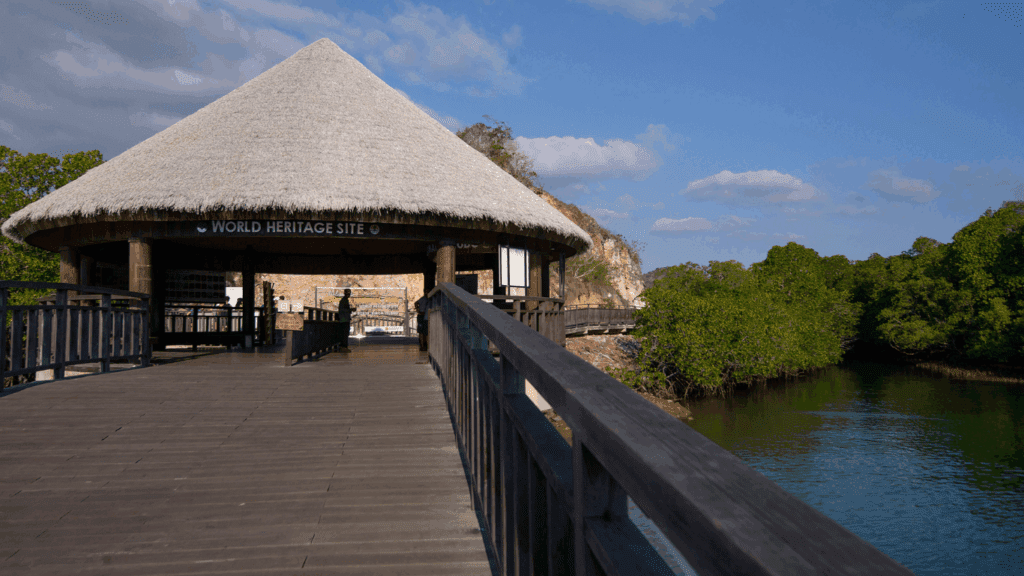
Rinca Island tour — One moment you’re stepping off the dinghy, feet hitting dry earth.
The next — you’re standing in Komodo dragon territory.
Welcome to Rinca Island, one of the wildest corners of Indonesia. Here, massive lizards roam free, deer graze near the trails, and palm-covered hills stretch toward the sea. It feels untouched. Untamed. And deeply alive.
And yes, you can visit.
One of the best parts of joining KLM Eliya is that your experience goes beyond diving. This isn’t just a marine park — it’s a land of dragons, and we’ll take you there.
Here’s everything you need to know about the Rinca Island Komodo tour — from what you’ll see, to how to prepare, and why it might just be the most unforgettable thing you do on land in Komodo.
Rinca (pronounced Rin-cha) is one of the three main islands of Komodo National Park, along with Komodo and Padar. It’s smaller than Komodo, but equally wild — and often less crowded.
It’s a haven for wildlife:
The dragons here are just as bold and majestic — and the trails take you through their natural habitat with the help of trained local rangers.
On your liveaboard trip with KLM Eliya, the crew will take you ashore using the dinghy. The ride is short but thrilling — especially knowing what’s waiting.
You’ll land at the ranger station near Loh Buaya, a protected zone and entry point for all visitors to Rinca.
After a short safety briefing, you’ll meet your park ranger, who will lead you on a guided trek through Komodo dragon territory.
There are a few different trek options for your Rinca Island Tour, ranging from short 30-minute loops to longer hikes. Your guide will recommend the route based on conditions and group interest.
Expect:
It’s not a zoo. There are no fences. This is the real deal.
Komodo dragons roam freely, and while sightings are never guaranteed, your guides know where to look.
Your ranger isn’t just there for safety — though yes, they carry long wooden sticks and are expertly trained in dragon behavior.
They’re also:
You’re not just walking through nature on you Rinca Island Tour — you’re learning from the people who live alongside it.
Midway through the trek, there’s a gentle uphill climb that leads to a hilltop viewpoint — where you’ll see the bay, the ranger station rooftops, and the vast, golden savannah stretching into the horizon.
It’s a spot to breathe, take it all in, and snap a few “I walked with dragons” shots for your feed.
Bring a hat and water — and your best wide-angle smile.
Capturing a Komodo dragon in the wild is one of those bucket list moments.
Some quick tips:
And don’t forget to tag us @scubajunkieliveaboards if you post your dragon shot. We’d love to share it!
🦎 Tour Price: $35 USD per person
Includes ranger fee, park access, and the full guided experience
Offered once during the trip (weather and logistics permitting)
While the tour is optional, we highly recommend it. It’s a rare chance to step off the boat and explore one of the most remote and legendary islands in the world.
Some guests choose to relax onboard, which is totally fine — but for those craving a bit of Jurassic Park energy… this is your moment.
There aren’t many places in the world where you can dive with manta rays in the morning, then walk with dragons in the afternoon.
The Rinca Island Komodo tour is the kind of experience that sticks with you — not because it’s loud or flashy, but because it’s real. You’re standing in a place where nature still rules, where evolution left behind a living relic, and where ancient reptiles still roam wild.
It’s raw. It’s beautiful. And it’s just one more reason why Komodo is like nowhere else.
Have you seen a Komodo dragon in the wild? Would you join the Rinca trek — or watch from the boat?
Drop your thoughts in the comments — we’d love to hear them!
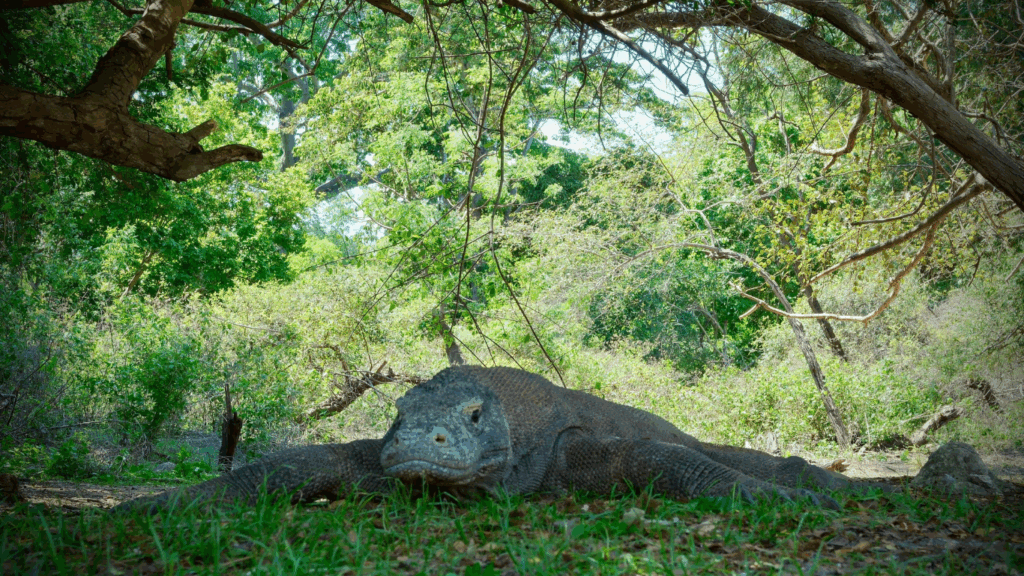
Komodo Dragons – One of the most magical things about joining KLM Eliya is that your adventure doesn’t end underwater.
Yes, you’ll dive with manta rays, drift over coral gardens, and explore remote islands — but you’ll also walk among living dinosaurs.
This isn’t a fantasy. Here is the home of the largest lizard on Earth: the Komodo dragon.
They’re ancient, powerful, and oddly graceful in their own wild way. On land, under the tropical sun, in a national park shared with deer, monkeys, and water buffalo — you may spot one just meters away, basking or slowly stalking across your path.
These creatures are one of the rarest wildlife experiences in the world — and here are 10 wild facts that prove it.
The Komodo dragon (Varanus komodoensis) is the largest living lizard on the planet, growing up to 3 meters long and weighing over 90 kg.
They’re ancient too — part of a lineage that dates back millions of years. Although not direct descendants of dinosaurs, they’re one of the closest, living reptilian links to that era.
They have armored skin, serrated teeth, powerful claws, and a presence that truly feels prehistoric.
While local communities had known of these dragons for generations (and even feared them in folklore), the Western world only discovered them in 1910, when Dutch colonial officers in Flores heard rumors of a giant lizard on Komodo Island.
One year later, Lieutenant van Steyn van Hensbroek led an expedition and sent a photo and report back to the Netherlands — and the legend was born.
Despite their slow, lumbering appearance, Komodo dragons are surprisingly agile. They can run up to 20 km/h in short bursts, and they’re known for ambushing prey with deadly speed.
They eat:
Once they bite, their victim rarely escapes. Komodos have sharp teeth, strong jaws, and a mildly venomous bite that causes rapid blood loss and shock.
Yes — it’s true. Komodo dragons are one of the few vertebrates capable of parthenogenesis, meaning females can lay fertile eggs without mating.
This happens when no males are available, allowing the species to survive even in isolation. It’s rare and remarkable — and a true example of evolutionary survival strategy.
They usually lay around 20 eggs, which incubate for 7–8 months before hatching.
Once hatched, young Komodo dragons immediately climb trees to avoid being eaten — yes, by other dragons. They spend their early life in the canopy, eating insects, lizards, and small birds, until they’re big enough to survive on the ground.
Komodo dragons only live on five islands in the world:
It’s believed that Komodo dragons once roamed a much larger area of Indonesia and Australia. Over time, due to rising sea levels and habitat changes, their range shrank — isolating them on a handful of islands in the Lesser Sundas.
Here, they survived as apex predators — without natural enemies and with just enough prey.
Yes. They are currently listed as Endangered on the IUCN Red List.
Their main threats include:
Komodo National Park was created in 1980 to protect these animals, and today it is a UNESCO World Heritage Site and a model for conservation in Southeast Asia.
Komodo dragons play an important role in the ecosystem. As apex predators, they help regulate the populations of other animals — like deer and monkeys — maintaining a balanced environment.
Their survival is linked to the survival of the whole island ecosystem. Protecting them means protecting all the life that depends on this unique environment.
With Scuba Junkie Liveaboards, we offer an optional land tour to see the dragons during your trip.
You’ll hop into the dinghy with your group and land at the edge of the Komodo National Park. A local ranger, trained by the park, will lead your group through dragon territory — sharing stories, pointing out wildlife, and yes, helping you get that perfect dragon photo (they’re great photographers, trust us).
Tour prices vary based on group size, with local park guides shared at a 1 guide per 5 guest ratio. On average, guests contribute around 50,000 IDR per person. Your crew will organize everything for you.
This tour is optional and weather/conditions permitting
Diving may be what brings you to Komodo. But it’s the dragons that leave you speechless on land.
Komodo dragons are not just wild animals — they are living time capsules. Fierce, fragile, and completely unique to this part of the world.
If you’ve never seen one in the wild, the time is now.
Tell us in the comments — would you join the Rinca trek, or wait on the boat? Have you ever seen one before?
Let’s talk dragons.

Komodo coral health is the quiet magic beneath every manta pass and shark patrol. Yes, big encounters steal the show—but none of it happens without living reef. Coral is the stage that holds the story together: the color, the food, the shelter. In Komodo, that stage is still vibrant in many areas, and with smart choices from managers, locals, and visitors, it can stay that way.
Corals are colonies of tiny animals (polyps) that build limestone skeletons, creating cities for ocean life. Healthy reefs feed fisheries, protect coasts, power tourism, and anchor biodiversity across the Coral Triangle—the world’s richest marine region that includes Indonesia, where Komodo sits. UNESCO’s site profile highlights how Komodo’s reefs are “diverse and luxuriant,” shaped by clear waters and rapid exchange of nutrient-rich currents between ocean basins, a big part of today’s Komodo coral health story. UNESCO World heritage
Komodo lies between the Pacific and Indian Oceans. The Indonesian Throughflow funnels water through deep basins and narrow straits; seasonal upwelling boosts nutrients, naturally supporting robust reef life and plankton blooms. This dynamic oceanography—north–south monsoon shifts, tidal mixing—creates conditions that benefit reef growth and productivity and help sustain megafauna too.
Overall, Komodo coral health remains good in many zones of the park. Historical monitoring inside KNP showed reef recovery after destructive fishing was curbed, with live coral cover increasing inside the park in the late 1990s–early 2000s—an early sign that protection works. ResearchGate At a broader scale, IUCN notes the site’s outstanding marine biodiversity while also flagging future climate-related risks—so “healthy” here means “strong but not invulnerable.”
Globally, NOAA confirmed the fourth mass coral bleaching event on record in 2023–2024, with heat stress affecting reefs worldwide (including parts of Indonesia). News coverage from mid-2024 also documented severe bleaching in Bali. These reports don’t mean Komodo’s reefs are failing; they remind us that climate stress is widespread and periodic events can touch many Indonesian regions. Keeping Komodo coral health resilient means staying vigilant through anomalously warm seasons.
Komodo National Park uses zoning (core, marine protection, and use zones) to balance conservation and traditional livelihoods. Responsible-use guidance and rules for marine tourism are part of everyday practice. Park literature outlines no-take areas and limits on extractive activities, which underpin Komodo coral health today.
Marine tourism management has also stepped up: after years of rapid growth, KNP introduced limits at sensitive manta/reef sites (e.g., September 2019 restrictions on boat and diver numbers at Karang Makassar), improving in-water etiquette and reducing crowd pressure—good for manta behavior and the nearby reef matrix.
And there’s hopeful national momentum: in 2024 the U.S.–Indonesia debt-for-nature swap dedicated funding to coral conservation in the Lesser Sunda–Banda Seascape (Komodo’s wider region), a positive signal for long-term Komodo coral health and restoration readiness.
Scuba Junkie Liveaboards contributes environmental and wildlife sightings to Indonesian researchers; long-term manta work in Komodo has relied heavily on dive-community citizen science—evidence that tourism can strengthen monitoring when done right.
Even with strong fundamentals, reefs are sensitive. Key risks include:
We’re careful to keep this in perspective: these are manageable when everyone plays their part—park teams, operators, and divers.
Komodo’s dive tourism brings visibility, funding, and real-time eyes on the reef. Codes of conduct, staggered entries (the “20-minute rule”), controlled group sizes, and buoyancy training reduce accidental coral contact and keep animal encounters calmer. That collaboration between managers and operators is a big reason Komodo coral health remains strong.
Start where you are—small choices add up:
What did Komodo coral health look like when you dived here—pristine gardens, recovering patches, a favourite coral species? Share your experience (and tips) in the comments so future guests know how to dive gentler and see more.