
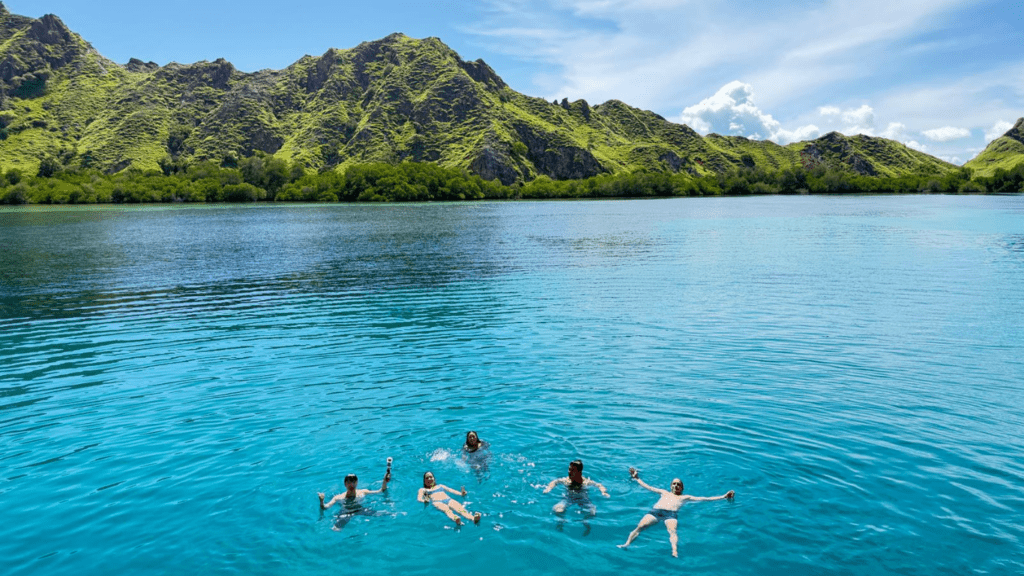
Komodo National Park visitor quota regulations will soon change how travelers visit one of the most extraordinary marine parks in the world. Starting in April 2026, the Indonesian government will introduce a new quota system limiting how many visitors can enter the park each day.
The goal behind this new regulation is clear: protect Komodo’s fragile ecosystem while maintaining sustainable tourism.
But the decision also raises an interesting question for divers, travelers, and conservationists:
Is limiting the number of visitors (carrying capacity) the best way to protect Komodo National Park?
Or could tourism itself play a bigger role in supporting conservation?
To understand the debate, it helps to look at what the new Komodo National Park visitor quota actually means.
The new Komodo National Park visitor quota will limit the number of people entering the park to 365,000 per year — or split daily — 1,000 visitors per day.
Currently, the average daily visitors is at 1,600, which meant that certain popular areas sometimes experienced significant visitor pressure. However, this 1,600 is not made up of a homogeneous group. These visitors are segmented into a few segments: cruise ship day visitors, independent land tourists, day trip divers, and liveaboard guests.
By reducing the daily limit, park authorities hope to better manage tourism and protect the natural environment that makes Komodo so unique.
Komodo National Park is globally famous for its extraordinary biodiversity. Located in the heart of the Coral Triangle, it is home to vibrant coral reefs, manta rays, sharks, turtles, and thousands of reef species.
It is also the only place on Earth where visitors can see the legendary Komodo dragons in their natural habitat.
Because of this incredible biodiversity, the park has been recognized as a UNESCO World Heritage Site by the UNESCO.
The permits required under the Komodo National Park visitor quota apply to all visitors entering the park, not only divers.
This means the permit includes:
• Diving activities within the marine park
• Snorkeling and boat visits
• Land excursions to islands such as Komodo, Padar and Rinca
• Wildlife viewing, including Komodo dragon treks
For a typical 6-day diving liveaboard itinerary, the park permit costs approximately:
IDR 1,650,000 per person
(IDR 275,000 per day)
These permits help fund conservation programs, ranger patrols, park management, and environmental protection.
If visitors plan to fly a drone while exploring the park, an additional permit is required.
The current drone permit fee is approximately:
IDR 2,000,000 per drone per day
Because permits are issued for specific travel dates under the Komodo National Park visitor quota, they now need to be arranged well in advance.
Supporters of the Komodo National Park visitor quota believe limiting visitor numbers is an important step toward protecting the park’s ecosystems.
Marine environments can be extremely sensitive to human activity. Large numbers of visitors can increase pressure on coral reefs, wildlife habitats, and popular dive sites.
By reducing the number of visitors entering the park each day, authorities hope to:
• Reduce overcrowding at popular locations
• Minimize environmental impact
• Improve visitor safety
• Maintain the quality of the experience for travelers
Many protected natural destinations around the world have introduced similar systems to protect fragile ecosystems.
The Komodo National Park visitor quota may feel like a big change, but similar systems already exist in other famous dive destinations.
One example is the Galápagos Islands, where strict regulations control how many visitors can enter protected areas.
Closer to home for us, Sipadan Island in Malaysia operates under a permit system that limits how many divers can visit the island each day. Sipadan is also home to another Scuba Junkie location, and the permit system has helped protect its reefs and marine life for many years.
These examples show that visitor limits can be an effective tool when it comes to protecting world-class dive destinations.
While government quotas are a “top-down” approach, the local diving industry, spearheaded by the Dive Operators Collaboration Komodo (D.O.C.K.) and Gahawisri, has been developing its own “water-up” solutions. A prime example is the existing government-approved framework — the 20-minute rule.
To prevent congestion at popular sites like Batu Bolong, Crystal Rock, and Castle Rock, local operators have begun self-regulating by limiting group time at a site to 20-minute intervals. By coordinating boat movements and diver flow, the industry is proving it can manage “carrying capacity” on its own.
Furthermore, many operators in the region have adopted the Green Fins Code of Conduct, including Scuba Junkie. By following these global environmental guidelines, the industry has shown that it can significantly reduce its environmental footprint. It suggests a powerful alternative: perhaps the focus shouldn’t just be on how many people visit, but on how they behave. Stricter underwater conduct and better diver education can protect the reef just as effectively as a quota.
This raises a key debate: If the industry can effectively self-manage through smarter site coordination, is a strict government-mandated cap on visitors truly necessary, or does it risk unnecessarily limiting access to the park?
While many conservationists support the Komodo National Park visitor quota, the topic still raises an interesting discussion.
Tourism is often the biggest driver for conservation.
Dive tourism generates important funding for local communities, marine protection programs, and environmental research. Visitors who experience places like Komodo often become passionate advocates for protecting the ocean.
This raises an important question:
If fewer people are able to visit, could that also reduce awareness and funding for conservation?
There no simple answer. Protecting precious ecosystems while allowing people to experience them is always a delicate balance.
What matters most is ensuring tourism remains sustainable, and supportive of conservation while protecting the livelihoods of local communities who depend on a healthy environment.
With the Komodo National Park visitor quota taking a more concrete effect in April 2026, planning ahead will become more important for visitors.
Because permits are limited and issued for specific dates, securing them early will help ensure your itinerary runs smoothly.
If you are planning a trip with Scuba Junkie Liveaboards or staying at Scuba Junkie Komodo Beach Resort, our booking team can help arrange the required permits and guide you through the process.
Our goal is to make the experience as seamless as possible so you can focus on enjoying your time exploring Komodo’s incredible underwater world.
The Komodo National Park visitor quota reflects a growing global conversation about how we protect the natural places we love to explore.
Limiting visitor numbers may help reduce environmental pressure. But tourism can also support conservation, education, and local livelihoods.
So the question remains:
Is restricting access the best way to protect Komodo National Park?
Or should the focus be more on sustainable tourism and environmental education?
We would love to hear your thoughts.
Have you ever dived in Komodo?
Do you think visitor limits help protect marine ecosystems?
Share your perspective in the comments.
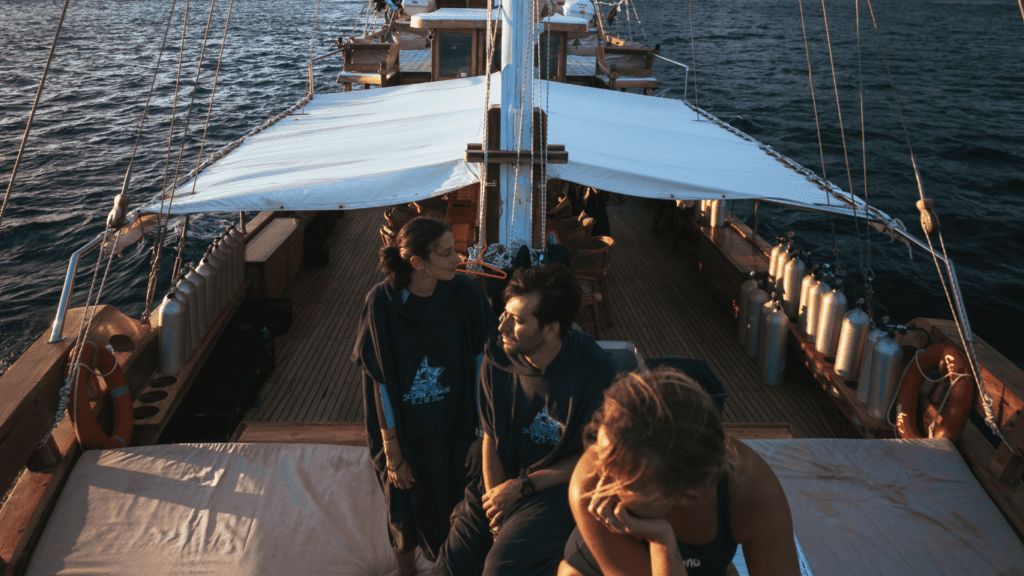
If you’re dreaming of diving in Indonesia, it’s only a matter of time before the question comes up: is a Komodo liveaboard worth it?
We hear this all the time — and honestly, it’s a very fair question.
At Scuba Junkie Liveaboards, we’ve spent years diving, guiding, and living in these waters. Komodo is not just another destination for us — it’s one of those places that reminds you why you fell in love with diving in the first place.
So let’s break it down, honestly and simply.
Komodo National Park is one of the most dynamic dive destinations on the planet. Located in the heart of the Coral Triangle, its waters are rich in nutrients, shaped by strong currents, and full of life — from tiny critters to large pelagics.
What makes Komodo stand out:
This is not “same-same” diving. Every day feels different — and that’s part of the magic.
A Komodo liveaboard with Scuba Junkie Liveaboards means living on the ocean for several days, surrounded by incredible scenery and supported by a crew that genuinely loves what they do.
Instead of planning your day around boat transfers and schedules, your days naturally flow:
It’s immersive, unhurried, and deeply rewarding.
Land-based diving can be a great option — but Komodo is one of those destinations where liveaboards truly shine.
For us, the biggest difference is freedom — freedom to be in the right place at the right time.
Komodo is famous for its currents — and yes, they can be strong. But they’re also what bring the life.
At Scuba Junkie Liveaboards, we plan dives carefully:
Advanced certification is helpful, but not always essential. Many of our guests arrive with intermediate experience and leave feeling far more confident. We focus on good preparation, honest advice, and calm guidance — never pushing divers beyond what feels comfortable.
Being on a liveaboard means we can follow the conditions instead of fighting them. That’s when Komodo truly comes alive.
Regular sightings include:
Because we’re already there, we don’t rush encounters. We let them happen naturally — and that’s when they’re most special.
A Komodo liveaboard doesn’t have to feel flashy to feel special. The experience is about comfort that supports the adventure, not distracts from it.
On board, you’ll find:
It’s the kind of comfort that lets you fully enjoy what you came for: the diving.
A Komodo liveaboard is especially worth it if you:
Many of our guests tell us it’s their favourite dive trip — not because it’s extreme, but because it feels complete.
Liveaboards are an investment — but they include far more than just dives.
With Scuba Junkie Liveaboards, your trip covers:
When you consider the quality of diving, the comfort, and the depth of the experience, many divers find it’s not just worth it — it’s excellent value.
Absolutely. Many of our guests experience their first liveaboard with us in Komodo and quickly fall in love with the rhythm of life at sea.
Yes. Our guides are experienced in Komodo conditions and provide clear briefings, positioning, and support throughout every dive.
Typically 3–4 dives per day, depending on conditions and itinerary.
Not at all. We believe in relaxed, well-paced diving with plenty of time to rest and enjoy the experience.
Yes. While Komodo can be exciting, we always choose sites and conditions that suit the group.
Yes — fewer transfers, longer stays, and responsible practices help reduce impact.
From our perspective — and from the stories our guests share long after the trip ends — the answer is a clear yes.
A Komodo liveaboard with Scuba Junkie is about more than diving. It’s about slowing down, tuning in to the ocean, and experiencing one of the world’s most powerful marine environments in a way that feels natural, comfortable, and deeply rewarding.
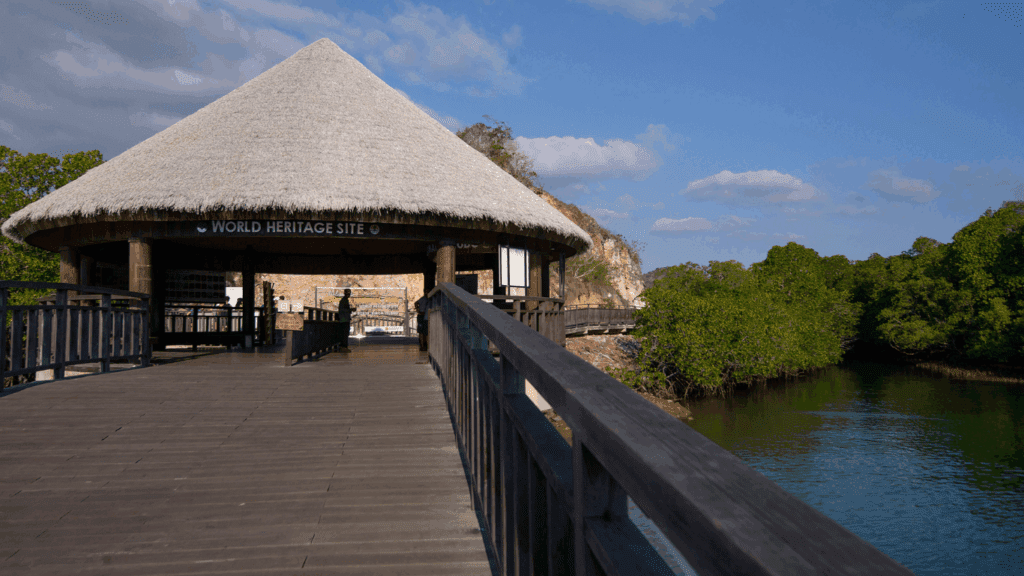
Rinca Island tour — One moment you’re stepping off the dinghy, feet hitting dry earth.
The next — you’re standing in Komodo dragon territory.
Welcome to Rinca Island, one of the wildest corners of Indonesia. Here, massive lizards roam free, deer graze near the trails, and palm-covered hills stretch toward the sea. It feels untouched. Untamed. And deeply alive.
And yes, you can visit.
One of the best parts of joining KLM Eliya is that your experience goes beyond diving. This isn’t just a marine park — it’s a land of dragons, and we’ll take you there.
Here’s everything you need to know about the Rinca Island Komodo tour — from what you’ll see, to how to prepare, and why it might just be the most unforgettable thing you do on land in Komodo.
Rinca (pronounced Rin-cha) is one of the three main islands of Komodo National Park, along with Komodo and Padar. It’s smaller than Komodo, but equally wild — and often less crowded.
It’s a haven for wildlife:
The dragons here are just as bold and majestic — and the trails take you through their natural habitat with the help of trained local rangers.
On your liveaboard trip with KLM Eliya, the crew will take you ashore using the dinghy. The ride is short but thrilling — especially knowing what’s waiting.
You’ll land at the ranger station near Loh Buaya, a protected zone and entry point for all visitors to Rinca.
After a short safety briefing, you’ll meet your park ranger, who will lead you on a guided trek through Komodo dragon territory.
There are a few different trek options for your Rinca Island Tour, ranging from short 30-minute loops to longer hikes. Your guide will recommend the route based on conditions and group interest.
Expect:
It’s not a zoo. There are no fences. This is the real deal.
Komodo dragons roam freely, and while sightings are never guaranteed, your guides know where to look.
Your ranger isn’t just there for safety — though yes, they carry long wooden sticks and are expertly trained in dragon behavior.
They’re also:
You’re not just walking through nature on you Rinca Island Tour — you’re learning from the people who live alongside it.
Midway through the trek, there’s a gentle uphill climb that leads to a hilltop viewpoint — where you’ll see the bay, the ranger station rooftops, and the vast, golden savannah stretching into the horizon.
It’s a spot to breathe, take it all in, and snap a few “I walked with dragons” shots for your feed.
Bring a hat and water — and your best wide-angle smile.
Capturing a Komodo dragon in the wild is one of those bucket list moments.
Some quick tips:
And don’t forget to tag us @scubajunkieliveaboards if you post your dragon shot. We’d love to share it!
🦎 Tour Price: $35 USD per person
Includes ranger fee, park access, and the full guided experience
Offered once during the trip (weather and logistics permitting)
While the tour is optional, we highly recommend it. It’s a rare chance to step off the boat and explore one of the most remote and legendary islands in the world.
Some guests choose to relax onboard, which is totally fine — but for those craving a bit of Jurassic Park energy… this is your moment.
There aren’t many places in the world where you can dive with manta rays in the morning, then walk with dragons in the afternoon.
The Rinca Island Komodo tour is the kind of experience that sticks with you — not because it’s loud or flashy, but because it’s real. You’re standing in a place where nature still rules, where evolution left behind a living relic, and where ancient reptiles still roam wild.
It’s raw. It’s beautiful. And it’s just one more reason why Komodo is like nowhere else.
Have you seen a Komodo dragon in the wild? Would you join the Rinca trek — or watch from the boat?
Drop your thoughts in the comments — we’d love to hear them!
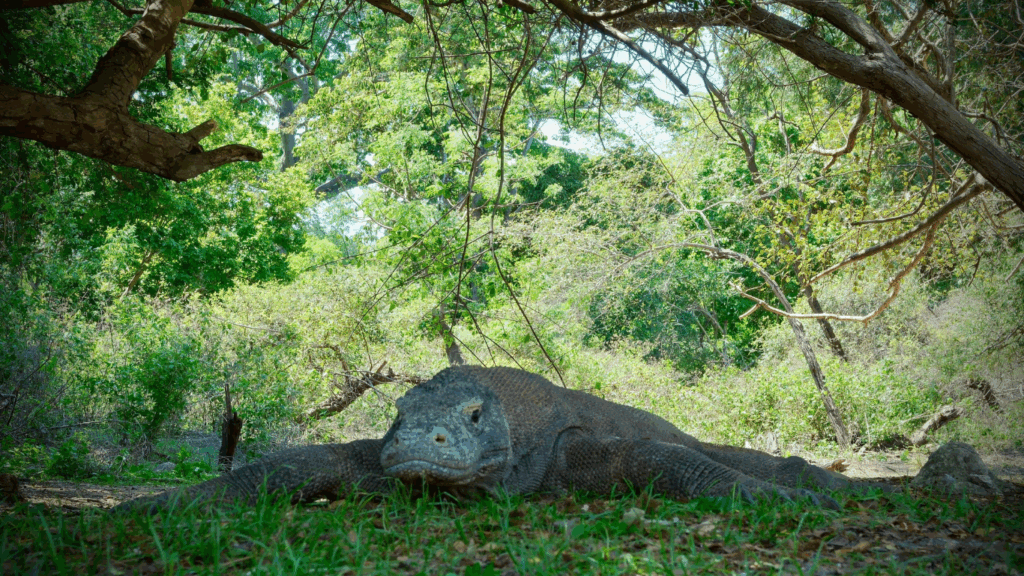
Komodo Dragons – One of the most magical things about joining KLM Eliya is that your adventure doesn’t end underwater.
Yes, you’ll dive with manta rays, drift over coral gardens, and explore remote islands — but you’ll also walk among living dinosaurs.
This isn’t a fantasy. Here is the home of the largest lizard on Earth: the Komodo dragon.
They’re ancient, powerful, and oddly graceful in their own wild way. On land, under the tropical sun, in a national park shared with deer, monkeys, and water buffalo — you may spot one just meters away, basking or slowly stalking across your path.
These creatures are one of the rarest wildlife experiences in the world — and here are 10 wild facts that prove it.
The Komodo dragon (Varanus komodoensis) is the largest living lizard on the planet, growing up to 3 meters long and weighing over 90 kg.
They’re ancient too — part of a lineage that dates back millions of years. Although not direct descendants of dinosaurs, they’re one of the closest, living reptilian links to that era.
They have armored skin, serrated teeth, powerful claws, and a presence that truly feels prehistoric.
While local communities had known of these dragons for generations (and even feared them in folklore), the Western world only discovered them in 1910, when Dutch colonial officers in Flores heard rumors of a giant lizard on Komodo Island.
One year later, Lieutenant van Steyn van Hensbroek led an expedition and sent a photo and report back to the Netherlands — and the legend was born.
Despite their slow, lumbering appearance, Komodo dragons are surprisingly agile. They can run up to 20 km/h in short bursts, and they’re known for ambushing prey with deadly speed.
They eat:
Once they bite, their victim rarely escapes. Komodos have sharp teeth, strong jaws, and a mildly venomous bite that causes rapid blood loss and shock.
Yes — it’s true. Komodo dragons are one of the few vertebrates capable of parthenogenesis, meaning females can lay fertile eggs without mating.
This happens when no males are available, allowing the species to survive even in isolation. It’s rare and remarkable — and a true example of evolutionary survival strategy.
They usually lay around 20 eggs, which incubate for 7–8 months before hatching.
Once hatched, young Komodo dragons immediately climb trees to avoid being eaten — yes, by other dragons. They spend their early life in the canopy, eating insects, lizards, and small birds, until they’re big enough to survive on the ground.
Komodo dragons only live on five islands in the world:
It’s believed that Komodo dragons once roamed a much larger area of Indonesia and Australia. Over time, due to rising sea levels and habitat changes, their range shrank — isolating them on a handful of islands in the Lesser Sundas.
Here, they survived as apex predators — without natural enemies and with just enough prey.
Yes. They are currently listed as Endangered on the IUCN Red List.
Their main threats include:
Komodo National Park was created in 1980 to protect these animals, and today it is a UNESCO World Heritage Site and a model for conservation in Southeast Asia.
Komodo dragons play an important role in the ecosystem. As apex predators, they help regulate the populations of other animals — like deer and monkeys — maintaining a balanced environment.
Their survival is linked to the survival of the whole island ecosystem. Protecting them means protecting all the life that depends on this unique environment.
With Scuba Junkie Liveaboards, we offer an optional land tour to see the dragons during your trip.
You’ll hop into the dinghy with your group and land at the edge of the Komodo National Park. A local ranger, trained by the park, will lead your group through dragon territory — sharing stories, pointing out wildlife, and yes, helping you get that perfect dragon photo (they’re great photographers, trust us).
Tour prices vary based on group size, with local park guides shared at a 1 guide per 5 guest ratio. On average, guests contribute around 50,000 IDR per person. Your crew will organize everything for you.
This tour is optional and weather/conditions permitting
Diving may be what brings you to Komodo. But it’s the dragons that leave you speechless on land.
Komodo dragons are not just wild animals — they are living time capsules. Fierce, fragile, and completely unique to this part of the world.
If you’ve never seen one in the wild, the time is now.
Tell us in the comments — would you join the Rinca trek, or wait on the boat? Have you ever seen one before?
Let’s talk dragons.

Komodo coral health is the quiet magic beneath every manta pass and shark patrol. Yes, big encounters steal the show—but none of it happens without living reef. Coral is the stage that holds the story together: the color, the food, the shelter. In Komodo, that stage is still vibrant in many areas, and with smart choices from managers, locals, and visitors, it can stay that way.
Corals are colonies of tiny animals (polyps) that build limestone skeletons, creating cities for ocean life. Healthy reefs feed fisheries, protect coasts, power tourism, and anchor biodiversity across the Coral Triangle—the world’s richest marine region that includes Indonesia, where Komodo sits. UNESCO’s site profile highlights how Komodo’s reefs are “diverse and luxuriant,” shaped by clear waters and rapid exchange of nutrient-rich currents between ocean basins, a big part of today’s Komodo coral health story. UNESCO World heritage
Komodo lies between the Pacific and Indian Oceans. The Indonesian Throughflow funnels water through deep basins and narrow straits; seasonal upwelling boosts nutrients, naturally supporting robust reef life and plankton blooms. This dynamic oceanography—north–south monsoon shifts, tidal mixing—creates conditions that benefit reef growth and productivity and help sustain megafauna too.
Overall, Komodo coral health remains good in many zones of the park. Historical monitoring inside KNP showed reef recovery after destructive fishing was curbed, with live coral cover increasing inside the park in the late 1990s–early 2000s—an early sign that protection works. ResearchGate At a broader scale, IUCN notes the site’s outstanding marine biodiversity while also flagging future climate-related risks—so “healthy” here means “strong but not invulnerable.”
Globally, NOAA confirmed the fourth mass coral bleaching event on record in 2023–2024, with heat stress affecting reefs worldwide (including parts of Indonesia). News coverage from mid-2024 also documented severe bleaching in Bali. These reports don’t mean Komodo’s reefs are failing; they remind us that climate stress is widespread and periodic events can touch many Indonesian regions. Keeping Komodo coral health resilient means staying vigilant through anomalously warm seasons.
Komodo National Park uses zoning (core, marine protection, and use zones) to balance conservation and traditional livelihoods. Responsible-use guidance and rules for marine tourism are part of everyday practice. Park literature outlines no-take areas and limits on extractive activities, which underpin Komodo coral health today.
Marine tourism management has also stepped up: after years of rapid growth, KNP introduced limits at sensitive manta/reef sites (e.g., September 2019 restrictions on boat and diver numbers at Karang Makassar), improving in-water etiquette and reducing crowd pressure—good for manta behavior and the nearby reef matrix.
And there’s hopeful national momentum: in 2024 the U.S.–Indonesia debt-for-nature swap dedicated funding to coral conservation in the Lesser Sunda–Banda Seascape (Komodo’s wider region), a positive signal for long-term Komodo coral health and restoration readiness.
Scuba Junkie Liveaboards contributes environmental and wildlife sightings to Indonesian researchers; long-term manta work in Komodo has relied heavily on dive-community citizen science—evidence that tourism can strengthen monitoring when done right.
Even with strong fundamentals, reefs are sensitive. Key risks include:
We’re careful to keep this in perspective: these are manageable when everyone plays their part—park teams, operators, and divers.
Komodo’s dive tourism brings visibility, funding, and real-time eyes on the reef. Codes of conduct, staggered entries (the “20-minute rule”), controlled group sizes, and buoyancy training reduce accidental coral contact and keep animal encounters calmer. That collaboration between managers and operators is a big reason Komodo coral health remains strong.
Start where you are—small choices add up:
What did Komodo coral health look like when you dived here—pristine gardens, recovering patches, a favourite coral species? Share your experience (and tips) in the comments so future guests know how to dive gentler and see more.
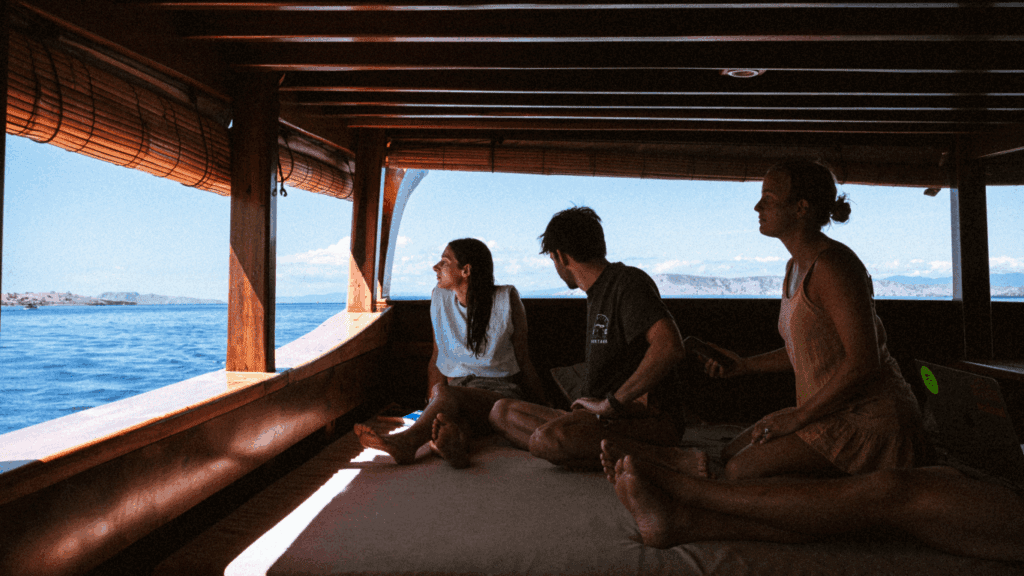
From her first crossing through Komodo’s wild currents to charting Raja Ampat’s paradise, KLM Eliya has always carried a spirit of exploration. Now, she’s growing — setting her sails into deeper seas, volcanic landscapes, and some of the most pristine coral ecosystems on Earth.
This is the next chapter. This is the KLM Eliya Banda Sea.
The Banda Sea is more than just remote — it’s legendary.
Part of the Coral Triangle and located between Raja Ampat, the Moluccas, and Flores, the Banda Sea is a place where marine biodiversity, deep-sea geology, and ancient island cultures collide. Here, seamounts rise from abyssal depths. Coral walls plunge vertically. And in the blue — hammerhead sharks, giant trevallies, and barracudas roam free.
For divers, the Banda Sea offers an unmatched combination of:
It’s unpredictable, thrilling, and humbling in all the best ways.
In 2027, KLM Eliya will sail two exclusive Banda Sea liveaboard trips:
Explore coral-rich reefs, volcanic seamounts, and drift dives between islands shaped by fire. From Raja’s kaleidoscopic corals to Alor’s critter-rich channels, this is the KLM Eliya Banda Sea voyage that starts it all.
Head home through Maumere, Pantar, and many other great dive sites. The journey ends in Komodo — where dragons and mantas await, welcoming Eliya back where her story began.
These routes only run twice per year, and are ideal for divers ready to go off the grid and into the wild.
Joining the KLM Eliya Banda Sea crossing isn’t just about the dives — it’s about everything in between.
This is an expedition in comfort — perfect for divers who want the thrill of adventure without giving up good coffee and warm towels.
This route is ideal for intermediate to experienced divers, especially those who:
The Banda Sea is still relatively untouched — but that’s changing.
As liveaboard popularity grows, the chance to experience it with this level of intimacy and remoteness becomes more rare. KLM Eliya Banda Sea expeditions are timed for the optimal season, before the trade winds shift and conditions become too rough.
This is your chance to be part of the first wave.
To dive where few have dived before — and return changed.
Eliya started in Komodo, carrying the spirit of Scuba Junkie across waters filled with dragons, manta rays, and endless reef. Next year she’s venturing to Raja Ampat — becoming a part of one of the richest marine ecosystems on Earth.
With this new adventure, KLM Eliya Banda Sea routes complete the arc — bridging east and west, past and present.
This is not just a new itinerary.
It’s an expansion of everything we believe in: adventure, conservation, and the power of diving to connect people with the wild.
Komodo to Raja. Raja to Alor. Alor to Komodo.
The ocean is calling — and KLM Eliya is answering, one new route at a time.
If you’ve ever dreamed of crossing entire seas with your dive buddies, watching the sunrise on deck after a night of open-ocean travel, and discovering places where maps end — this is your moment.
Join us. KLM Eliya Banda Sea trips are waiting.
Tag your dive buddy and let us know in the comments👇
And stay tuned — bookings open next week. Spots will go fast.

Let’s be honest: liveaboards are incredible, but they can be tiering.
Four dives a day. Six days in a row. Surface intervals. Early wake-ups. Sunset dives. Repeat.
By the third or fourth day, even the most passionate divers start to feel it a mix of underwater bliss and fatigue. You’re diving some of the world’s best sites, but also giving your body (and your dive computer) plenty to keep up with.
So, that brings us to the question many divers ask themselves just before they click “book”:
Is the Nitrox upgrade worth it?
Let’s explore the science, the myths, the price tag — and the reality of diving with Nitrox on a liveaboard.
Nitrox (also known as Enriched Air Nitrox, or EANx) is a blend of air that has more oxygen and less nitrogen than regular compressed air.
Standard air = 21% oxygen / 79% nitrogen
Nitrox = 32% or 36% oxygen (most common blends)
By reducing nitrogen content, Nitrox slows down nitrogen absorption, allowing you to stay within your no-decompression limits (NDL) longer.
When you scuba dive, the pressure underwater causes nitrogen from your tank to dissolve naturally into your blood and tissues.
As you ascend and the pressure reduces, your body releases this nitrogen slowly through your lungs. However, if the ascent is too fast, or don’t follow your computer, this process can be disrupted. The nitrogen may form tiny bubbles, which can affect circulation or cause discomfort — a condition known as decompression sickness (DCS) or “the bends.”
It’s not something to fear — just something to understand and manage. Diving conservatively, taking safety stops, and staying within your limits (and your guide’s) keeps your risk extremely low.
NDL stands for No-Decompression Limit — the amount of time you can stay at a given depth without having to make mandatory decompression stops during your ascent.
When you reach your NDL on a dive, it’s time to ascend slowly and safely. Nitrox helps extend this limit at moderate depths by reducing the nitrogen you’re absorbing, giving you longer dive times and a greater safety buffer.
Even if you don’t dive to the longer limits, the reduced nitrogen gives you a greater margin of safety.
PADI – Things you should never do immediately after diving.
When used conservatively (diving below your maximum NDL), Nitrox can help reduce the nitrogen load across multiple dives — perfect for liveaboard-style diving.
There’s a widely held belief that Nitrox makes divers feel less tired — especially on long trips.
But here’s the catch: there’s no hard scientific evidence that Nitrox directly reduces post-dive fatigue. It’s a common anecdotal claim — one that may be influenced by:
Still, ask any group of divers after a long liveaboard, and chances are most Nitrox users will say, “Yeah, I felt better.”
So while it’s not a proven physiological effect, it’s a widely reported personal one.
Producing Nitrox requires:
All of this adds up for the dive operator — and that gets passed to the guest.
At Scuba Junkie Liveaboards, a full-trip Nitrox upgrade for Komodo costs $110 if pre-booked for our 6D5N trips, or $12 per dive onboard.
✔️ You’re doing multiple dives per day, especially over several days
✔️ You’re diving 18–30m frequently
✔️ You want to minimize nitrogen load for health or safety
✔️ You’re Nitrox-certified and want to dive to full NDLs safely
✔️ You just want that “extra edge” in how you feel after the dive
✘ You’re sticking to shallow depths only
✘ You’re diving just 1–2 times a day
✘ You’re on a tight budget
✘ You’re not Nitrox certified and don’t want to take the course now
✘ Your trip is short and includes mostly land-based or snorkel days
Most of the time — YES.
Especially on a liveaboard like KLM Eliya, where you’re diving 3–4 times a day over 6–7 days.
You’ll have more time within your no-deco limits, and that could mean:
It’s not about going deeper — it’s about making the most of each dive, safely and comfortably.
If you’re not already certified, no worries — you can complete the Nitrox Specialty during your liveaboard trip.
The course is quick and theory-based, with no mandatory dives. Our instructors onboard KLM Eliya will guide you through:
That means you can upgrade to Nitrox mid-trip and start enjoying the benefits right away.
Ask about it during booking.
Nitrox isn’t a miracle gas. But for many divers — especially on liveaboards — it’s a smart, simple way to dive longer and (maybe) feel better.
And let’s be honest — if you’re at Manta Alley, surrounded by gliding giants, mesmerized by the loops and spirals of their dance, and your dive computer starts flashing because you’re nearing your NDL… you’ll really wish you’d upgraded to Nitrox.
That extra margin of time might not seem like much on paper — but underwater, in moments like those, it means not having to choose between safety and staying a little longer in magic. It’s the difference between surfacing early or being the last one up, eyes wide, heart full.
Did it make a difference for you?
Would you recommend it to others on a liveaboard?
Drop your experience in the comments — let’s help other divers decide if the Nitrox upgrade is really worth it!
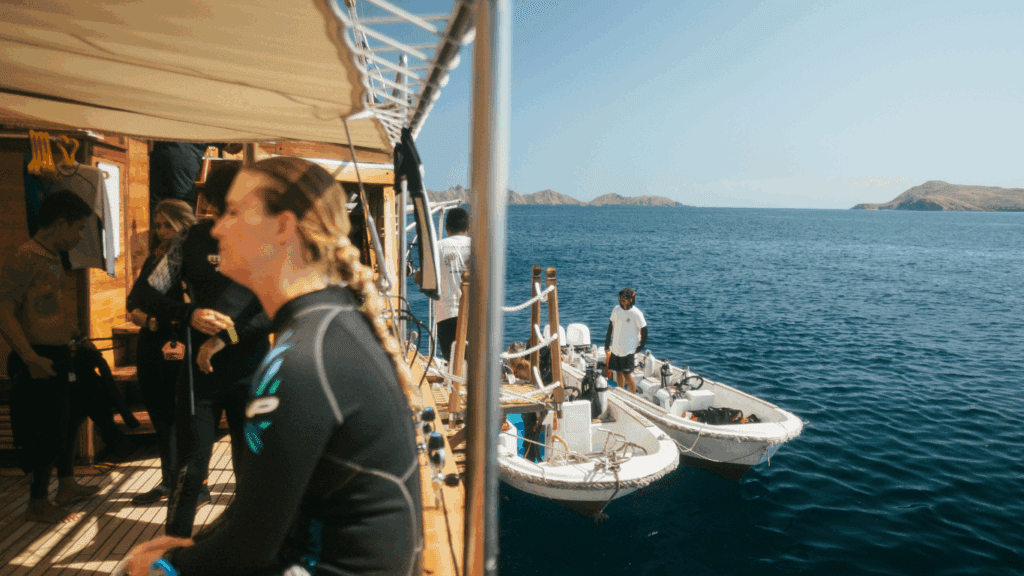
Liveaboard diving experience;
The sun rises gently over the jagged hills of Komodo, casting gold across calm waters. You’re already awake, barefoot, sipping espresso on the deck of a handcrafted Phinisi as the dive deck hums to life.
This isn’t a dream. It’s a liveaboard diving experience, and it might just change how you travel forever.
In this blog, we take you behind the scenes — through a full day aboard KLM Eliya — so you can feel exactly what it’s like to live, dive, and breathe the ocean from the comfort of your floating home.
A liveaboard is more than just a boat with beds. It’s a full immersion — into the sea, into the rhythm of nature, into slow mornings and salty hair and underwater wonder. You dive more, relax more, and connect more deeply with both the ocean and the people around you.
It’s about waking up at the dive site, not traveling there.
It’s about diving 3–4 times a day — and still having time to nap in the sun, explore remote islands, or laugh over dinner under the stars.
Most mornings start just before sunrise. The sea is glassy. Coffee is already brewing. You might hear the crew prepping tanks or the soft shuffle of other guests easing into the day.
No alarms. Just the natural rhythm of the ocean.
Tea, toast, fruit, or banana pancakes — enough to energize you for dive #1.
Your dive guide shares the plan for the morning: site name, marine life to watch for, currents, entry technique. Briefings are relaxed but detailed, and you can always ask questions.
Maybe it’s manta rays gliding through a cleaning station. Maybe it’s a slow drift past coral gardens. Maybe it’s sharks and schooling jacks. You never really know — that’s the beauty.
You surface, eyes wide, heart full.
Back onboard, you’re greeted with warm towels, ginger tea, and the smell of breakfast. Eggs, toast, rice porridge — you earned it.
After a surface interval lounging in the sun, it’s time for round two.
Sites are chosen based on conditions and guest preferences. KLM Eliya is flexible, and your input matters.
Between dives, there’s no rush.
Read a book. Chat with new friends. Lounge on the sun deck. Take a nap. The boat becomes your safe, floating retreat.
The crew keeps things running smoothly — gear is cleaned, tanks refilled, meals prepped.
You just breathe.
Our chef crafts local and international dishes, served alfresco. Think Indonesian curries, fresh vegetables, pasta, sambals, and warm chocolate cake for dessert.
Dietary preferences? No problem.
This dive might be a stunning reef wall, a vibrant coral slope, or a macro playground.
You return with stories — of ghost pipefish sightings, or a rare shark encounter — to share over tea and snacks.
One of the most magical moments: diving into the blue as the day fades. Watch the reef shift from day to night — octopus hunting, feather stars unfurling, bioluminescence dancing.
Not a fan of night dives? No worries — the sunset views from the deck are just as unforgettable.
Dinner is always a highlight. Guests gather to share dive stories, toast with cold beers or ginger tea, and sometimes even stargaze from beanbags on the upper deck.
No TV. No distractions. Just connection — to nature, to each other.
You head to your air-conditioned ensuite cabin, shower off the salt, and fall asleep to the gentle sway of the sea — knowing tomorrow brings more.
More adventure.
More life.
More memories.
The liveaboard diving experience isn’t about luxury for luxury’s sake. It’s about being present. Being immersed. Being free from the everyday distractions of life on land.
You eat well, sleep deeply, dive often, and connect to nature like never before. Whether you’re a seasoned diver or brand new, the transformation is the same: you leave changed.
Designed by divers, for divers, KLM Eliya blends the soul of traditional Phinisi craftsmanship with all the comforts of a boutique retreat.
With Komodo as your backyard and a handpicked team to take care of you, this is more than a dive trip. It’s a memory you’ll carry for life.
Tell us: what’s your favorite part of life at sea? Or if you’re still dreaming about it — what would your perfect dive day look like? Drop it in the comments 👇
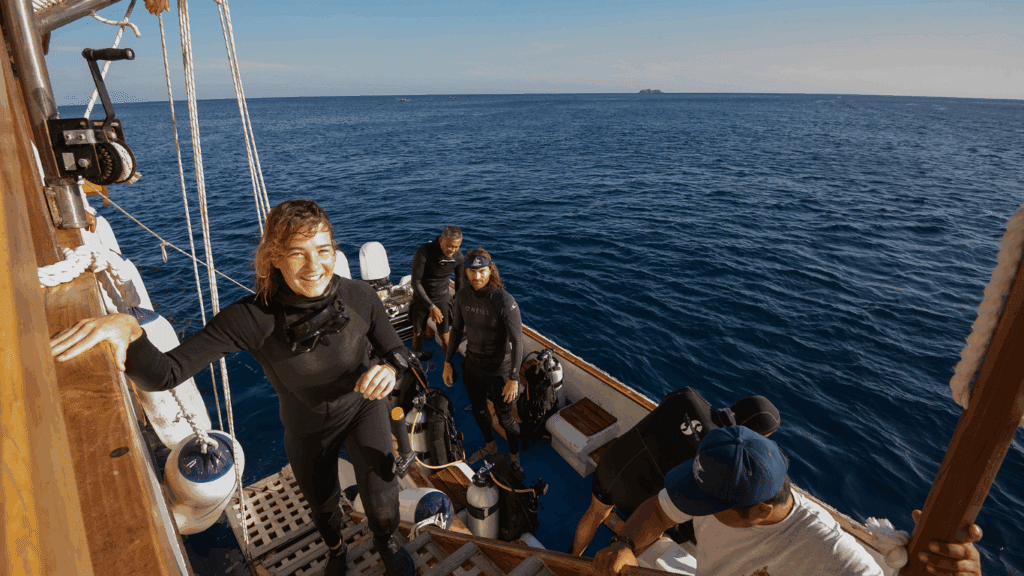
Komodo liveaboard for beginners may sound intimidating — but what if we told you that Komodo liveaboards are actually one of the best ways to ease into diving — even for beginners?
Especially when the boat is built to make you feel safe, supported, and inspired — like the KLM Eliya.
Whether you’ve just got your Open Water certification or you’re still hesitating to book your first diving holiday, this guide is here to show you why beginner divers not only can join a Komodo liveaboard, but why they should.
One of the most common fears on a liveaboard for beginners is: What if I’m the least experienced person onboard?
We get it. But aboard KLM Eliya, that’s never a problem. Our dive guides are trained professionals with years of experience in Komodo, and they’re passionate about sharing the ocean with everyone — no matter their certification level.
You’ll be briefed before every dive, supported in and out of the water, and always diving in small groups tailored to your experience. You’re never alone. We are a liveaboard for beginners friendly 😉
Haven’t dived in over a year? Still adjusting your buoyancy? No worries.
At Scuba Junkie, we offer free refresher sessions to help you feel 100% ready before the first dive. You’ll practice a few basic skills (like mask clearing or regulator recovery) and get comfortable with your gear before heading into the magical waters of Komodo.
We keep things chill, friendly, and designed to boost your confidence.
Komodo is known for strong currents — but that doesn’t mean every dive is a wild ride.
In fact, the park is home to a huge variety of sites, and our Cruise Director and guides choose daily dive sites based on conditions and your level. Calm bays, gentle slopes, and stunning coral gardens are always on the menu — especially in the south and central areas of the park.
One of the best things about liveaboard diving is the simplicity. You don’t need to carry tanks, rinse gear, or rush between hotels and dive shops. Everything is done for you.
On KLM Eliya, your gear is set up by our crew each morning, and rinsed after every dive. You wake up, walk a few steps, and plunge into paradise — no stress, no logistics.
From dive briefings to post-dive chats on deck, every moment on a liveaboard is an opportunity to learn.
By the end of your trip, you’ll feel more comfortable in the water, understand marine life behavior, learn how to read currents, and maybe even master your buoyancy like a pro. Think of it as an advanced diving workshop… disguised as a holiday.
Unlike some resorts where you may dive with dozens of people, KLM Eliya is intimate and personal, which is great for liveaboard beginners. We host a maximum of 14 guests and dive in small groups, which means more attention, better buddy support, and a sense of family.
Plus, with ensuite cabins, a dedicated chef, an espresso machine, and cozy decks to relax on — you’ll feel pampered every minute.
You’ll see manta rays, reef sharks, turtles, and coral gardens glowing with life. You’ll hike to viewpoints, spot Komodo dragons on Rinca Island, and sip coffee under a blanket of stars.
This is not just a diving trip — it’s a life experience. And once you’ve done it, you’ll realize: you didn’t need to be an expert to begin. You just needed the right boat, the right people, and a little courage.
Our handcrafted Phinisi-style boat was designed with divers in mind — and beginner divers especially love the little details:
The Komodo National Park can feel intimidating at first glance — but once you’re onboard KLM Eliya, you’ll feel at ease, supported, and excited.
Because every diver started as a beginner. And there’s no better place to fall in love with diving than Komodo.
Have you just completed your Open Water and wondering if Komodo is your next step? Ask us in the comments — we’d love to help you feel confident about your first liveaboard adventure!
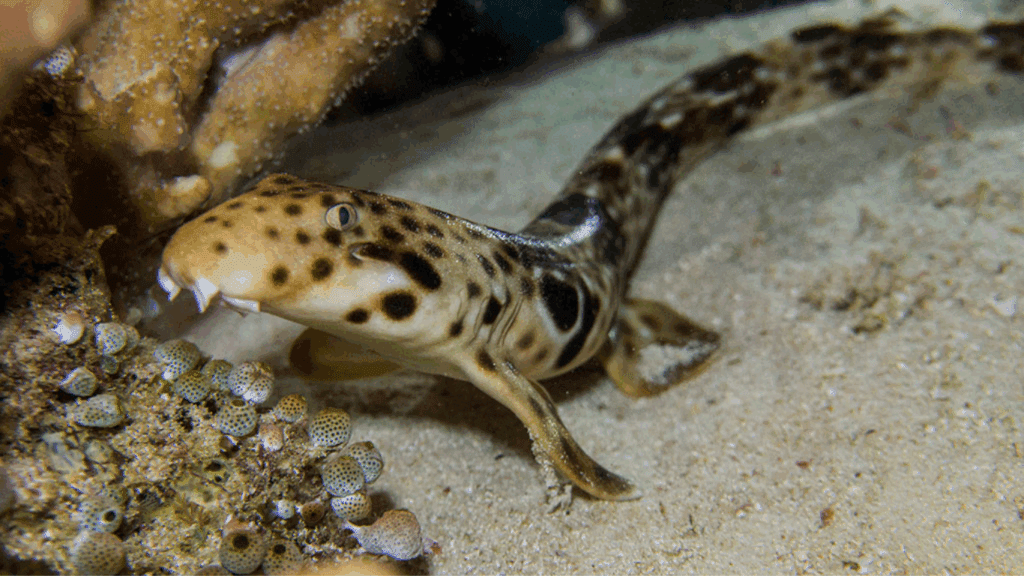
What to expect from Raja Ampat Marine Life.
There are places that feel so untouched, so wild and vibrant, that stepping into them feels like crossing into another world. Raja Ampat is one of them.
Imagine drifting through crystal-clear waters where every glance reveals another marvel: a manta gliding silently above, a sea fan swaying with pygmy seahorses, a flash of reef sharks patrolling the edge of a drop-off. It’s not a dream — it’s Raja Ampat marine life, Indonesia’s crown jewel of marine biodiversity.
And aboard KLM Eliya, you don’t just visit this paradise — you live in it.
Located off the northwest tip of New Guinea in Southwest Papua, Indonesia, Raja Ampat (meaning “Four Kings”) is a remote archipelago of over 1,500 small islands, cays, and shoals. Despite its remoteness, it has become one of the world’s most sought-after destinations for divers and marine scientists alike.
What makes it so special? Its location at the heart of the Coral Triangle, the epicenter of global marine biodiversity. Raja Ampat is a hotspot where the Pacific and Indian Oceans meet — a confluence that feeds its reefs with rich nutrients and supports astonishing life.
According to Conservation International, Raja Ampat holds the world record for the highest number of fish species seen in a single dive — 374. More than 600 species of coral (75% of the world’s known species) thrive here. There’s simply no other place on Earth like it.
Raja Ampat is not just a marine park — it’s home to resilient, warm communities who have lived in harmony with the sea for generations. Papuan villages like Arborek, Sawandarek, and Yenbuba welcome visitors with smiles, traditional dances, and simple stilt houses built over water.
Fishing and sago harvesting remain vital here, but thanks to marine protection efforts, many locals have shifted to sustainable tourism roles — dive guides, boat crew, conservation rangers. These are the stewards of the sea, sharing their home with divers while protecting Raja Ampat marine life.
Raja Ampat is home to both reef mantas (Mobula alfredi) and oceanic mantas (Mobula birostris). At famed cleaning stations like Manta Sandy or Manta Ridge, you can hover weightless as these giants—some with wingspans over 5 meters—circle gracefully just meters above.
These encounters are not only visually breathtaking; they’re crucial to science. Raja’s mantas are part of ongoing conservation tagging projects. You may even spot a tagged individual mid-dive!
Once overfished, Raja Ampat has become a sanctuary for sharks. Blacktip, whitetip, and grey reef sharks are common on dives, with rarer sightings of wobbegongs (the quirky carpet shark) and even walking sharks, found nowhere else on Earth.
Since 2012, the entire area has been declared a shark sanctuary, making Raja a powerful example of how marine protection works.
At sites like Cape Kri and Melissa’s Garden, divers are treated to mind-blowing coral formations — hard and soft corals in colors that seem Photoshopped, from bright purple to fluorescent greens.
Unlike in many places around the world, coral bleaching events here have been minimal. Why? Thanks to strong currents, deep-water upwellings, and strict conservation laws, Raja Ampat’s reefs remain resilient and full of life.
Yes, the big fish are stunning — but Raja also rewards the patient. Look closely and you’ll spot pygmy seahorses clinging to sea fans, blue-ringed octopus, nudibranchs of all colors, and mantis shrimp with punch-fast reflexes.
This blend of mega and micro is what makes diving in Raja feel like flipping between a National Geographic documentary and a BBC close-up.
Few things give a diver goosebumps like being surrounded by a swirling school of barracudas, jacks, or batfish. At My Reef or Sardine Reef, you may find yourself lost in a tornado of silver scales, sunlight flickering through from above.
While not guaranteed, dolphins, pilot whales, and even dugongs have been spotted in Raja’s open waters. You never know what you’ll see next — and that’s part of the thrill.
On night dives, something magical happens: the reefs glow. Not from your torch, but from nature itself. Bioluminescent plankton sparkle with each movement, creating an underwater galaxy you’ll never forget.
Raja Ampat is a model for marine conservation. Its marine park is divided into zones: no-take zones, sustainable fishing areas, and tourism zones. Entrance fees directly fund reef patrols, village development, and education.
This is diving with a purpose — knowing your trip supports a living, breathing marine sanctuary.
There’s only one way to fully absorb the magic of Raja Ampat marine life — and that’s on a liveaboard. KLM Eliya isn’t just a boat; it’s a floating boutique hotel steeped in tradition and comfort.
Lovingly handcrafted in the Phinisi style and equipped for divers of all levels, KLM Eliya offers:
Most importantly, she takes you where few others go — weaving through central and southern Raja, reaching pristine reefs and secluded coves.
Raja Ampat marine life is not just beautiful — it’s sacred. It’s living proof of what our oceans can be when they are loved and protected. When you dive here, you don’t just witness a paradise — you become part of the story.
And there’s no better way to experience it than aboard KLM Eliya, where every sunrise, every dive, every encounter leaves you just a little more breathless.
💬 Have you ever dreamed of diving in Raja Ampat? Tell us what marine life you’d love to see first in the comments!