
Komodo Raja Ampat Banda Sea Diving – If yoIf you’ve been looking into diving in Indonesia, you’ve likely come across the same three destinations again and again: Komodo, Raja Ampat, and the Banda Sea.
At first, it feels like a choice.
But in reality, it’s more like a journey.
With Scuba Junkie Liveaboards, the same vessel — KLM Eliya — follows the seasons across Indonesia, exploring each of these regions at the best possible time of year.
So instead of asking which one is better, the real question becomes:
Which one feels right for you, right now?
One of the unique things about these trips is that they are not fixed in one place.
KLM Eliya moves with the seasons:
Each destination has its moment — when conditions, marine life, and overall experience align at their best.
And that’s when we go.
Komodo National Park is where many divers first experience Indonesia — and it leaves a strong impression.
This is a place shaped by currents. Nutrient-rich water flows through narrow channels, feeding an ecosystem that feels constantly alive.
Underwater, you can expect:
Every dive feels different. Some are calm, others more dynamic — but always full of life.
Komodo is surprisingly accessible. With the right planning and guidance, many divers — including those newer to currents — can enjoy it. It’s also a place where divers can continue learning, with courses available onboard.
Above the water, the experience adds another layer:
Raja Ampat feels different from the moment you arrive.
The pace slows down. The reefs become denser. Life is everywhere.
This is often considered the most biodiverse marine ecosystem on Earth — and it shows in every dive.
Marine life highlights include:
The diving here is less about intensity and more about immersion. You don’t chase the experience — you float through it.
Raja Ampat trips require a bit more experience. Divers are expected to be Advanced or hold a Deep Specialty certification, as conditions and profiles can vary.
This is not a place for courses — it’s a place to enjoy and explore.
Banda Sea is where things become more exploratory.
These trips are not just about diving — they’re about crossing a remote part of Indonesia that few divers experience.
The Banda Sea season is short and special:
The journey is divided into two legs:
Guests can join either one, or experience the full crossing.
Underwater, this is big ocean diving:
This is where the ocean feels vast.
More experienced divers who are comfortable in changing conditions and looking for something more remote and exploratory.
While each destination feels different, life onboard remains beautifully consistent.
Mornings begin early, often just before sunrise.
The day flows between dives, meals, rest, and quiet moments on deck.
Evenings slow down — sunsets, conversations, and the feeling of being far from everything else.
The boat becomes home.
And as the scenery changes — Komodo’s rugged hills, Raja Ampat’s limestone islands, Banda’s open horizons — the rhythm stays the same.
Komodo Raja Ampat Banda Sea Diving – These destinations share one thing in common: the best dive sites are not close to shore.
A liveaboard allows you to:
Because the itinerary is flexible, every trip is slightly different — shaped by the ocean, not by a fixed schedule.
Each destination offers something unique:
The good news is — you don’t have to choose forever.
Many divers come back to experience all three.
Yes. KLM Eliya moves seasonally between Komodo, Raja Ampat, and the Banda Sea.
Komodo (April–September), Raja Ampat (November–February), Banda Sea (March & October).
Komodo is generally the most accessible, with guidance and courses available onboard.
Yes, divers are required to be Advanced or have a Deep Specialty certification.
Yes, you can join either leg (Raja Ampat–Alor or Alor–Komodo) or complete the full crossing.
Komodo, Raja Ampat, and the Banda Sea are not competing destinations.
They are chapters of the same story.
Each one reveals a different side of Indonesia — its energy, its biodiversity, its remoteness.
And whichever one you choose, you’re not just visiting a place.
You’re stepping into a journey shaped by the ocean.
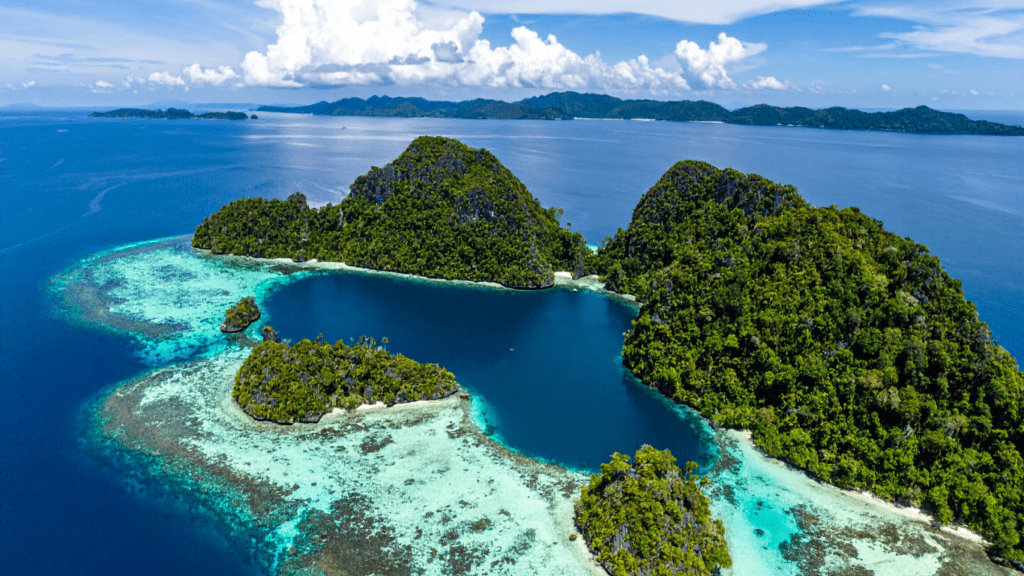
If you’ve been dreaming of visiting one of the world’s most extraordinary marine environments, Raja Ampat marine park is the name that appears again and again—and with good reason. Known for unmatched biodiversity, deep-rooted cultural traditions, and some of the clearest waters on Earth, the region stands as a reminder of how vibrant and delicate our oceans truly are.
This blog offers a gentle introduction to the marine park, its people, and its cultural landscape, while sharing a little Scuba Junkie excitement—because our upcoming Raja trips are nearly sold out, and November 2026 will mark Eliya’s very first journey to Raja Ampat. With only a few spots left on two departures, this feels like the perfect moment to help divers understand the magic of where they’re headed.
Raja Ampat sits at the center of the Coral Triangle, the world’s most biodiversity-rich marine region. Scientists consider it a global priority for conservation due to its high coral cover, fish abundance, and healthy reef systems.
The Raja Ampat marine park holds:
This combination creates a dreamscape for divers: colorful, calm, and alive at every depth.
The marine park isn’t just a tourist attraction—it’s a formally managed conservation zone designed to protect marine life for future generations. Visitors contribute directly to preservation through park fees and low-impact tourism practices.
Raja Ampat is home to Indigenous Papuan groups whose lives are closely linked to the sea. Their knowledge of tides, reefs, and seasonal shifts is passed down through generations and deeply respected by conservationists.
Visitors may notice:
Respecting privacy, modest dress near villages, and polite interaction goes a long way. A friendly smile is always returned with one.
Being mindful of local customs keeps tourism harmonious. Basic guidelines include:
These small gestures ensure that tourism remains beneficial and respectful.
The Raja Ampat marine park is divided into zones that regulate fishing, diving, and boating. These rules help fish populations recover and reefs remain healthy.
Local communities play a major role in patrolling the waters, reporting illegal fishing, and ensuring their environment is preserved. Their involvement is one reason the region remains so pristine.
Responsible operators, divers, and travelers are essential. By following regulations and supporting ethical tourism, visitors help keep the ecosystem thriving.
The Scuba Junkie family has shown incredible enthusiasm for our Raja Ampat trips—so much so that most departures are already fully booked. Your trust, excitement, and loyalty mean everything, and we can’t wait to share these experiences with you.
At this point, only two trips still have a few available spots. If Raja Ampat has been on your bucket list, now is the moment before everything fills up.
A special note: November 2026 marks Eliya’s very first venture to Raja Ampat, making the upcoming seasons feel even more exciting. Sharing knowledge about the area feels important as we prepare for this milestone.
Small actions make a big difference:
These habits help keep the Raja Ampat marine park thriving.
Choosing local services, respecting cultural spaces, and acknowledging the park fee system all contribute to community livelihoods and conservation funding.
Its location within the Coral Triangle and strong ocean currents create ideal conditions for marine life.
Yes. The Raja Ampat Marine Park Entry Fee supports conservation and community projects.
Due to the more advanced nature of some of the sites within the Raja Ampat Marine Park, we require all divers to be Open Water with a minimum Deep certification.
Conditions are excellent year-round, with November–April offering some of the calmest seas.
Yes, with respect for customs. Always dress modestly and ask before taking photos.
Through park fees, ethical diving, and supporting community-led initiatives.
The Raja Ampat marine park is more than a destination—it’s a living ecosystem intertwined with culture, tradition, and community-led conservation. For divers, it offers unmatched biodiversity and a powerful reminder of why protecting our oceans matters.
As we prepare for upcoming Scuba Junkie trips—with only two departures still holding a few spots—and with Eliya joining her first Raja adventure in November 2026, we hope this guide helps guests understand the beauty and responsibility of exploring this extraordinary region.