
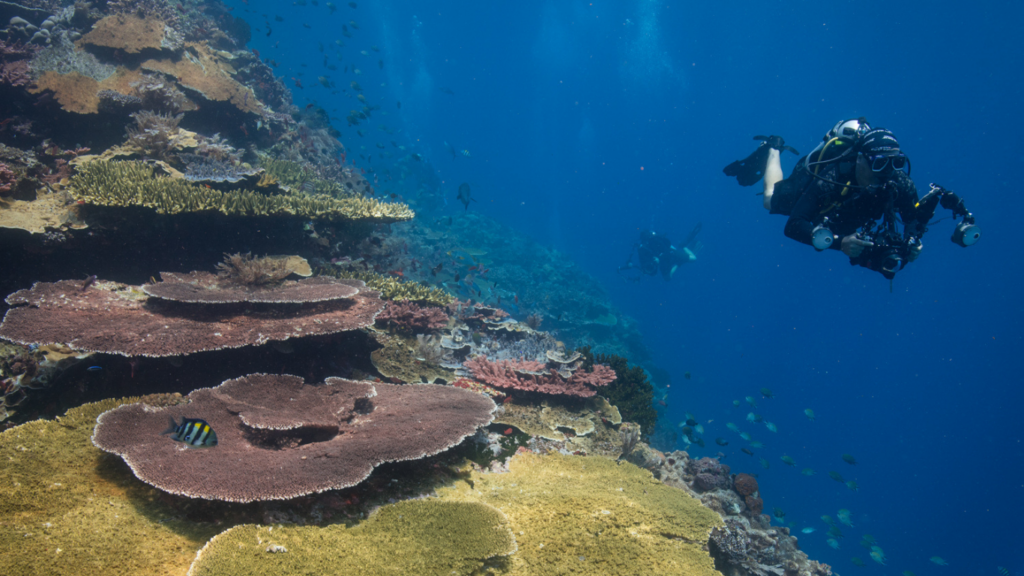
Ask a group of divers how they felt before their first drift diving experience and you’ll probably hear the same answer more than once.
“I was nervous.”
It’s a completely normal reaction.
From the very beginning of our diving journey, we’re taught to control our movements underwater. We learn buoyancy, finning techniques and navigation, so the idea of diving in moving water can seem intimidating at first. The word current often sounds like something to avoid rather than something to enjoy.
Then comes that first drift dive.
Instead of fighting the water, you realise the current is carrying you effortlessly across the reef. Your breathing slows down, your finning becomes lighter, and before you know it, you’re gliding over coral gardens while schools of fish move alongside you.
That’s usually the moment divers understand why drift diving has become one of the most enjoyable ways to explore the underwater world.
Simply put, drift diving is a dive where the natural movement of the water becomes part of the journey.
Rather than swimming long distances, divers allow the current to carry them across the reef while the dive boat follows from the surface. The route, speed and distance covered all depend on the strength and direction of the current, making every drift dive slightly different from the last.
The goal isn’t to fight the current.
It’s to work with it.
When done correctly, drift diving often feels surprisingly effortless. Instead of focusing on swimming, divers can spend more time observing marine life, enjoying the scenery and maintaining good buoyancy.
It’s one of the reasons experienced divers often describe it as feeling more like flying than swimming.
One of the biggest surprises for new drift divers is how relaxing it can be.
As the current carries you along, the reef unfolds naturally beneath you. Large coral bommies appear one after another, schools of fish move in and out of the blue, and the dive becomes a continuous journey rather than swimming from one point to another.
Because you’re covering a larger area, every few minutes the underwater landscape changes. A colourful coral garden may give way to a dramatic wall, followed by a sandy channel or a reef slope full of marine life.
Many of the world’s most famous dive destinations are known for drift diving because currents bring nutrients into the ecosystem. Those nutrients support healthy coral reefs and attract the incredible diversity of marine life that divers travel across the world to see.
In many cases, the current itself is one of the reasons these reefs are so alive.
Not necessarily.
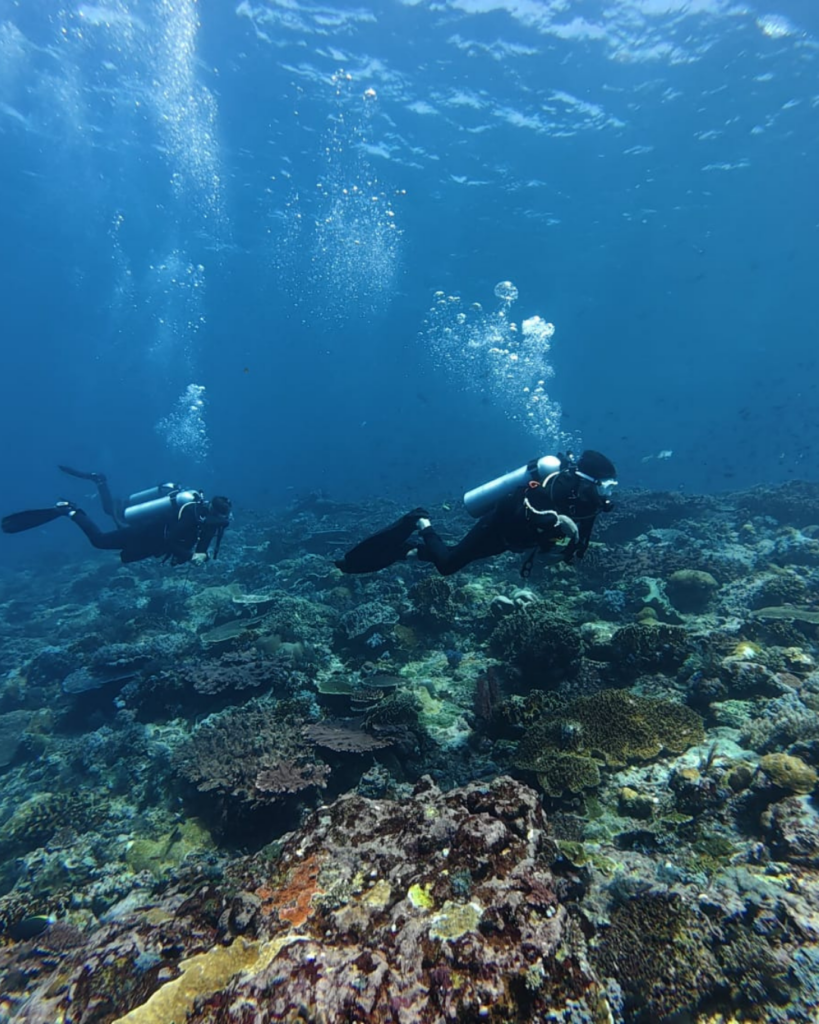
This is probably the biggest misconception surrounding drift diving.
A drift dive simply means the current is carrying you during the dive. Sometimes that movement is so gentle you barely notice it. Other times, the current is stronger and requires more experience, careful planning and close communication with your guide.
Every dive site is different, and currents can change with the tides, the moon phase and local topography.
This is why two dives at exactly the same site can feel completely different, even if they happen only a few hours apart.
Understanding these changes is one of the reasons local knowledge is so valuable.
Long before divers enter the water, a great deal of planning has already taken place.
Your guide will consider the tide, wind direction, swell, current strength and the experience level of the group before deciding whether a drift dive is appropriate.
At Scuba Junkie Liveaboards, divers are grouped according to their experience and comfort level. This allows every group to enjoy the best possible dive while maintaining high safety standards.
Sometimes this means choosing a gentle drift that’s perfect for building confidence. Other times, experienced divers may explore sites where stronger currents create spectacular underwater conditions.
The decision is never based on finding the strongest current.
It’s about finding the right conditions for that particular group.
The good news is that you don’t need to be an expert to enjoy drift diving, but a few good habits will make your experience much more comfortable.
The most important skill is buoyancy. A diver who is comfortable maintaining neutral buoyancy will find drift diving far easier than someone relying on constant finning to control their position.
Good communication with your buddy and guide is equally important. Before entering the water, make sure you understand the dive plan, entry technique and how the group will stay together throughout the dive.
Finally, remember to relax.
Many new drift divers instinctively try to swim against the current. In reality, allowing yourself to move naturally with the water is usually the most efficient and enjoyable approach.
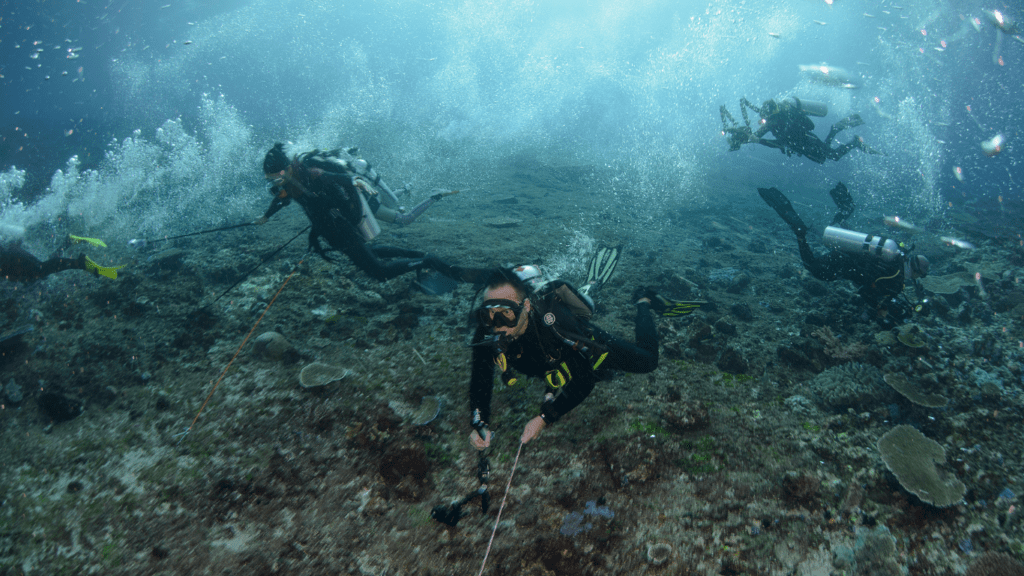
If you’ve researched diving in Indonesia, you’ve probably heard that Komodo National Park is famous for its currents.
There’s a good reason for that.
Komodo sits between the Indian Ocean and the Flores Sea, where enormous volumes of water move through narrow channels as the tides change. This constant movement brings nutrient-rich water into the park, supporting one of the most productive marine ecosystems on the planet.
The result is healthy coral reefs, incredible fish biomass and frequent encounters with larger marine life.
Of course, not every dive in Komodo is a drift dive, and not every drift dive involves strong currents. Conditions vary from site to site and throughout the day, which is why experienced guides carefully choose dive sites based on the conditions and the experience of each dive group.
It’s also worth remembering that at Scuba Junkie Liveaboards, divers are never mixed across very different experience levels. Groups are planned according to certification, experience and confidence in the water, allowing everyone to enjoy Komodo in conditions that suit them.
Perhaps the biggest lesson drift diving teaches us is that not everything underwater needs to be controlled.
Instead of resisting the ocean, we learn to understand it.
We begin to notice the direction of the current, the behaviour of fish and the shape of the reef. We trust our guide, refine our buoyancy and allow the ocean to do much of the work for us.
It’s a different way of diving.
And for many people, after that first drift dive, it’s difficult to imagine diving any other way.
Drift diving is a type of scuba dive where divers allow the current to carry them naturally across the reef instead of swimming long distances.
Yes. When properly planned and conducted with experienced guides, drift diving is a safe and enjoyable style of diving.
Not always. Gentle drift dives are suitable for many certified divers, while stronger currents require more experience. Your dive guide will always select sites appropriate for your group’s experience level.
Komodo’s unique geography creates nutrient-rich currents that support extraordinary marine life, making it one of the world’s best destinations for drift diving.
In most drift dives, no. Divers are encouraged to relax, maintain good buoyancy and move naturally with the current while following the dive plan.
Yes. With the right conditions and experienced guides, many newer divers discover that gentle drift diving is much easier and more enjoyable than they expected.
Planning your next adventure? You might also enjoy:
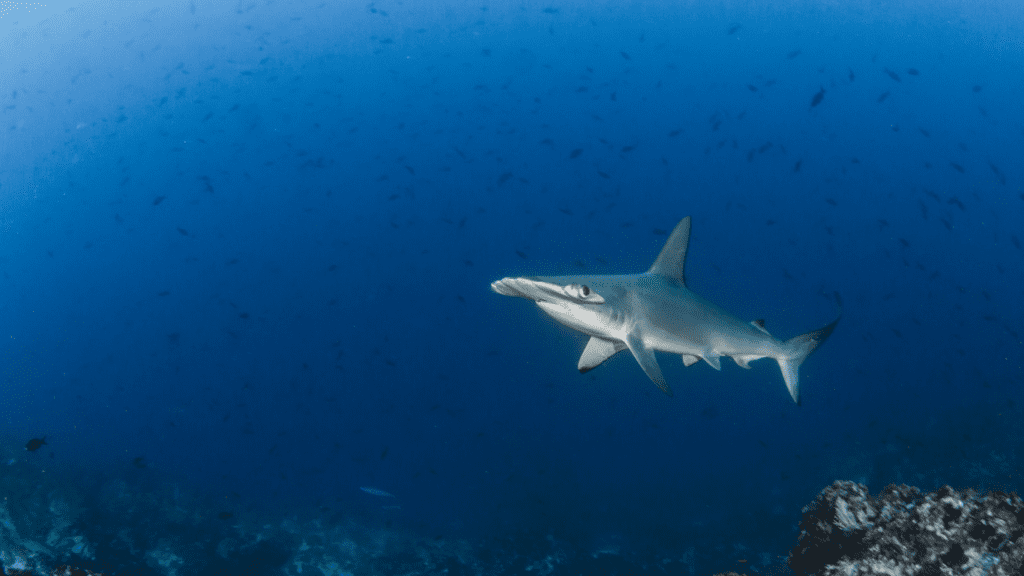
Komodo Raja Ampat Banda Sea Diving – If yoIf you’ve been looking into diving in Indonesia, you’ve likely come across the same three destinations again and again: Komodo, Raja Ampat, and the Banda Sea.
At first, it feels like a choice.
But in reality, it’s more like a journey.
With Scuba Junkie Liveaboards, the same vessel — KLM Eliya — follows the seasons across Indonesia, exploring each of these regions at the best possible time of year.
So instead of asking which one is better, the real question becomes:
Which one feels right for you, right now?
One of the unique things about these trips is that they are not fixed in one place.
KLM Eliya moves with the seasons:
Each destination has its moment — when conditions, marine life, and overall experience align at their best.
And that’s when we go.
Komodo National Park is where many divers first experience Indonesia — and it leaves a strong impression.
This is a place shaped by currents. Nutrient-rich water flows through narrow channels, feeding an ecosystem that feels constantly alive.
Underwater, you can expect:
Every dive feels different. Some are calm, others more dynamic — but always full of life.
Komodo is surprisingly accessible. With the right planning and guidance, many divers — including those newer to currents — can enjoy it. It’s also a place where divers can continue learning, with courses available onboard.
Above the water, the experience adds another layer:
Raja Ampat feels different from the moment you arrive.
The pace slows down. The reefs become denser. Life is everywhere.
This is often considered the most biodiverse marine ecosystem on Earth — and it shows in every dive.
Marine life highlights include:
The diving here is less about intensity and more about immersion. You don’t chase the experience — you float through it.
Raja Ampat trips require a bit more experience. Divers are expected to be Advanced or hold a Deep Specialty certification, as conditions and profiles can vary.
This is not a place for courses — it’s a place to enjoy and explore.
Banda Sea is where things become more exploratory.
These trips are not just about diving — they’re about crossing a remote part of Indonesia that few divers experience.
The Banda Sea season is short and special:
The journey is divided into two legs:
Guests can join either one, or experience the full crossing.
Underwater, this is big ocean diving:
This is where the ocean feels vast.
More experienced divers who are comfortable in changing conditions and looking for something more remote and exploratory.
While each destination feels different, life onboard remains beautifully consistent.
Mornings begin early, often just before sunrise.
The day flows between dives, meals, rest, and quiet moments on deck.
Evenings slow down — sunsets, conversations, and the feeling of being far from everything else.
The boat becomes home.
And as the scenery changes — Komodo’s rugged hills, Raja Ampat’s limestone islands, Banda’s open horizons — the rhythm stays the same.
Komodo Raja Ampat Banda Sea Diving – These destinations share one thing in common: the best dive sites are not close to shore.
A liveaboard allows you to:
Because the itinerary is flexible, every trip is slightly different — shaped by the ocean, not by a fixed schedule.
Each destination offers something unique:
The good news is — you don’t have to choose forever.
Many divers come back to experience all three.
Yes. KLM Eliya moves seasonally between Komodo, Raja Ampat, and the Banda Sea.
Komodo (April–September), Raja Ampat (November–February), Banda Sea (March & October).
Komodo is generally the most accessible, with guidance and courses available onboard.
Yes, divers are required to be Advanced or have a Deep Specialty certification.
Yes, you can join either leg (Raja Ampat–Alor or Alor–Komodo) or complete the full crossing.
Komodo, Raja Ampat, and the Banda Sea are not competing destinations.
They are chapters of the same story.
Each one reveals a different side of Indonesia — its energy, its biodiversity, its remoteness.
And whichever one you choose, you’re not just visiting a place.
You’re stepping into a journey shaped by the ocean.
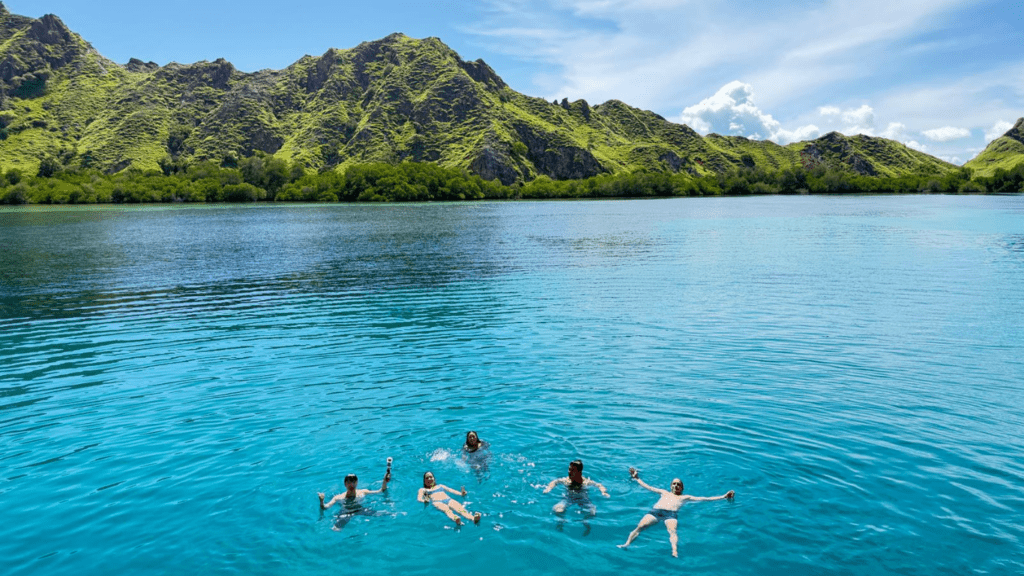
Komodo National Park visitor quota regulations will soon change how travelers visit one of the most extraordinary marine parks in the world. Starting in April 2026, the Indonesian government will introduce a new quota system limiting how many visitors can enter the park each day.
The goal behind this new regulation is clear: protect Komodo’s fragile ecosystem while maintaining sustainable tourism.
But the decision also raises an interesting question for divers, travelers, and conservationists:
Is limiting the number of visitors (carrying capacity) the best way to protect Komodo National Park?
Or could tourism itself play a bigger role in supporting conservation?
To understand the debate, it helps to look at what the new Komodo National Park visitor quota actually means.
The new Komodo National Park visitor quota will limit the number of people entering the park to 365,000 per year — or split daily — 1,000 visitors per day.
Currently, the average daily visitors is at 1,600, which meant that certain popular areas sometimes experienced significant visitor pressure. However, this 1,600 is not made up of a homogeneous group. These visitors are segmented into a few segments: cruise ship day visitors, independent land tourists, day trip divers, and liveaboard guests.
By reducing the daily limit, park authorities hope to better manage tourism and protect the natural environment that makes Komodo so unique.
Komodo National Park is globally famous for its extraordinary biodiversity. Located in the heart of the Coral Triangle, it is home to vibrant coral reefs, manta rays, sharks, turtles, and thousands of reef species.
It is also the only place on Earth where visitors can see the legendary Komodo dragons in their natural habitat.
Because of this incredible biodiversity, the park has been recognized as a UNESCO World Heritage Site by the UNESCO.
The permits required under the Komodo National Park visitor quota apply to all visitors entering the park, not only divers.
This means the permit includes:
• Diving activities within the marine park
• Snorkeling and boat visits
• Land excursions to islands such as Komodo, Padar and Rinca
• Wildlife viewing, including Komodo dragon treks
For a typical 6-day diving liveaboard itinerary, the park permit costs approximately:
IDR 1,650,000 per person
(IDR 275,000 per day)
These permits help fund conservation programs, ranger patrols, park management, and environmental protection.
If visitors plan to fly a drone while exploring the park, an additional permit is required.
The current drone permit fee is approximately:
IDR 2,000,000 per drone per day
Because permits are issued for specific travel dates under the Komodo National Park visitor quota, they now need to be arranged well in advance.
Supporters of the Komodo National Park visitor quota believe limiting visitor numbers is an important step toward protecting the park’s ecosystems.
Marine environments can be extremely sensitive to human activity. Large numbers of visitors can increase pressure on coral reefs, wildlife habitats, and popular dive sites.
By reducing the number of visitors entering the park each day, authorities hope to:
• Reduce overcrowding at popular locations
• Minimize environmental impact
• Improve visitor safety
• Maintain the quality of the experience for travelers
Many protected natural destinations around the world have introduced similar systems to protect fragile ecosystems.
The Komodo National Park visitor quota may feel like a big change, but similar systems already exist in other famous dive destinations.
One example is the Galápagos Islands, where strict regulations control how many visitors can enter protected areas.
Closer to home for us, Sipadan Island in Malaysia operates under a permit system that limits how many divers can visit the island each day. Sipadan is also home to another Scuba Junkie location, and the permit system has helped protect its reefs and marine life for many years.
These examples show that visitor limits can be an effective tool when it comes to protecting world-class dive destinations.
While government quotas are a “top-down” approach, the local diving industry, spearheaded by the Dive Operators Collaboration Komodo (D.O.C.K.) and Gahawisri, has been developing its own “water-up” solutions. A prime example is the existing government-approved framework — the 20-minute rule.
To prevent congestion at popular sites like Batu Bolong, Crystal Rock, and Castle Rock, local operators have begun self-regulating by limiting group time at a site to 20-minute intervals. By coordinating boat movements and diver flow, the industry is proving it can manage “carrying capacity” on its own.
Furthermore, many operators in the region have adopted the Green Fins Code of Conduct, including Scuba Junkie. By following these global environmental guidelines, the industry has shown that it can significantly reduce its environmental footprint. It suggests a powerful alternative: perhaps the focus shouldn’t just be on how many people visit, but on how they behave. Stricter underwater conduct and better diver education can protect the reef just as effectively as a quota.
This raises a key debate: If the industry can effectively self-manage through smarter site coordination, is a strict government-mandated cap on visitors truly necessary, or does it risk unnecessarily limiting access to the park?
While many conservationists support the Komodo National Park visitor quota, the topic still raises an interesting discussion.
Tourism is often the biggest driver for conservation.
Dive tourism generates important funding for local communities, marine protection programs, and environmental research. Visitors who experience places like Komodo often become passionate advocates for protecting the ocean.
This raises an important question:
If fewer people are able to visit, could that also reduce awareness and funding for conservation?
There no simple answer. Protecting precious ecosystems while allowing people to experience them is always a delicate balance.
What matters most is ensuring tourism remains sustainable, and supportive of conservation while protecting the livelihoods of local communities who depend on a healthy environment.
With the Komodo National Park visitor quota taking a more concrete effect in April 2026, planning ahead will become more important for visitors.
Because permits are limited and issued for specific dates, securing them early will help ensure your itinerary runs smoothly.
If you are planning a trip with Scuba Junkie Liveaboards or staying at Scuba Junkie Komodo Beach Resort, our booking team can help arrange the required permits and guide you through the process.
Our goal is to make the experience as seamless as possible so you can focus on enjoying your time exploring Komodo’s incredible underwater world.
The Komodo National Park visitor quota reflects a growing global conversation about how we protect the natural places we love to explore.
Limiting visitor numbers may help reduce environmental pressure. But tourism can also support conservation, education, and local livelihoods.
So the question remains:
Is restricting access the best way to protect Komodo National Park?
Or should the focus be more on sustainable tourism and environmental education?
We would love to hear your thoughts.
Have you ever dived in Komodo?
Do you think visitor limits help protect marine ecosystems?
Share your perspective in the comments.
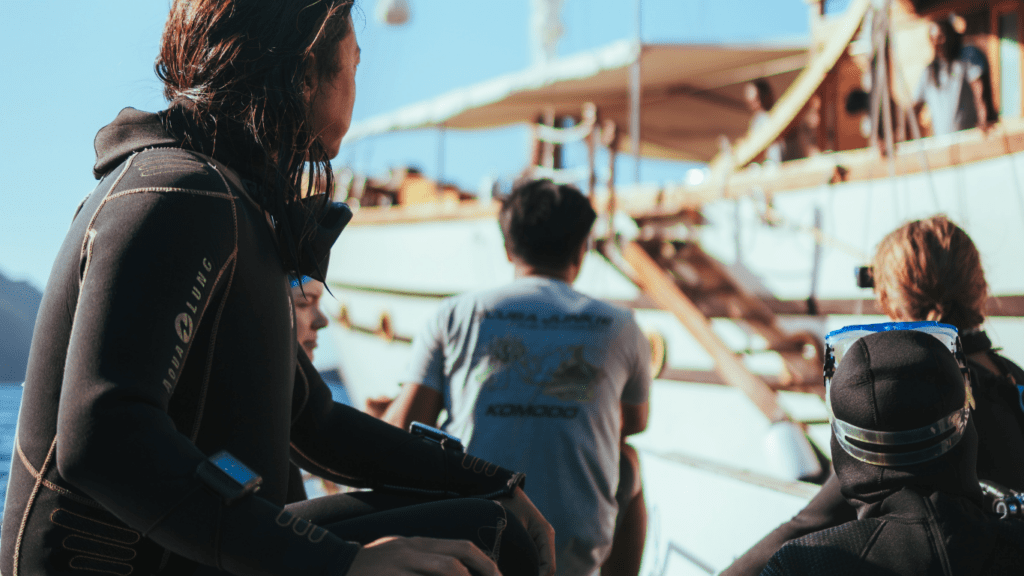
Planning a liveaboard trip can feel like standing at the edge of something exciting — flights to check, bags to pack, park fees to understand, arrival times to get right.
So we’ve put together this Komodo 6D5N liveaboard guide to make everything simple before you step aboard KLM Eliya with Scuba Junkie Liveaboards.
Think of this as your calm, clear walkthrough — from the moment you book, to the moment you cross the street for a celebratory ice cream at the end.
Most guests reach out to us by email (liveaboards@scubajunkie.com), through social media, or via the contact form on our website. From there, our team walks you through availability, cabin options, and next steps.
To secure your space, a 50% non-refundable deposit confirms your booking. The remaining balance is due 60 days before departure. If your booking is made within 61 days of the trip, full payment is required at reservation. All details are clearly outlined in our official Terms & Conditions .
We always recommend comprehensive travel insurance — and dive insurance is compulsory due to the remote nature of diving in Komodo.
Once that’s done, the adventure starts to feel very real.
Your journey will bring you to Komodo International Airport (LBJ) in Labuan Bajo.
There are now direct flights from:
From Bali, the flight is around one hour — short, scenic, and often the moment it really sinks in that you’re headed somewhere special.
We recommend arriving the day before embarkation if possible. It gives you time to settle in, adjust, and avoid any stress if flights are delayed.
On Day 1, we meet at our office in Labuan Bajo between 08:00 and 08:30am. There’s always a buzz in the air — new faces, excited conversations, gear being double-checked.
At 09:00am, we walk together to the harbour and step aboard KLM Eliya. A welcome drink is served, cabins are shown, and our Cruise Director guides you through safety procedures and the plan for the week ahead.
Then, just like that, you’re on your way.
The first day typically includes two afternoon dives and a sunset or night dive. Sometimes, depending on conditions and planning, it may include two dives and a visit to Rinca Island to see the Komodo dragons. The exact flow is explained once onboard — flexibility is part of the magic.
By the second morning, you’re already in rhythm.
You’ll wake around 6:00am to light snacks, tea, and coffee before your first dive. There’s something special about slipping into the water as the day begins — Komodo often feels at its most alive in the early morning.
The days flow gently:
Dive.
Breakfast.
Dive.
Lunch.
Rest.
Dive.
Sunset or night dive.
Dinner under the stars.
Up to 20 dives across the trip, all guided, with full equipment rental included (excluding dive computer). Meals, tea, coffee, drinking water, towels, toiletries — everything is taken care of so you can focus fully on the experience.
And it’s not only about diving.
Komodo National Park is just as dramatic above the surface.
During the trip, depending on where we are diving and the conditions at the time, we may visit:
These excursions are never forced into a rigid schedule. We choose them based on tides, weather, and what will create the best overall experience for everyone onboard.
There is a daily national park fee for activities within the park, payable in cash (IDR).
For foreign nationals:
For Indonesian citizens (KTP holders):
Fees are subject to change.
Cash is also useful for:
There are plenty of ATMs in Labuan Bajo before boarding.
Komodo is tropical, but evenings can feel cool after multiple dives.
Bring:
Reusable water bottles are encouraged — each cabin has one onboard that you can keep as a souvenir.
SMBs are advisable but not required. Reef hooks are not required.
Wetsuits are available onboard.
On Day 6, there’s one final early morning dive (or two morning dives if the Dragon Tour happened earlier). After breakfast and lunch, KLM Eliya returns to harbour around 14:30.
Back at the office, our team assists with remaining payments and arranges taxis to your hotel or the airport.
Because of the 18-hour no-fly rule after diving, we strongly recommend flying the following day.
And this is where we always suggest something simple.
Cross the street.
Treat yourself to a well-earned ice cream at Maison Belmont.
Sit down. Take a breath. Let it sink in.
The dives, the dragons, the sunsets, the early mornings — it all settles into memory right there.
If you’re staying an extra night, Labuan Bajo is relaxed and easy to explore.
Some guest favourites include:
Whether you choose something vibrant or simple, it’s a lovely way to ease back into land life.
We hope this Komodo 6D5N liveaboard guide makes planning your trip feel smooth and straightforward.
Komodo is powerful, unpredictable, and unforgettable. Once you’re onboard KLM Eliya, the logistics fade away and the experience takes over.
We’ll handle the details.
You just show up ready for the adventure.
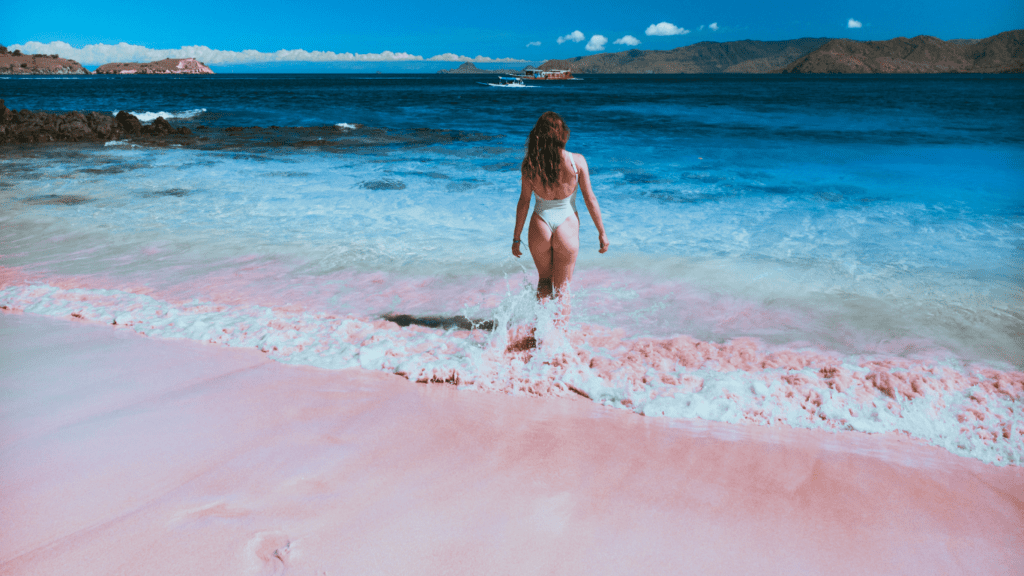
If you’ve been researching Komodo, you’ve probably asked yourself the same question many of our guests ask us: Pink Beach Komodo worth it, or just an Instagram highlight?
Pink Beach is undeniably beautiful, and yes — it can be a lovely place to visit. But at Scuba Junkie Liveaboards, we also believe that setting the right expectations is part of creating a great experience. Pink Beach is one small piece of Komodo, and depending on the conditions, it’s not always the highlight of the trip — especially when diving is the main focus.
Pink Beach gets its name from tiny fragments of red coral mixed with white sand, creating a soft pink tone along the shoreline. In calm weather and the right light, it looks stunning — and it’s easy to understand why it became so popular online.
However, the colour and overall experience depend heavily on:
Some days, Pink Beach really does glow. Other days, the colour is subtle and the conditions less inviting — which can be surprising if expectations are set by social media alone.
This is where expectations matter most.
Pink Beach is primarily a land and swimming stop, sometimes suitable for snorkelling when conditions are calm. It is not known as one of Komodo’s best dive sites, especially compared to the incredible reefs, currents, and marine life found elsewhere in the park.
At Scuba Junkie Liveaboards, diving always comes first. Komodo offers:
When conditions are excellent for diving, we prioritise spending time underwater where Komodo truly shines.
One of the biggest advantages of a liveaboard trip is flexibility. Instead of following a fixed checklist, we plan each day based on:
Our land excursions may include:
We don’t force stops just because they’re famous. The goal is always to create a balanced, enjoyable day that complements the diving.
Komodo National Park is wild and constantly changing. Conditions can shift from day to day — and that’s exactly why we keep our plans flexible.
Some days, Pink Beach is calm and beautiful and fits perfectly into the schedule. Other days, the better choice might be:
For us, the question isn’t “Is this famous?” — it’s “Will everyone enjoy this today?”
The short answer: sometimes, yes — but not always, and that’s okay.
Pink Beach can be a lovely bonus when conditions are right. But it’s not the reason most people fall in love with Komodo. The real magic is found in the diversity of experiences — powerful dives, scenic islands, wildlife encounters, and slow moments at sea.
We prefer to treat Pink Beach as a nice addition, not a must-do priority.
Not necessarily. We visit Pink Beach when conditions and timing make it a good fit for the day.
Depending on the trip, we visit Gili Lawa, Padar Island, Rinca or Komodo Island, and Pink Beach.
Because Komodo changes daily. Flexibility allows us to choose the best experience, not just the most popular one.
Most guests find the overall Komodo experience far more memorable than any single stop.
So, Pink Beach Komodo worth it?
Yes — when expectations are realistic and conditions are right.
At Scuba Junkie Liveaboards, our focus is always on creating a complete experience — choosing dive sites and land excursions that everyone will enjoy, rather than chasing one famous photo.
Often, it’s the moments you didn’t expect that become the highlights of the trip.
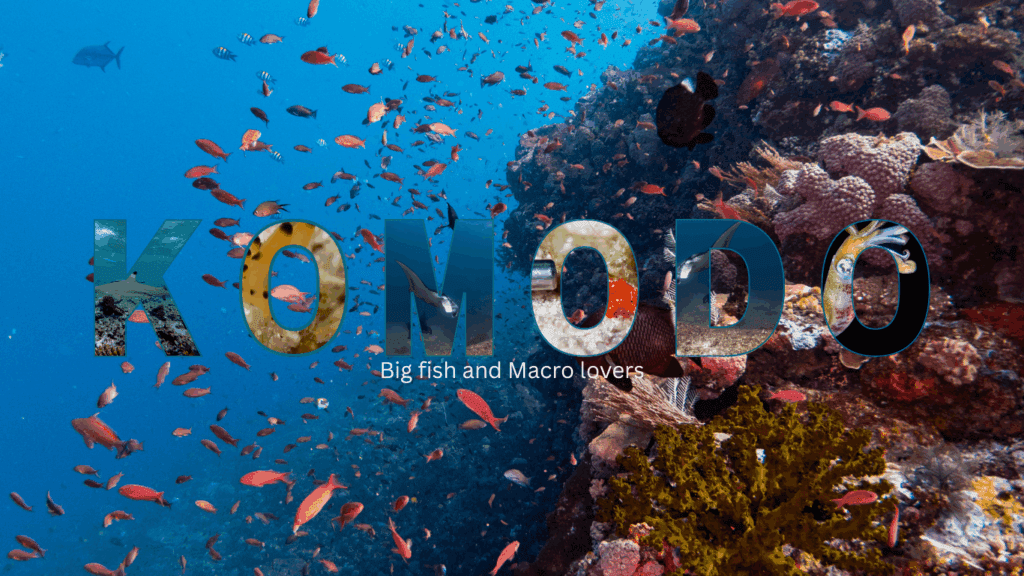
Komodo underwater paradise, the story below the surface ……
If Komodo were a storybook, it would be the kind that grabs you by the hand and pulls you down into a realm where reality blurs with magic.
You’ve probably heard of its dragons and its manta rays—those are the stars of the show. But what if I told you that behind the curtain, there’s a dazzling ensemble of performers waiting for their moment under your dive torch?
Welcome to the Komodo underwater paradise, where dugongs glide in silence, reef sharks cruise the deep blue, and bobtail squid blink like fireflies in the sand. This is a place where macro meets mega, where your camera never rests, and your sense of wonder grows dive by dive.
Some dive destinations are for big fish. Others are for macro.
Komodo? It’s greedy—it gives you both.
With over 1,000 species of fish and 260 species of coral, the Komodo National Park is a UNESCO World Heritage Site for good reason. You don’t have to choose between thrilling pelagics and mind-blowing macro. On a single day, you might dive with a school of trevally in the morning, photograph a ghost pipefish at lunch, and float beside manta rays by sunset.
Tip: Our 6D5N itinerary is designed to explore every corner of this underwater spectacle.
Let’s start big. Komodo’s currents are alive. They’re what bring in the giants:
This isn’t staged. It’s raw, wild, and real. Drift dives can launch you through clouds of fusiliers while mantas swoop overhead like underwater kites.
But slow down—because the real treasure might be in the sand.
Komodo is a macro diver’s dream. Its volcanic seabed and biodiversity mean the critters here are next level:
It’s why underwater photographers book return trips. One dive site can yield a dozen new subjects if your eyes are tuned to tiny.
Want to learn more about these? Check out our Critters of Komodo – Part 1 blog!
Komodo’s magic comes not just from what you see, but how it’s delivered.
Dives are selected based on tide, current, visibility, and experience level. Some dives offer slow sand-sifting exploration, while others offer exhilarating channel drifts where big fish wait in ambush.
Onboard KLM Eliya, we adjust our dive plan to make sure every guest—whether they crave macro, mantas, or both—gets their fill.
Some divers come for the thrill of drifting with mantas.
Some come for the chase—searching the sand for something with arms, stripes, and the power to mimic a lionfish.
Komodo welcomes both.
This Komodo underwater paradise is not about choosing a side. It’s about saying yes to everything. To big eyes and big fins. To critters and currents. To getting surprised—over and over again.
Komodo is not a place you visit once. It’s the kind of destination that whispers:
“Look again.”
And when you do, something new is always waiting.
What do you dive for—big fish or tiny critters? Or are you like us and want it all?
Tell us in the comments below—your next dive might just be in Komodo’s magic.
If you’re looking for a destination that combines thrilling adventure, stunning marine biodiversity, and breathtaking landscapes, Komodo National Park is your answer. This UNESCO World Heritage site is not only one of the seven natural wonders of the world but also a diver’s paradise. Here are 10 compelling reasons why Komodo National Park should be on every traveler’s bucket list.
Komodo National Park is world-renowned for its vibrant marine life. Home to more than 1,000 species of fish, manta rays, sharks, and over 260 species of coral, it’s no wonder this park is considered one of the top dive destinations in the world. Whether you are an experienced diver or a snorkeling enthusiast, the underwater life here is simply spectacular.
Nothing says Komodo quite like the famous Komodo dragons. As the largest living lizards on Earth, these reptiles can grow up to 3 meters in length and weigh around 70 kg. Encountering these prehistoric creatures in their natural habitat on Komodo and Rinca Islands is an unforgettable experience.
The park features some of the most exhilarating dive spots globally. Sites like Batu Bolong, Manta Point, and Castle Rock offer adrenaline-pumping dives, incredible visibility, and the chance to see reef sharks, and turtles.
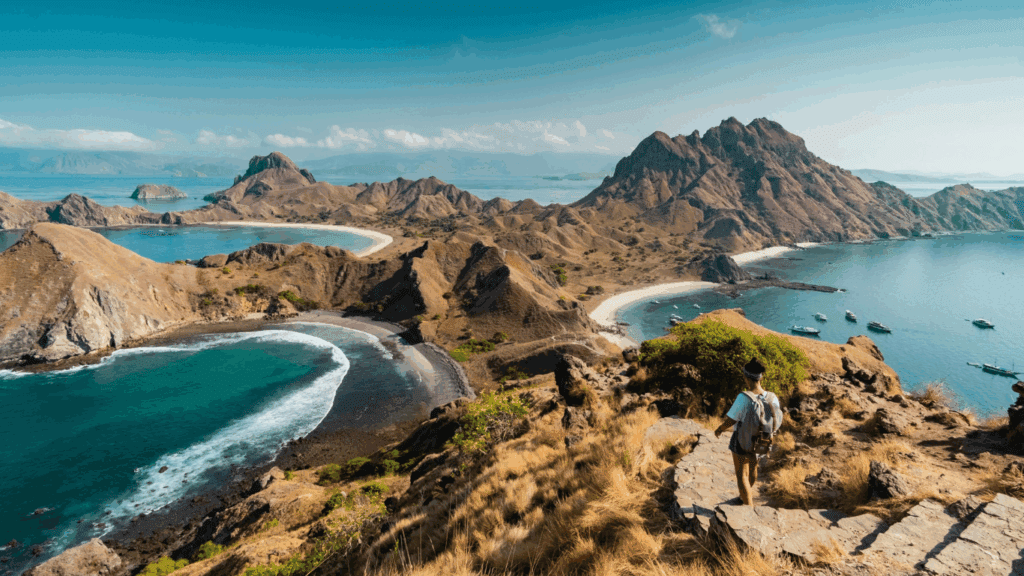
Besides diving, Komodo National Park offers thrilling land excursions. Hike to the famous Gili Lawa viewpoint for panoramic vistas of rugged hills and azure waters. Explore Rinca Island to spot Komodo dragons and other wildlife, including buffalo, wild pigs, and exotic birds.
One of the most unique beaches globally, Pink Beach owes its vibrant hue to microscopic organisms called Foraminifera. The contrast of pink sand with turquoise waters creates a picturesque scene perfect for swimming, snorkeling, and capturing stunning photos.
The wet season (November to February) is prime time for spotting manta rays. These graceful giants are often seen in groups at Manta Point, gliding effortlessly through the currents. Diving or snorkeling alongside them is a once-in-a-lifetime experience.
Explore Komodo National Park aboard the luxurious KLM Eliya. This handcrafted Phinisi boat offers a combination of traditional craftsmanship and modern comfort, making it the ideal way to explore the park’s underwater treasures and iconic islands.
The park’s commitment to protecting marine and terrestrial biodiversity is noteworthy. Thanks to collaborative efforts between local communities and conservation organizations, the park maintains healthy ecosystems, allowing marine life to flourish.
Visit the local villages on Rinca and Komodo Islands to learn about the traditional lifestyle. Witness how communities coexist with nature and contribute to conservation efforts through sustainable practices.
Despite being remote, Komodo National Park is easily accessible from Bali, Kuala Lumpur, Singapore and Jakarta via Labuan Bajo. Frequent flights and boat trips make it simple for international visitors to plan their dream dive trip.
If you’re passionate about capturing nature’s beauty, Komodo National Park offers endless opportunities for breathtaking shots. From the iconic pink beaches to the majestic manta rays gliding through crystal-clear waters, every moment is picture-perfect. Don’t forget to bring your camera and capture memories that will last a lifetime.
With its jaw-dropping biodiversity, awe-inspiring landscapes, and exhilarating adventures, Komodo National Park is a destination that should be on everyone’s travel bucket list. Whether you’re a diver, a nature lover, or just seeking an unforgettable escape, Komodo promises an experience unlike any other.
Ready to embark on your next adventure? Join us aboard KLM Eliya and explore the wonders of Komodo National Park! Book your spot today on our website or contact us at liveaboards@scubajunkie.com.