
Some dive trips are built around a single destination.
You spend a week exploring the same reefs before returning home with a logbook full of incredible dives.
A Banda Sea liveaboard expedition is different.
The destination isn’t just one island or one famous dive site. It’s an entire journey across one of Indonesia’s least explored regions, where every few days the landscape, the marine life and even the feeling of the ocean change completely.
This October, our Scuba Junkie KLM Eliya will set sail on her very first Alor to Ambon expedition, kicking off the launch of our new destination, Ambon — one of Indonesia’s finest macro diving capitals, connecting remote islands, volcanic seascapes and historic spice islands in a voyage that is as much about the adventure above the surface as the diving below it.
For divers looking for something beyond the familiar, this is where the next chapter begins.
If you’ve already explored destinations like Komodo or Raja Ampat, the Banda Sea feels different from the moment you arrive.
The distances between islands are greater. The landscapes become more dramatic. Small volcanic peaks rise straight out of the ocean, while tiny coral atolls appear hundreds of kilometres from the nearest city.
Every overnight crossing feels like you’re travelling somewhere new.
And that’s exactly the point.
Rather than diving the same region for a week, this expedition takes you through several completely different ecosystems, each with its own character both above and below the water.
It’s a journey that rewards divers who enjoy discovering what lies beyond the next horizon.
The expedition begins in Alor, a destination already well known among experienced divers for its healthy reefs, colourful coral gardens and impressive biodiversity.
As KLM Eliya heads north, the scenery begins to transform.
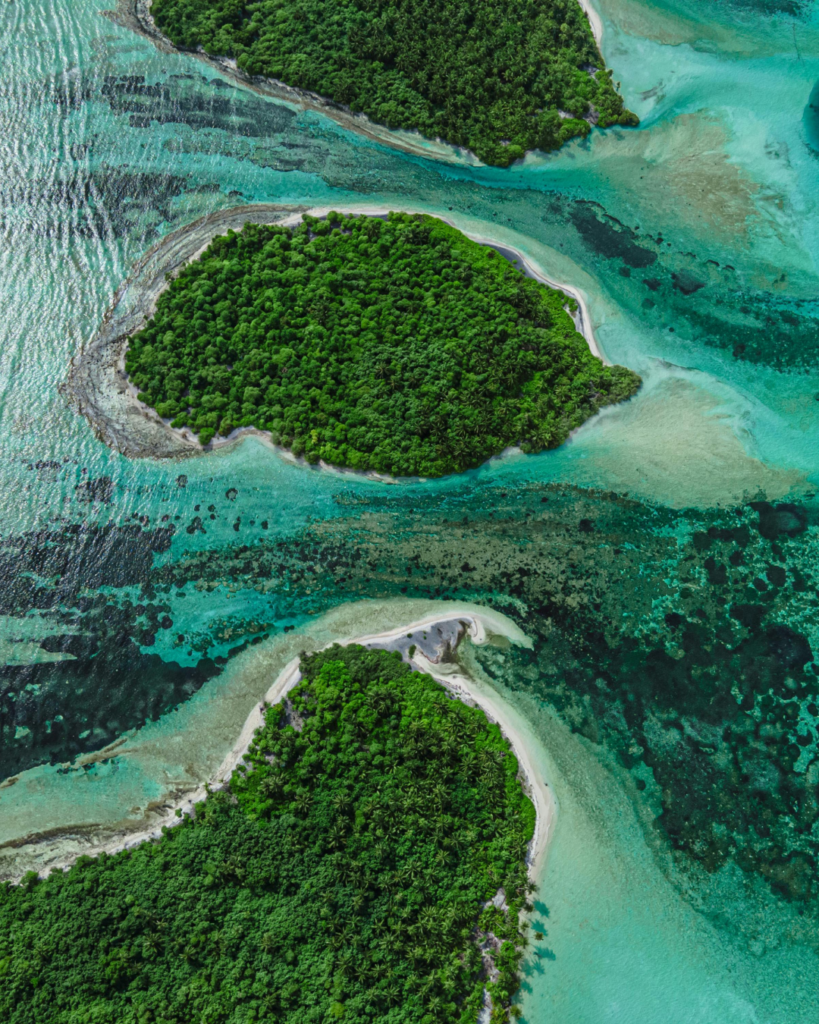
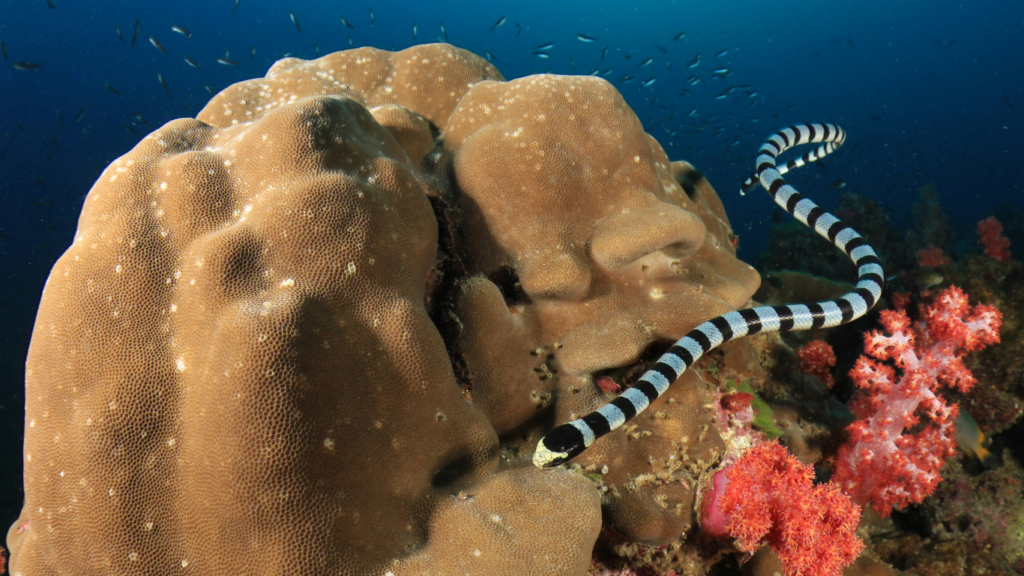
Volcanic islands emerge from the sea, creating dramatic underwater topography shaped by centuries of geological activity. Around Manuk, one of the expedition’s highlights, divers may encounter large numbers of sea snakes weaving effortlessly through the reef while schools of pelagic fish patrol the blue.
A few days later, the reefs change once again.
The remote Lucipara Islands feel almost untouched, with pristine coral formations surrounded by open ocean. Far from busy coastlines, these reefs offer a completely different diving experience, reminding you just how vast Indonesia’s archipelago really is.
Then comes another surprise.
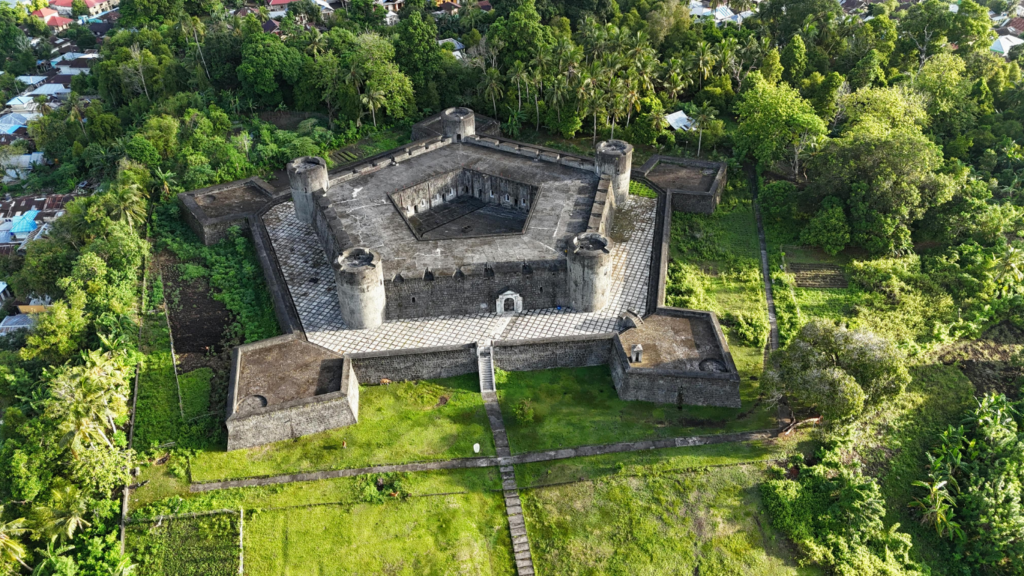
Instead of another remote reef, the expedition arrives at Banda Neira, the historic heart of Indonesia’s spice trade. Walking through its colonial streets after days at sea offers a welcome change of pace before the adventure continues underwater.
By the time you reach Ambon eleven days later, it feels less like visiting a single destination and more like completing an expedition across several worlds.
Every season in Indonesia offers something different.
For the Banda Sea, October has earned a special reputation.
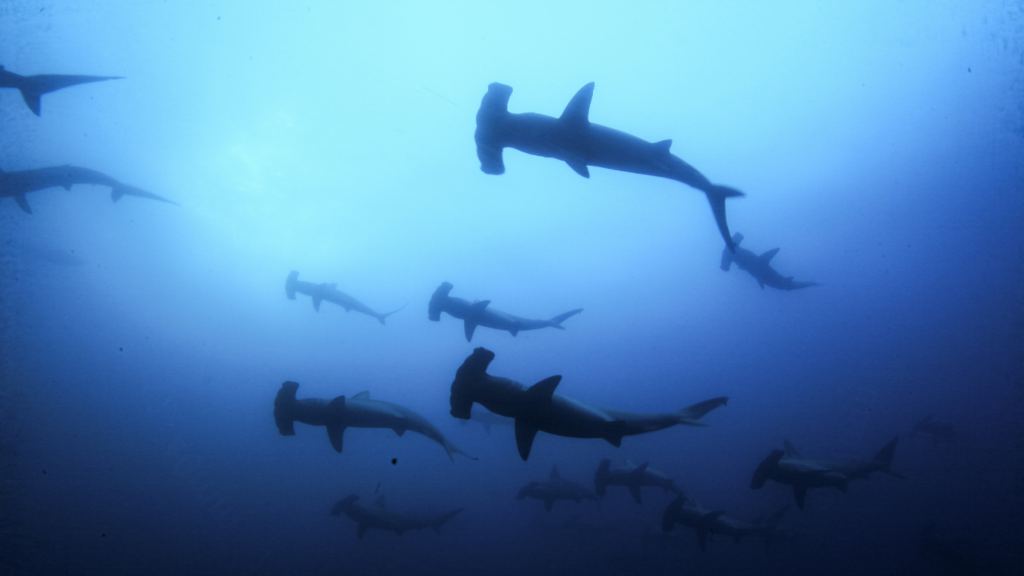
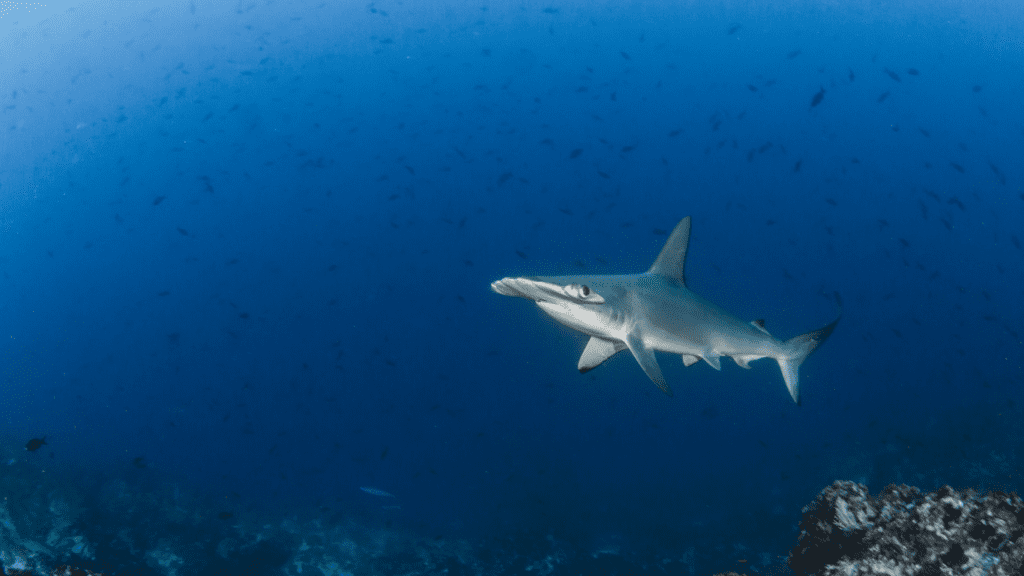
It is traditionally the time of year when divers have the best chance of encountering schooling hammerhead sharks around the Hatta Islands. Like all wildlife encounters, nothing can ever be guaranteed, but generations of divers return during this period hoping to witness one of the ocean’s most iconic sights.
Of course, hammerheads are only part of the story.
Large schools of fish, pelagic species, vibrant reefs and dramatic underwater landscapes make every day feel different from the last.
That unpredictability is part of what makes expedition diving so rewarding.
No two crossings are ever exactly the same.
This isn’t a trip built around ticking famous dive sites off a list.
It’s designed for divers who appreciate exploration.
Over eleven days aboard KLM Eliya, you’ll complete approximately 28 to 30 dives, depending on weather and sea conditions, while travelling through one of Indonesia’s most diverse marine regions.
Some mornings begin beneath towering volcanic islands.
Others start over remote coral reefs with nothing but open ocean stretching to the horizon.
And occasionally, the best moments happen between dives, watching another island slowly appear on the horizon as the crew prepares for the next adventure.
Expeditions are about more than the places you visit.
They’re about the people you share them with.
Aboard KLM Eliya, the goal isn’t simply to show you great dive sites. It’s to create an experience where every part of the journey feels considered, from the dive planning and safety briefings to meals shared around the table after a full day in the water.
As with every Scuba Junkie Liveaboards trip, routes remain flexible, allowing the Cruise Director to adapt the itinerary according to sea conditions and wildlife activity while always putting guest safety first.
That flexibility is one of the reasons expedition diving feels so different from a fixed itinerary.
Nature sets the schedule.
We simply make the most of it.
A New Chapter for Scuba Junkie KLM Eliya
October 2027 marks an exciting milestone as KLM Eliya embarks on her very first October Banda Sea crossing with a three-part Banda Sea Crossing Series that bridges some of Indonesia’s most legendary diving hubs..
The three expeditions that are in this series are:
To celebrate, we’ve got a little surprise planned for guests who have sailed with us before as part of your loyalty reward.
We’re not saying any more just yet…
But if you’ve been part of the Eliya family before, keep an eye on your email (before 31st August 2026).
We think you’ll like it.
If your idea of the perfect dive trip is staying in one place, this probably isn’t it.
But if you enjoy waking up somewhere new, exploring remote islands, and never quite knowing what tomorrow’s dive will bring, then the Banda Sea liveaboard expedition offers something genuinely different.
It’s an adventure that rewards curiosity as much as experience.
And once you’ve crossed from Alor to Ambon, you’ll understand why so many divers describe expedition diving as their favourite way to explore Indonesia.
Scuba Junkie KLM Eliya sails this expedition in October, traditionally the season offering the best chance of encountering schooling hammerhead sharks.
The Alor to Ambon expedition lasts 11 days and 10 nights.
Depending on weather and sea conditions, divers can expect approximately 28 to 30 dives during the expedition.
No. Wildlife encounters are never guaranteed, but October has traditionally offered the best opportunity to encounter schooling hammerheads.
This expedition is designed for experienced divers who enjoy exploration, changing environments and multi-day crossings.
There are regular dive trips, and then there are true expeditions.
The journey from Raja Ampat to Alor with Scuba Junkie Liveboards KLM Eiya belongs firmly in the second category: an 11-day Banda Sea crossing through some of the most remote, untouched and spectacular waters in Indonesia. Stretching across nearly 1,500 kilometres of archipelago, this voyage connects the legendary reefs of Raja Ampat to the volcanic wilderness of the Banda Sea before ending in the biodiversity-rich waters of Alor.
For divers looking for more than a standard liveaboard itinerary, this is a voyage into the heart of the Ring of Fire, a region shaped by tectonic forces, deep ocean currents and centuries of isolation, and one of the most biodiverse marine environments on Earth.
The expedition departs from Sorong, gateway to Raja Ampat. From there, we will head south toward Misool, the wildest and most visually dramatic region of southern Raja Ampat.
Towering limestone karsts rise above turquoise lagoons. Underwater, the reefs explode with life: dense schools of fusiliers and snappers drifting across coral slopes draped in giant sea fans, barracudas patrolling blue-water drop-offs, manta rays circling cleaning stations. Misool delivers everything Raja Ampat promises, and then some.
But unlike most Raja Ampat liveaboard itineraries, this Banda Sea expedition does not stop there.
Crossing into the Banda Sea changes the atmosphere entirely. The reefs become more remote. The distances are longer. The ocean is deeper and wilder.
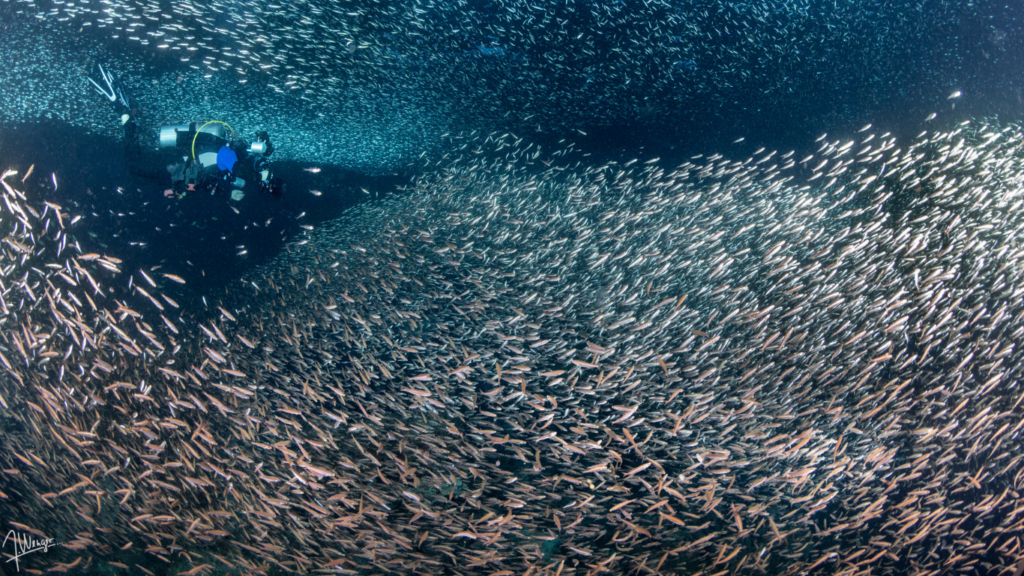
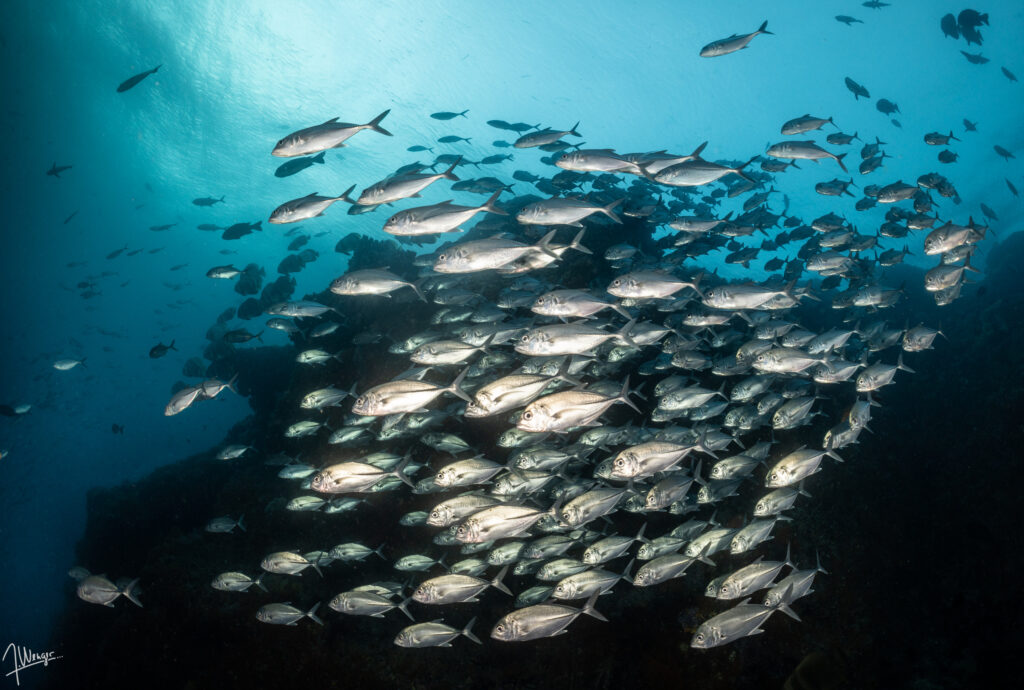
One of the expedition highlights is Pulau Koon, home to a site known simply as “Too Many Fish”. The name barely does it justice. Massive schools of reef fish blanket the reef in astonishing density, while turtles, sharks and pelagic predators move constantly through nutrient-rich currents.
Further south lies Pulau Manuk, an isolated volcanic island rising abruptly from the open Banda Sea. Black volcanic cliffs steam under the tropical sun while thousands of seabirds circle overhead. Below the surface, it offers one of the most unusual diving experiences anywhere in the world.
Manuk is famous for its sea snakes — not the occasional encounter most divers experience elsewhere — but the huge numbers of highly active sea snakes hunting together across the reef slopes, weaving through schools of fish alongside giant trevallies. The kind of dive that stays with you for a long time to come.
As the voyage pushes deeper into the Banda Sea, the sense of isolation becomes even more striking. Remote volcanic islands such as Teun, Nila, Serua, Romang and Wetar sit far from regular tourism routes, surrounded by deep ocean currents and vast open water.
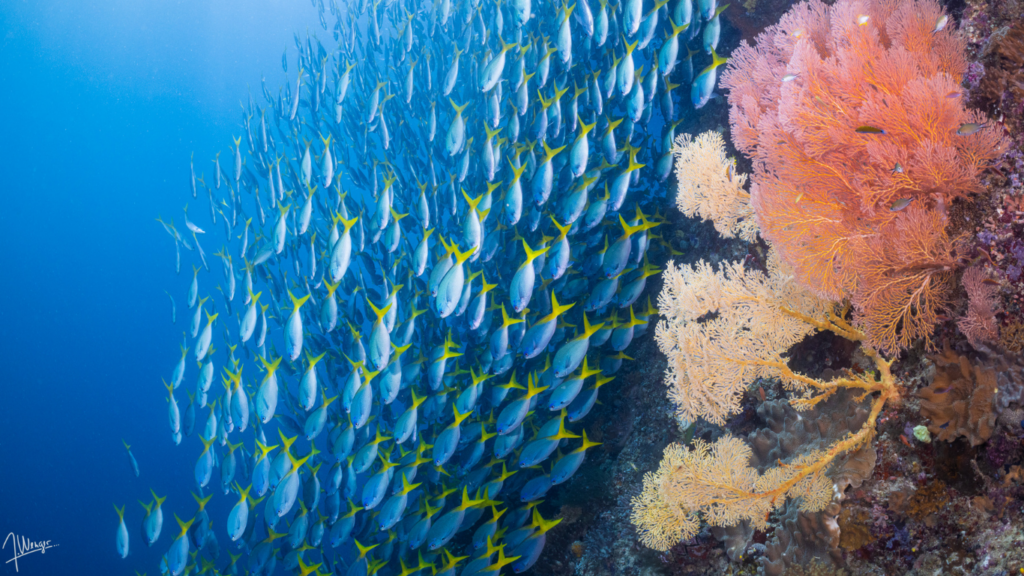
The diving here feels raw and untamed: steep walls disappearing into the blue, offshore pinnacles swept by current, reefs alive with schools of jacks, fusiliers and roaming predators. Between dives, rugged coastlines and dramatic volcanic scenery reinforce what this trip really is — one of Indonesia’s truly wild frontiers.
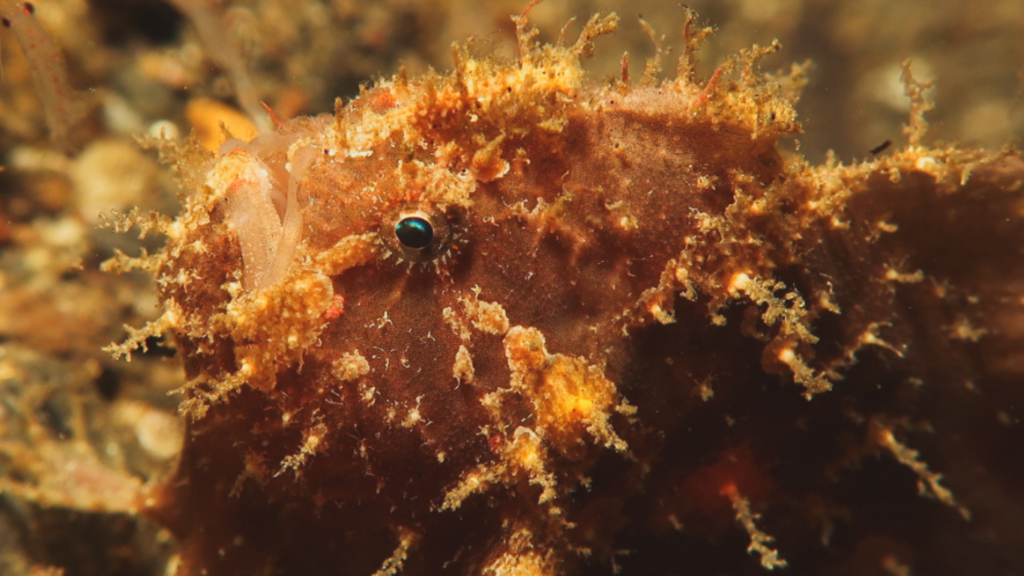
The final chapter unfolds in Alor, widely considered as one of Indonesia’s most underrated diving destinations.
Nutrient-rich currents flowing through the Pantar Strait create ideal conditions for marine biodiversity. Depending on seasonal conditions, mola mola and hammerhead sharks may appear in the blue. And after days of drift dives and volcanic reef systems, the expedition slows down with an evening muck dive in Kalabahi Bay, where frogfish, nudibranchs, crustaceans and other macro creatures hide in dark volcanic sand.
A fitting finale to a journey defined by variety.
This is not a trip for everyone, and that is entirely the point.
The Raja Ampat to Alor crossing is designed for experienced divers comfortable to dive in currents as currents dictate the dives in this expedition. Every island feels isolated from the modern world.
Recommended experience level: intermediate to advanced divers. Drift diving experience is strongly advised.
The crossing is typically operated during the transitional seasons, March to May and September to November, when prevailing winds shift and sea conditions allow for safe passage through the open Banda Sea. These windows also coincide with optimal conditions in both Raja Ampat and the Banda Sea, where thermoclines bring cooler, nutrient-rich water and increase the chances of pelagic encounters.
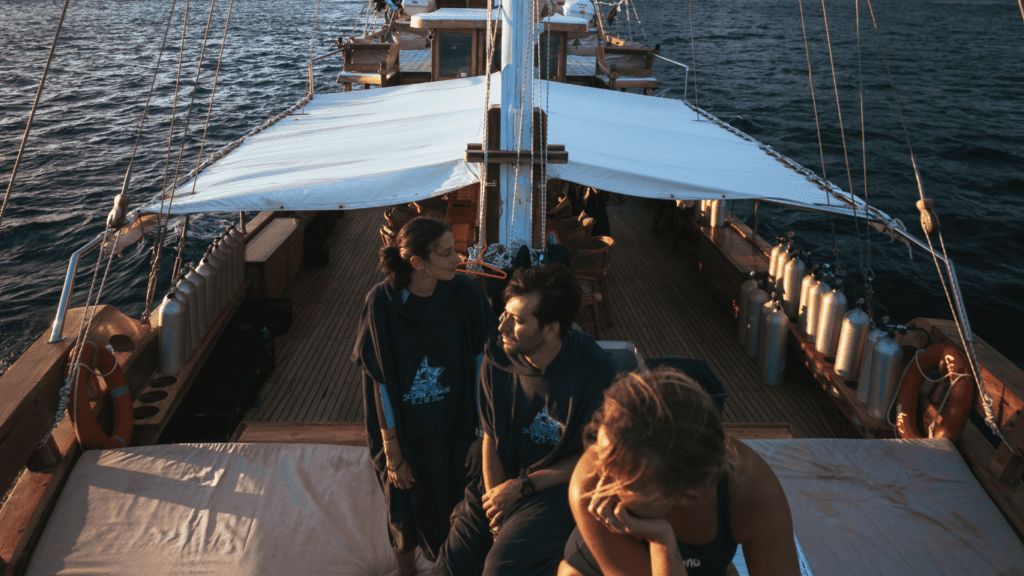
Over 11 days, life onboard our KLM Eliya settles into the rhythm of the sea: sunrise briefings, long crossings under starlit skies, remote anchorages and conversations shared on deck after unforgettable dives.
The dive guides aboard KLM Eliya know these waters intimately. Their knowledge of currents, seasonal behaviour and site-specific marine life is what turns a good dive into an exceptional one. In waters this remote, that expertise matters and it is those expertise that will give you the best expedition experience all while looking after the environment.
More than a dive trip, this voyage moves through multiple ecosystems, geological worlds and cultural regions, from Raja Ampat’s limestone lagoons to the active volcanoes of the Banda Sea and the remote communities of Alor. It feels closer to an old-style ocean expedition than a conventional dive cruise.
This is the kind of journey divers talk about for years. Spots go quickly, and for good reason. So, time to join the Scuba Junkie Liveaboards family and come share our passion for the ocean!
Check availability or contact the team now to book your next diving adventure.
How long is the Raja Ampat to Alor Banda Sea Liveaboard Expedition?
KLM Eliya’s Sorong to Alor expedition runs over 11 days, covering approximately 1,500 kilometres of Indonesian archipelago across Raja Ampat, the Banda Sea and Alor.
What experience level is required?
Intermediate to advanced divers. You will encounter strong currents, open-ocean crossings and multi-day sea passages. Drift diving experience is strongly advised. This trip is not suitable for beginners.
What is the best time to do this crossing?
March to May and September to November are the recommended windows, when seasonal conditions allow safe passage through the Banda Sea and maximise opportunities for pelagic encounters.
What marine life can I expect?
Manta rays, reef sharks, sea snakes, giant trevallies, massive schools of jacks and fusiliers, turtles, frogfish and nudibranchs throughout the route. Depending on timing, mola mola and hammerhead sharks are possible in Alor. The species variety across 1,500 kilometres is extraordinary.
How do I get to Sorong?
Sorong is served by domestic flights from Jakarta, Bali, Makassar and Manado. Most guests fly via Jakarta or Bali. Plan for at least one overnight in Sorong before embarkation.
Some dive trips are built around famous sites.
Others are built around something deeper — the feeling of movement, exploration, and waking up each day somewhere new.
That is what makes a Banda Sea diving trip so different.
With Scuba Junkie Liveaboards aboard KLM Eliya, the Banda Sea is not simply a destination. It is a crossing through one of Indonesia’s most fascinating regions, linking iconic dive areas through open ocean, volcanic islands, rich reefs, and constantly changing scenery.
For divers looking for something beyond the usual routine, a Banda Sea diving trip offers exactly that.
Unlike trips that remain in one marine park or island group, a Banda Sea diving trip connects regions through a liveaboard journey.
These seasonal crossings typically operate in:
The routes may include:
Rather than staying anchored in one area, you travel through multiple environments, experiencing different coastlines, reef systems, and dive conditions along the way.
It feels less like a standard holiday, and more like an adventure shaped by the sea.
March is one of the most exciting times for a Banda Sea diving trip, as KLM Eliya transitions between Raja Ampat and eastern Indonesia.
Current March schedules include:
October crossings are also available seasonally, offering another chance to experience this remarkable route.
There is a rhythm to this kind of travel.
Some mornings begin with a dive briefing as the sun rises over a volcanic island. Some afternoons are spent crossing open water, watching the horizon shift slowly around you. Some evenings end under a sky full of stars, replaying the day’s dives with fellow guests on deck.
This is what many divers love most about a Banda Sea diving trip.
It is not only about ticking off dive sites.
It is about the full journey.
The movement.
The anticipation.
The changing scenery.
The sense that every day may bring something new.
The Banda region is known for big-water potential, healthy reefs, and variety across the route.
Depending on season, conditions, and exact itinerary, divers may encounter:
October crossings are also known for the possibility of schooling hammerheads in the right place, time and conditions.
As always with wildlife, nothing can be guaranteed — and that is part of the excitement.
Every dive holds possibility.
One of the most honest things to say about a Banda Sea diving trip is that it is not built on repetition.
Conditions can change.
Visibility may vary from one area to another. Currents can be mild one day and more dynamic the next. Some days focus heavily on diving, while others include longer travel stretches between destinations.
This is not a flaw of the trip.
It is the nature of expedition-style diving.
Guests who enjoy flexibility, variety, and a more organic journey often find this part of the appeal.
This trip is usually best suited to divers who enjoy:
It is not about needing to be the most technical diver in the group.
It is more about mindset.
Curiosity. Patience. Adventure.
While the ocean changes daily, life onboard offers consistency and comfort.
KLM Eliya was designed with divers in mind and hosts a maximum of 14 guests in ensuite cabins. Small dive groups aim for up to four guests per guide, creating a more personal experience in the water.
Days are built around diving, meals, rest, and the easy rhythm that makes liveaboard travel so enjoyable.
There is time to relax between dives, take in the view, and enjoy the journey itself.
Komodo is dynamic.
Raja Ampat is famously biodiverse.
The Banda Sea offers something different.
A sense of crossing through Indonesia rather than staying in one place.
For many experienced divers, that feeling becomes the highlight.
Not one single dive.
Not one famous site.
But the whole journey.
March and October are the main seasonal crossing months.
Depending on route, trips may offer around 25 to 28 dives.
This trip is generally better for divers comfortable with changing conditions and longer liveaboard journeys.
Yes. Guests may join individual routes such as Raja Ampat to Alor or Alor to Komodo.
A Banda Sea diving trip is not the most conventional dive holiday.
That is exactly why people love it.
It offers movement instead of routine. Variety instead of repetition. Discovery instead of predictability.
And for divers who enjoy the feeling of being on a true journey, few trips compare.
Komodo Raja Ampat Banda Sea Diving – If yoIf you’ve been looking into diving in Indonesia, you’ve likely come across the same three destinations again and again: Komodo, Raja Ampat, and the Banda Sea.
At first, it feels like a choice.
But in reality, it’s more like a journey.
With Scuba Junkie Liveaboards, the same vessel — KLM Eliya — follows the seasons across Indonesia, exploring each of these regions at the best possible time of year.
So instead of asking which one is better, the real question becomes:
Which one feels right for you, right now?
One of the unique things about these trips is that they are not fixed in one place.
KLM Eliya moves with the seasons:
Each destination has its moment — when conditions, marine life, and overall experience align at their best.
And that’s when we go.
Komodo National Park is where many divers first experience Indonesia — and it leaves a strong impression.
This is a place shaped by currents. Nutrient-rich water flows through narrow channels, feeding an ecosystem that feels constantly alive.
Underwater, you can expect:
Every dive feels different. Some are calm, others more dynamic — but always full of life.
Komodo is surprisingly accessible. With the right planning and guidance, many divers — including those newer to currents — can enjoy it. It’s also a place where divers can continue learning, with courses available onboard.
Above the water, the experience adds another layer:
Raja Ampat feels different from the moment you arrive.
The pace slows down. The reefs become denser. Life is everywhere.
This is often considered the most biodiverse marine ecosystem on Earth — and it shows in every dive.
Marine life highlights include:
The diving here is less about intensity and more about immersion. You don’t chase the experience — you float through it.
Raja Ampat trips require a bit more experience. Divers are expected to be Advanced or hold a Deep Specialty certification, as conditions and profiles can vary.
This is not a place for courses — it’s a place to enjoy and explore.
Banda Sea is where things become more exploratory.
These trips are not just about diving — they’re about crossing a remote part of Indonesia that few divers experience.
The Banda Sea season is short and special:
The journey is divided into two legs:
Guests can join either one, or experience the full crossing.
Underwater, this is big ocean diving:
This is where the ocean feels vast.
More experienced divers who are comfortable in changing conditions and looking for something more remote and exploratory.
While each destination feels different, life onboard remains beautifully consistent.
Mornings begin early, often just before sunrise.
The day flows between dives, meals, rest, and quiet moments on deck.
Evenings slow down — sunsets, conversations, and the feeling of being far from everything else.
The boat becomes home.
And as the scenery changes — Komodo’s rugged hills, Raja Ampat’s limestone islands, Banda’s open horizons — the rhythm stays the same.
Komodo Raja Ampat Banda Sea Diving – These destinations share one thing in common: the best dive sites are not close to shore.
A liveaboard allows you to:
Because the itinerary is flexible, every trip is slightly different — shaped by the ocean, not by a fixed schedule.
Each destination offers something unique:
The good news is — you don’t have to choose forever.
Many divers come back to experience all three.
Yes. KLM Eliya moves seasonally between Komodo, Raja Ampat, and the Banda Sea.
Komodo (April–September), Raja Ampat (November–February), Banda Sea (March & October).
Komodo is generally the most accessible, with guidance and courses available onboard.
Yes, divers are required to be Advanced or have a Deep Specialty certification.
Yes, you can join either leg (Raja Ampat–Alor or Alor–Komodo) or complete the full crossing.
Komodo, Raja Ampat, and the Banda Sea are not competing destinations.
They are chapters of the same story.
Each one reveals a different side of Indonesia — its energy, its biodiversity, its remoteness.
And whichever one you choose, you’re not just visiting a place.
You’re stepping into a journey shaped by the ocean.