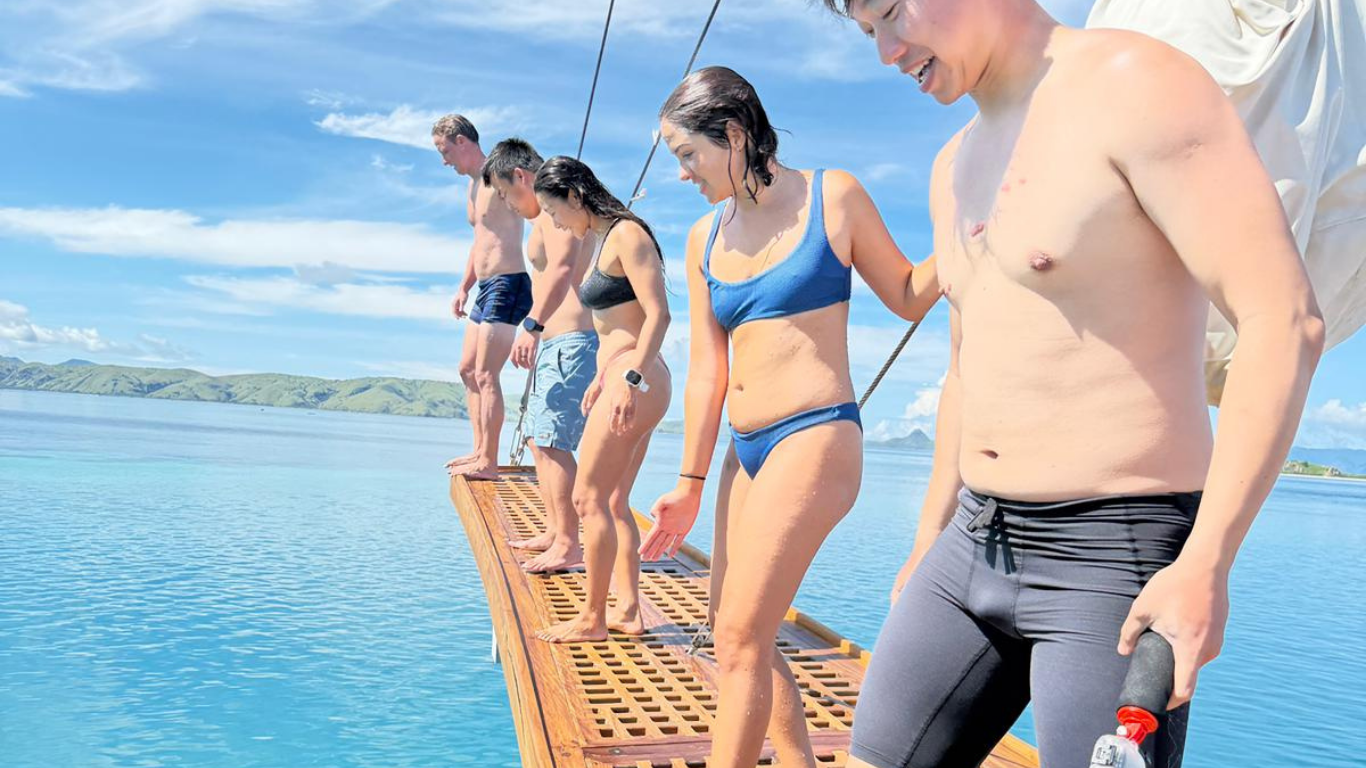
We provide Liveaboard trips in the within Indonesia. With trips to Komodo National Park, Raja Ampat & Banda Sea aboard our beautiful KLM Eliya. Come explore the beauty of some of Indonesia's best dive locations!
Looking for tips and tricks about diving, marine life or what to do in Indonesia? Follow us on our blog for weekly updates from the team!
Phinisi Liveaboard: Sailing Indonesia’s UNESCO Maritime Heritage

KLM Eliya l Uncategorized May 27, 2026
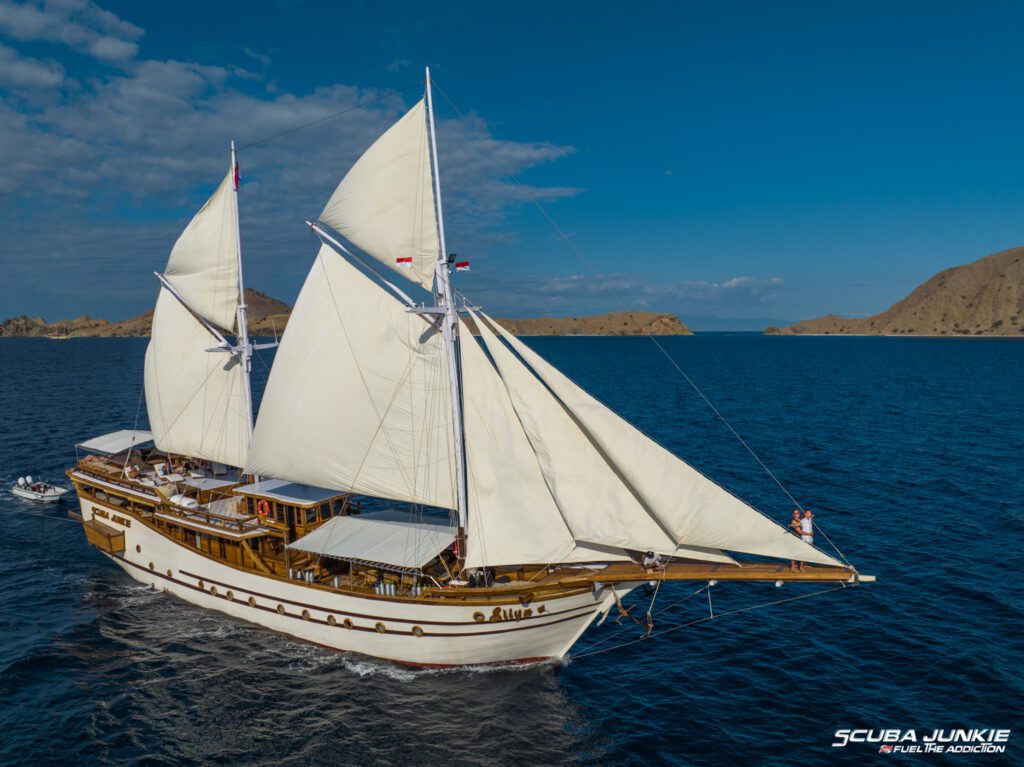
Table of Contents
Long before diving trips, before liveaboards, before routes connecting Komodo, Raja Ampat, or the Banda Sea, there were ships built for something far more essential.
They were built to travel.
The phinisi liveaboard we know today began as something entirely different — a traditional Indonesian sailing vessel, crafted by the Bugis and Konjo people of South Sulawesi. For generations, these master shipbuilders created wooden boats designed to cross vast stretches of ocean, carrying goods, people, and stories between islands.
These were working ships. Strong, purposeful, and deeply connected to the sea.
They transported spices across trade routes, connected remote communities, and navigated Indonesian waters long before modern navigation existed. Built without written blueprints, their design was passed down through memory, skill, and experience — a living tradition shaped by those who understood the ocean intimately.
This craftsmanship became so significant that the art of building these vessels was recognized by UNESCO as part of the world’s intangible cultural heritage.
And yet, despite their long history, the story of the phinisi has never really stopped.
It has simply evolved.
From Trade Routes to Ocean Journeys
Over time, the purpose of the phinisi began to change.
The same design that once carried cargo across Indonesia proved perfectly suited for a different kind of journey — one not driven by trade, but by exploration.
The structure remained the same. The spirit remained the same. But the experience onboard slowly transformed.
What was once a vessel built for movement became a place where people could stay, observe, and experience the ocean in a more personal way.
This is where the modern phinisi liveaboard begins to take shape.
Where Tradition Meets the Present
Today, stepping onto a phinisi liveaboard still feels like stepping into that history — even if the experience itself has evolved.
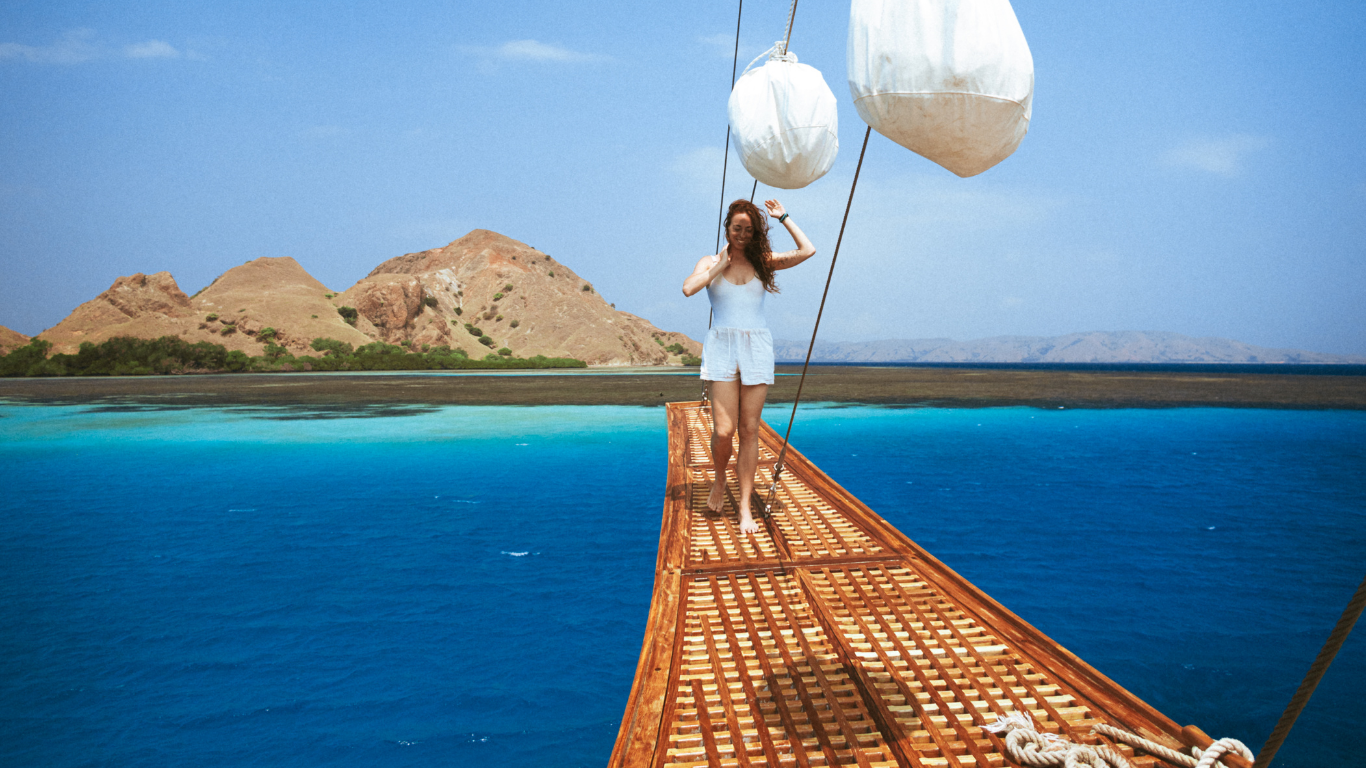
From the outside, the silhouette is unmistakable. The twin masts, the wooden hull, the proportions shaped by centuries of design.
But onboard, things feel different.
Spaces are designed for comfort. Cabins offer privacy and rest. Open decks invite you to slow down and take in your surroundings.
It is not about turning the vessel into something modern and unrecognisable.
It is about adapting it carefully — allowing tradition and present-day travel to exist together.
Life at Sea, As It Was Meant to Be
Once the journey begins, time takes on a different rhythm.
There is no rush. No fixed pace beyond the one set by the sea.
Mornings arrive quietly, often with the first light reflecting across the water. The horizon feels endless. The day unfolds naturally, without urgency.
Between dives, there is space — not just physically, but mentally.
You sit on deck. You watch the water move. You begin to notice the small details that often go unseen.
The sound of the hull cutting through the sea.
The warmth of the sun after a dive.
The stillness that settles in during longer crossings.
On a phinisi liveaboard, these moments are not interruptions.
They are part of the experience.
The Journey Becomes the Destination
A phinisi was never meant to remain in one place.
It was designed to move — and that movement continues to define the experience today.
As KLM Eliya sails through regions like Komodo, Raja Ampat, and the Banda Sea, each journey unfolds differently.
Some days are filled with diving, exploring reefs shaped by currents and marine life. Other days are quieter, spent travelling between destinations, watching the landscape shift slowly around you.
There is a balance between action and stillness.
And over time, that balance becomes what you remember most.
KLM Eliya: A Modern Chapter in an Old Story
KLM Eliya carries this heritage forward in a way that feels natural.
Built by master craftsmen and shaped by the experience of the Scuba Junkie Liveaboards team, she reflects both the tradition of the phinisi and the needs of modern divers.
She accommodates a small number of guests, creating space not just physically, but in the overall experience. The rhythm onboard remains unhurried. The focus stays on the journey as much as the destination.
There is a quiet confidence in the way she moves through the water.
Not trying to stand out — simply belonging.
Why a Phinisi Liveaboard Feels Different
Many boats can take you to a dive site.
A phinisi liveaboard offers something else.
It connects you to a way of travelling that is slower, more intentional, and more aware of its surroundings.
It is not about rushing from one location to another.
It is about being present for the journey itself.
And somewhere along the way, you begin to realise that the boat is no longer just transport.
It has become part of the experience.
Frequently Asked Questions (FAQs)
What is a phinisi liveaboard?
A phinisi liveaboard is a traditional Indonesian wooden sailing vessel adapted for modern travel and diving, recognised by UNESCO as maritime heritage.
Who builds phinisi boats?
They are built by skilled Bugis and Konjo shipbuilders in South Sulawesi using techniques passed down through generations.
What were phinisi boats originally used for?
They were traditionally used for trade, transporting goods and people across Indonesian islands.
Is a phinisi liveaboard comfortable?
Yes. Modern vessels like KLM Eliya combine traditional design with comfortable living spaces suited for multi-day journeys.
Final Thoughts
A phinisi liveaboard is not just a way to explore Indonesia.
It is a continuation of a story.
A story shaped by the sea, carried through generations, and still unfolding today.
And when you step onboard, you are no longer just travelling across the ocean.
You are becoming part of that journey.