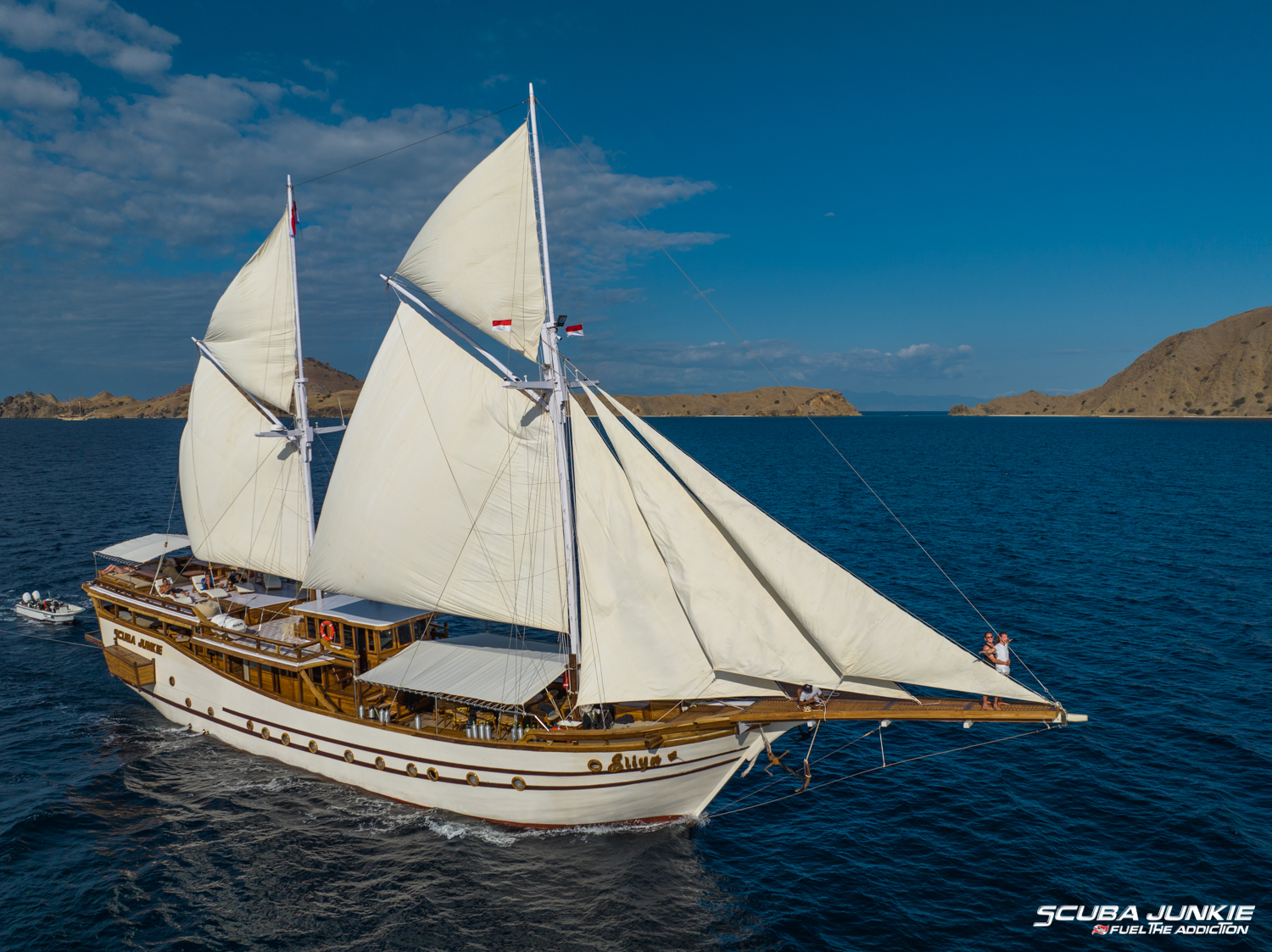
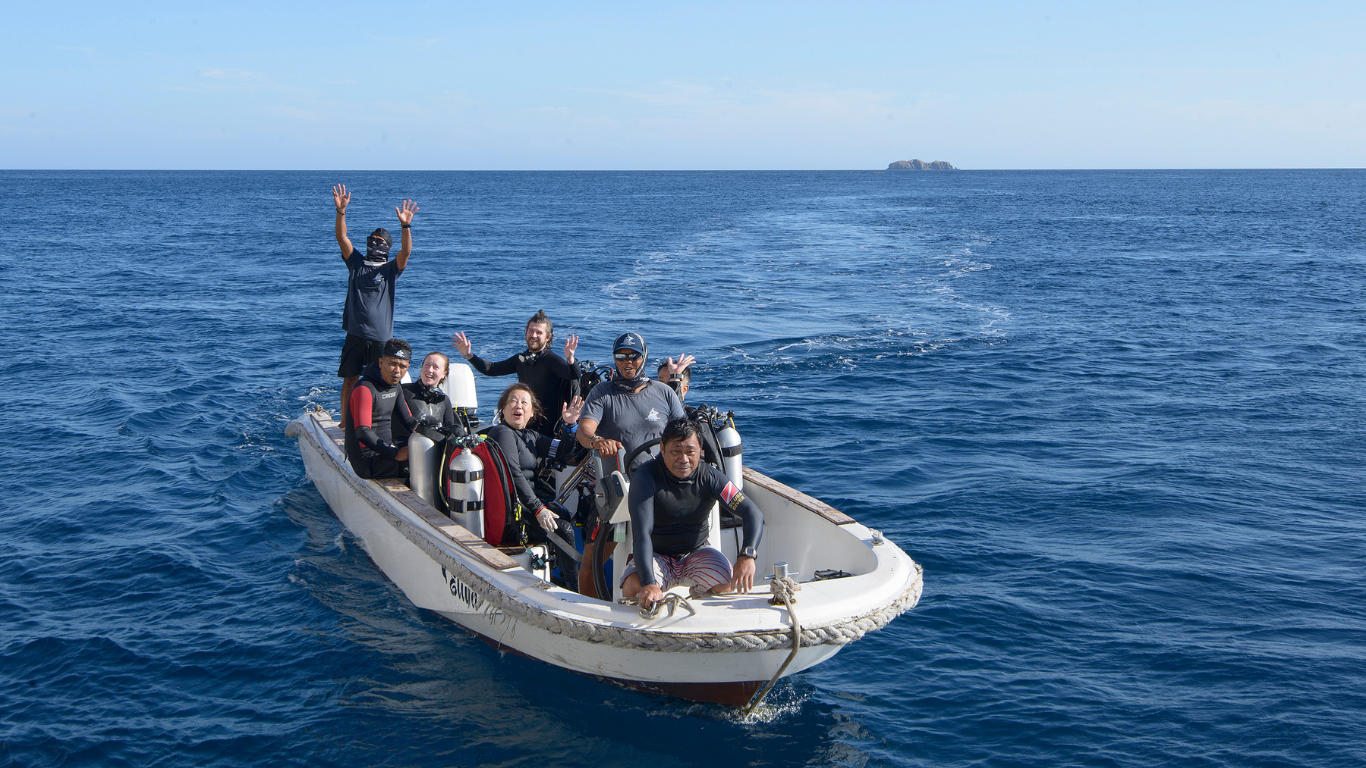
We provide Liveaboard trips in the within Indonesia. With trips to Komodo National Park, Raja Ampat & Banda Sea aboard our beautiful KLM Eliya. Come explore the beauty of some of Indonesia's best dive locations!
Looking for tips and tricks about diving, marine life or what to do in Indonesia? Follow us on our blog for weekly updates from the team!
Manta Ray Courtship: Understanding What You Are Really Seeing Underwater

Uncategorized June 30, 2026
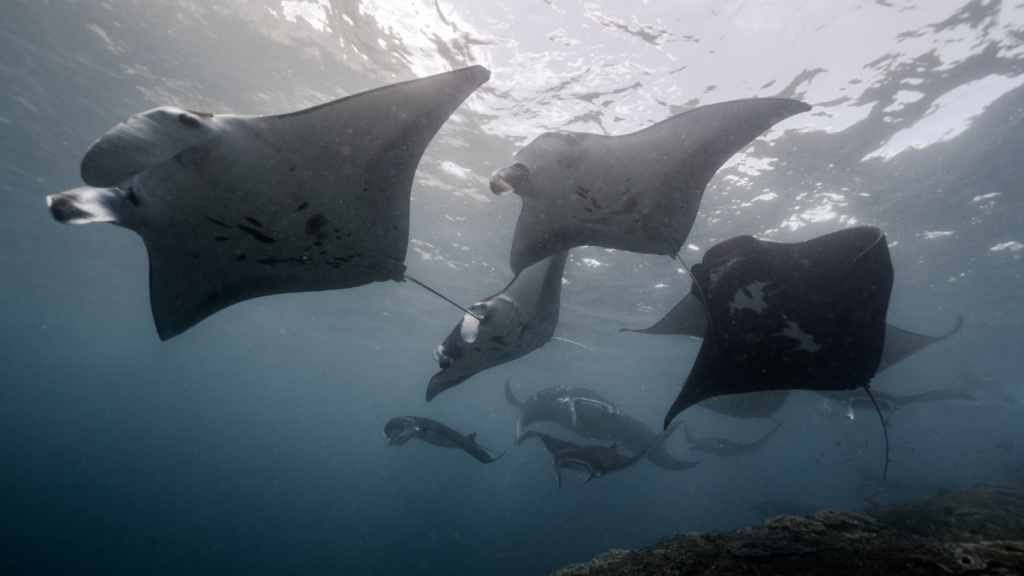
Table of Contents
There are moments underwater that leave divers with more questions than answers.
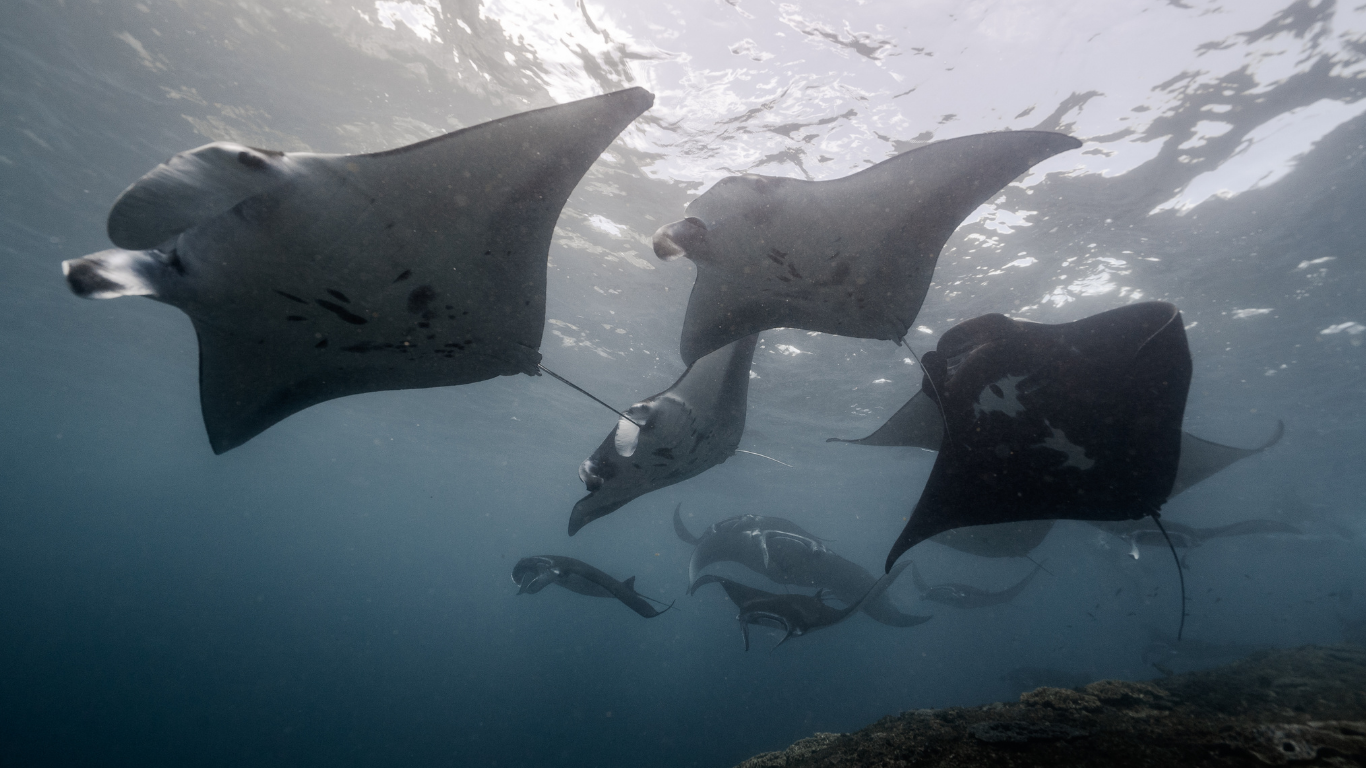
Imagine you’re diving in Komodo and you notice several manta rays swimming together. One animal leads while the others follow closely behind. They seem focused, constantly adjusting their speed and direction together. At first glance, it almost looks choreographed.
Back on the boat, somebody eventually asks the same question.
“What were they doing?”
The answer is actually quite simple.
You were probably watching manta ray courtship or also known as manta mating train.
While it may look like a random gathering, researchers from organisations such as the Marine Megafauna Foundation and Manta Trust have shown that this behavior follows a surprisingly structured process. What divers often call a “manta train” is part of the way these animals find and select a mate.
What Is Manta Ray Courtship?
Everything starts with a female.
As she swims, one male may begin following her. Soon, several more may join in, creating a line of manta rays swimming closely behind one another. Scientists refer to this as a mating train.
What is interesting is that the female is not simply being chased. In fact, she controls the encounter.
Researchers have documented females changing direction, accelerating, descending, and making sudden turns while the males attempt to maintain their position. Over time, some individuals drop away while others remain.
Rather than a race, it is more like a test of endurance.
The female is effectively deciding which males are fit enough to continue.
From Courtship to Mating
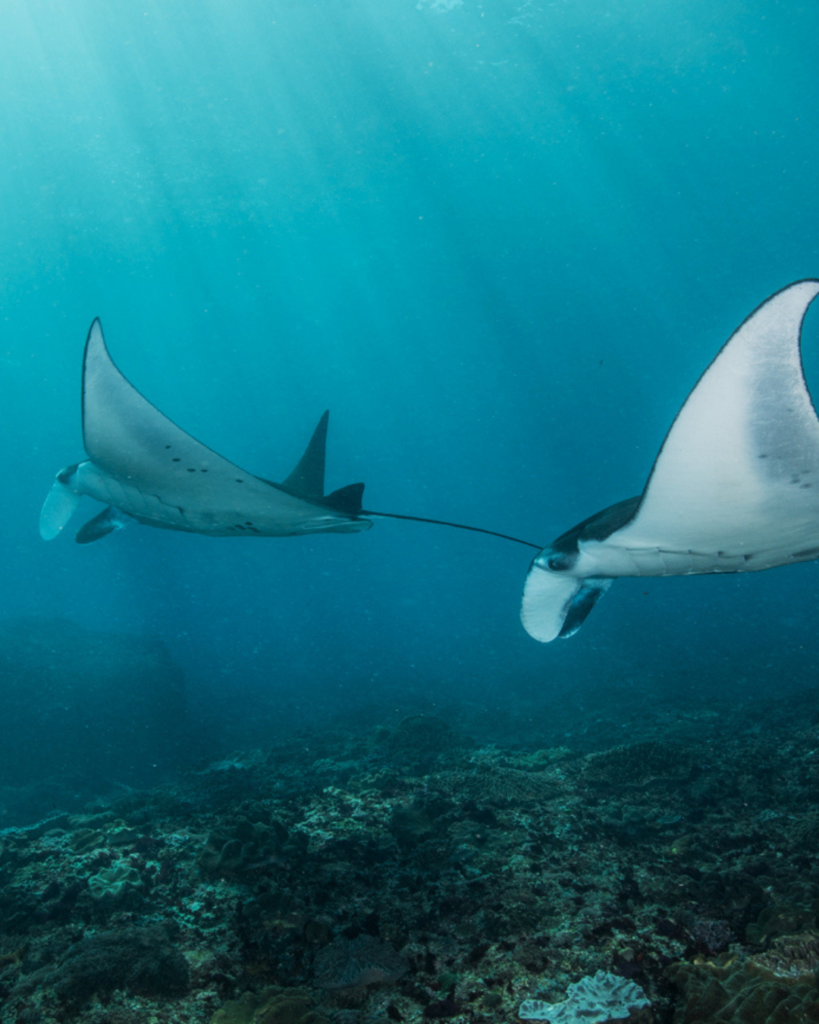
Most divers are lucky enough to witness the beginning of the story. However, very few get to see the end — the happy ending…
According to observations made by manta researchers, once only one male remains, he attempts to grasp the female’s left pectoral fin with his mouth — that’s the only time the manta’s teeth come in use as they’re filter feeders. The pair rotate belly-to-belly and mating takes place.
Surprisingly, after hours of courtship, the actual mating event lasts only a few seconds.
Soon afterwards, the pair separate and disappear back into the blue.
Which explains why most people see courtship trains, but very rarely witness mating itself.
Why Protected Areas Matter
Manta rays do not perform these behaviours everywhere.
Courtship and reproduction require healthy populations, abundant food, and environments where the animals can move with minimal disturbance.
This is one of the reasons marine protected areas are so important.
Protected regions like Komodo National Park provide the conditions that allow manta rays to feed, migrate, and reproduce. But protection alone is not enough. Understanding these animals is equally important.
Organisations such as Marine Megafauna Foundation Indonesia have spent years identifying individual manta rays, tracking their movements, and studying their behaviour. Thanks to this work, scientists now understand much more about how manta populations use Indonesian waters.
And perhaps most importantly, this research helps managers and conservation groups make better decisions to ensure these populations remain healthy for generations to come.
What Should Divers Do?
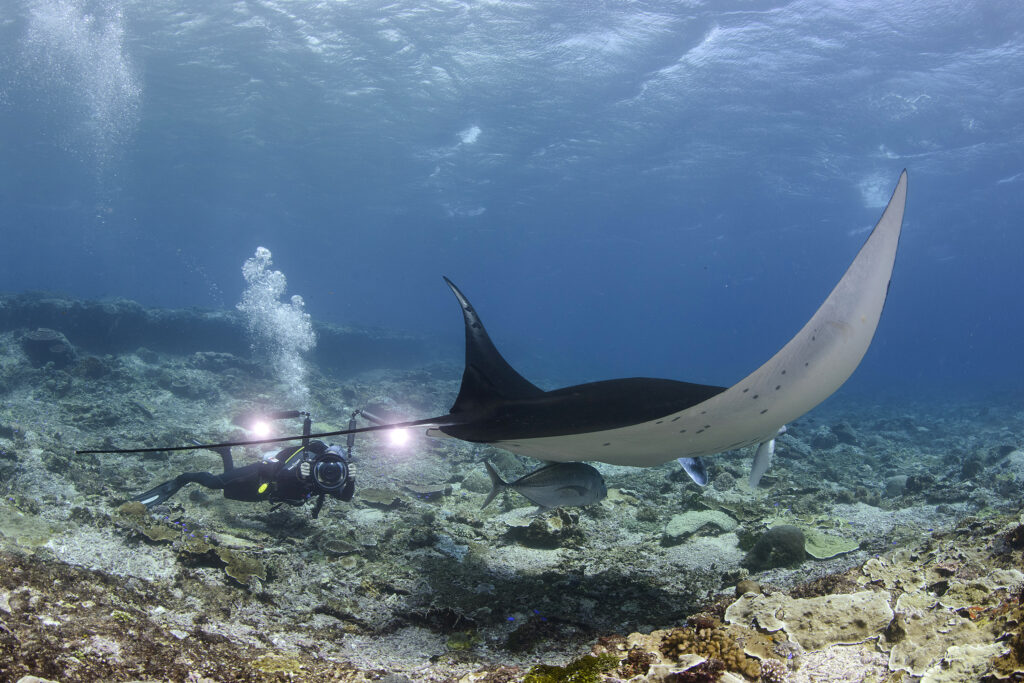
Watching manta ray courtship is fascinating, but it is also important to remember that we are observing a natural behaviour.
The best approach is usually the simplest one.
Stay calm. Maintain good buoyancy. Avoid chasing the animals or positioning yourself in their path.
Most of the time, the less we interfere, the more natural the encounter becomes.
And understanding what is happening often makes the experience even more rewarding.
If the opportunity presents itself, take ID shots of manta belly patterns and upload the data to a database like MantaMatcher as that will help scientists to understand their movement and behavior better to be able to protect them more effectively.
How Much Do We Still Have to Learn?
Despite decades of research, manta rays continue to surprise scientists.
Many questions remain unanswered. Researchers are still studying migration patterns, nursery areas, social interactions, and even how individuals recognize one another.
Projects led by the Manta Trust and Marine Megafauna Foundation Indonesia have identified thousands of individual manta rays by the unique spot patterns on their bellies, allowing scientists to follow the lives of animals over many years.
And that raises another fascinating question.
If we can recognize individual mantas and understand how they reproduce, where do the young spend their first years?
Where are the nursery grounds?
How far do these animals travel?
And how do they navigate across such enormous areas of ocean?
Those questions deserve an article of their own.
Frequently Asked Questions
What is a manta train?
A manta train is a group of male manta rays following a female during courtship.
How long does manta ray courtship last?
Courtship can last several hours, although mating itself lasts only seconds.
Do female manta rays choose their mates?
Yes. Current research suggests that females play an active role in mate selection.
Can divers witness manta ray mating?
It is possible, but extremely rare. Most divers observe courtship behaviour rather than mating itself.
Why are marine protected areas important for manta rays?
Protected areas provide safe environments that support feeding, movement, and reproduction.
Who studies manta rays in Indonesia?
Several organisations do, including Marine Megafauna Foundation Indonesia and the Manta Trust.