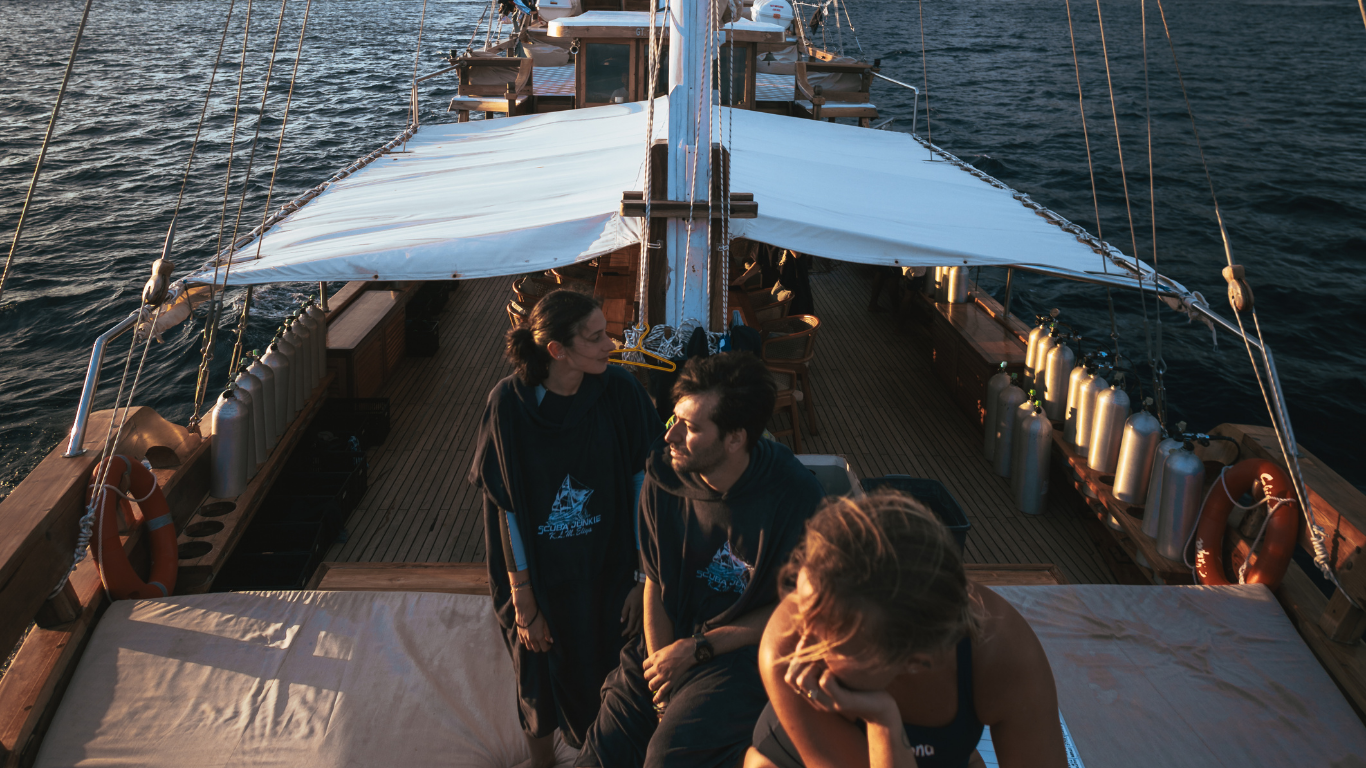
We provide Liveaboard trips in the within Indonesia. With trips to Komodo National Park, Raja Ampat & Banda Sea aboard our beautiful KLM Eliya. Come explore the beauty of some of Indonesia's best dive locations!
Looking for tips and tricks about diving, marine life or what to do in Indonesia? Follow us on our blog for weekly updates from the team!
7 Rare Komodo Critters Every Diver Dreams of Finding (And How to Spot Them)

Uncategorized July 15, 2025
Table of Contents
Introduction:
–Komodo critter diving guide–
Welcome to Komodo National Park, where dragons roam the land and critters rule the reefs. While Komodo is world-famous for thrilling currents, manta rays, and vibrant coral walls, there’s another side to these waters that only the most attentive divers get to see.
Hidden in the sand, tucked into coral rubble, or boldly flashing warning colors—Komodo’s macro critters are nothing short of mind-blowing. This Komodo critter diving guide is your backstage pass to the weird, the rare, and the wonderful. So when your dive guide starts pointing at a bit of seaweed, you’ll know that might just be a ghost nudi about to dance.
This is your go to Komodo critter diving guide
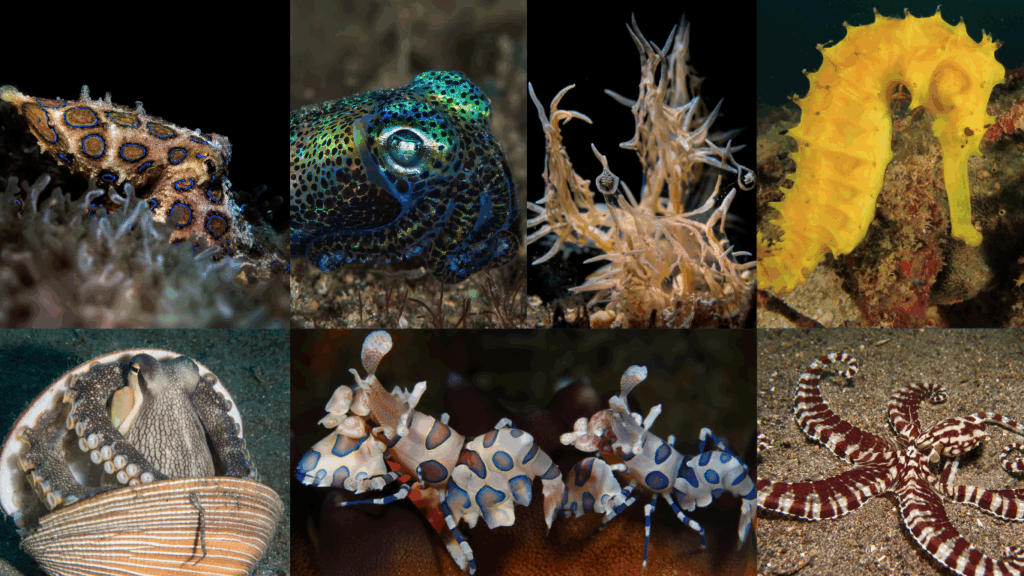
1. The Ghost Nudi (Melibe colemani)
With a body like drifting lace and a face like no other, this nudibranch is one of Komodo’s holy grails. The Melibe colemani isn’t just rare—it’s borderline mythical.
- What to look for: A translucent hood swaying in the current with spindly appendages like sea grass.
- Where it hides: Sandy slopes or rubble patches in calm areas with some current.
- Fun fact: It feeds by “netting” plankton with its expandable oral hood. It’s like a jellyfish in nudibranch form.
Pro tip: If your guide is excitedly circling a patch of “nothing”—stay put and look closer.
2. Coconut Octopus
Adorably eerie, this critter is best known for carrying shells or coconut halves to use as mobile homes. It’s smart, shy, and a total heartthrob once spotted.
- What to look for: A pair of curious eyes peeking from a shell or bottle. It might “walk” across the sand carrying its shelter.
- Where it hides: Mucky, soft sand bottoms.
- Fun fact: It can use tools! It’s been observed stacking shells for defense—a behavior once thought exclusive to humans and primates.
Watch for movement in the debris—it might be more than just trash.
3. Blue Ring Octopus
Small, stunning, and deceptively deadly, the Blue Ring is a powerful reminder that beauty in nature can bite. But don’t worry—it won’t attack unless threatened.
- What to look for: Tiny (palm-sized), with iridescent blue rings that glow when the animal is stressed.
- Where it hides: Under rocks, coral rubble, or inside bottles.
- Fun fact: Despite being so venomous, they’re incredibly hard to find. Many divers spend years hoping to catch even a glimpse.
Never poke around with fingers—your guide will point it out safely.
4. Bobtail Squid
A nighttime gem, these cuties are as round as marbles and glow under your torch thanks to bioluminescent bacteria.
- What to look for: A sparkling, blinking creature half-buried in the sand during night dives.
- Where it hides: Sandy bottoms, often shallow.
- Fun fact: It hides during the day and lights up at night, using its glow to avoid casting a shadow and avoid predators.
Night dive? Stay low and scan the sand slowly—they’re tiny but magical.
5. Harlequin Shrimp
As colorful as a carnival and twice as outrageous, the Harlequin Shrimp hunts sea stars in pairs and lives a drama-filled life among coral rubble.
- What to look for: Vibrant pink, blue, and cream-colored shrimp often seen in pairs.
- Where it hides: Coral rubble or near hard corals, especially if a starfish is nearby.
- Fun fact: They exclusively feed on starfish, sometimes flipping them over and feeding for days.
You’ll fall in love instantly—but remember, look, don’t touch.
6. Thorny Seahorse
They may be common in some regions, but spotting a Thorny Seahorse in Komodo always feels like a win. Their camouflage is next-level.
- What to look for: A bumpy seahorse clinging to coral, sponges, or rope-like algae.
- Where it hides: In soft corals or hydroids in protected sandy or silty slopes.
- Fun fact: It changes color to blend into its background—look for a profile rather than colors.
Let your eyes follow algae lines—you may just find a hidden hitchhiker.
7. Wunderpus
The name alone tells you you’re in for a treat. The Wunderpus is a hypnotic, daytime mimic octopus with striped arms and moves like an underwater magician.
- What to look for: Long-armed, reddish-brown octopus with cream stripes. It “flows” rather than walks.
- Where it hides: Flat sandy or muddy areas, especially just after sunrise or in overcast light.
- Fun fact: It can mimic other animals like lionfish or sea snakes to scare off predators.
It’s shy but curious—give it space and time to reveal itself.
Final Thoughts:
Diving in Komodo is not just about big fish and ripping currents—it’s about the slow, careful, and awe-inspiring search for the tiny treasures that others swim right past. With this Komodo critter diving guide, you’ll be ready to spot, appreciate, and fall in love with some of the ocean’s most extraordinary and bizarre creatures.
Have you seen any of these critters on your dives? Which one is still on your bucket list?
💬 Tell us in the comments—and if you’ve got photos, we’d love to see them too!