We provide Liveaboard trips in the within Indonesia. With trips to Komodo National Park, Raja Ampat & Banda Sea aboard our beautiful KLM Eliya. Come explore the beauty of some of Indonesia's best dive locations!
Looking for tips and tricks about diving, marine life or what to do in Indonesia? Follow us on our blog for weekly updates from the team!
Manta Rays in Komodo and Beyond: 10 Reasons These Ocean Giants Need Our Protection

Conservation l Marine Life September 12, 2025
Table of Contents
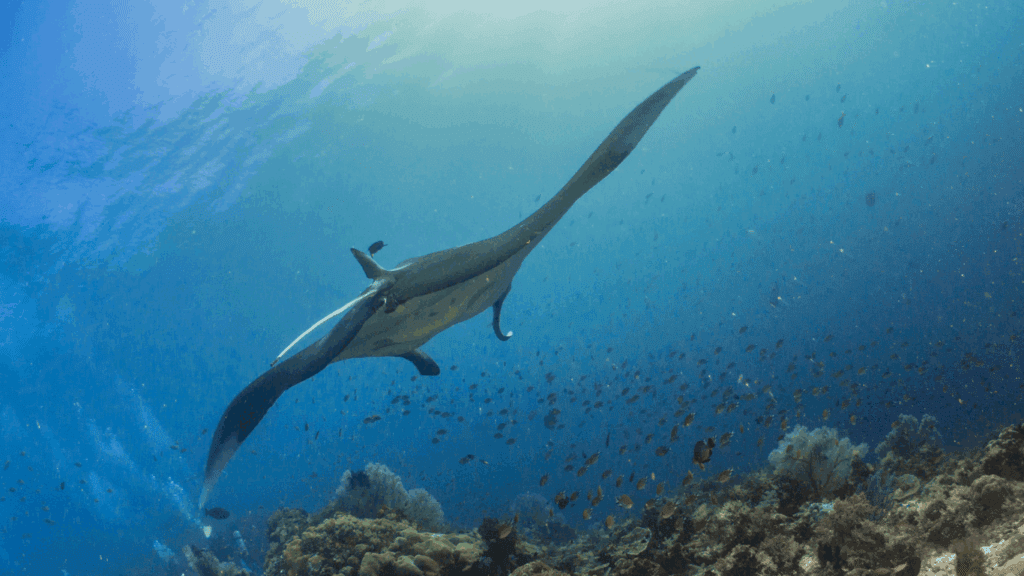
Let’s talk about Manta Rays in Komodo.
There are moments underwater that stay with you for life.
When a manta ray appears — wings spread, moving with effortless grace — everything slows down. The silence deepens. You forget the world above. These creatures don’t just swim. They fly.
To dive with a manta ray in Komodo is to witness something sacred.
It’s humbling. Magical. And increasingly, a privilege we might not always have.
As we mark Manta Day on September 17th, let’s dive into why these gentle giants matter — not just to divers, but to the planet. From the facts that make them extraordinary, to the dangers they face and the safe havens like Komodo, where they still thrive, this is a story worth sharing.
Why Manta Rays in Komodo and the World Matter
1. They’re Filter Feeders — and Ocean Gardeners
Manta rays feed on plankton — tiny organisms floating near the ocean’s surface. Using their large, gaping mouths and cephalic fins (those horn-like flaps), they filter hundreds of liters of water every hour, consuming microscopic algae and zooplankton.
This makes them key players in controlling plankton blooms, keeping ecosystems balanced and healthy — much like whales, turtles, or sharks do in other ocean layers.
They don’t eat fish. They don’t attack. They simply flow.
2. Two Main Species — Including the Enigmatic Black Manta
There are two main species of manta rays:
- Reef mantas (Mobula alfredi) — typically 3–4 meters wide, often found near coral reefs and cleaning stations
- Oceanic mantas (Mobula birostris) — can reach 7 meters in wingspan and roam the open ocean
In Komodo, you can encounter both. And if you’re lucky, you might meet a melanistic (black) manta, whose inky body glides like a shadow through the sea. They’re rare, mysterious, and unforgettable.
3. They Live Long Lives — and Reproduce Slowly
Manta rays can live for up to 40 years, but they reproduce slowly — only one pup every few years. This makes their populations extremely vulnerable to overfishing and habitat loss.
Even small population declines can take decades to recover. And in many places, they’re not recovering at all.
4. They’re Under Threat — Despite Their Popularity
While manta rays are beloved by divers, they face serious threats:
- Targeted fishing for their gill plates, used in traditional medicine
- Bycatch in industrial fisheries
- Boat collisions in busy waters
- Plastic pollution, which they can ingest while filter-feeding
- Climate change, which affects plankton patterns and reef health
The IUCN lists both reef and oceanic mantas as vulnerable to extinction.
Manta Rays in Komodo: A Sanctuary for Giants
Thankfully, not all is lost. Some places — like Komodo National Park — are still safe havens for manta rays.
In 2014, Indonesia declared manta rays a protected species, making it illegal to catch or harm them. Komodo offers them abundant plankton, strong current systems, and protected cleaning stations where they return regularly.
5. What’s a Cleaning Station — and Why It Matters
Cleaning stations are coral outcrops where small fish like wrasses and butterflyfish clean parasites and dead skin from larger animals.
Manta rays return to these sites repeatedly — hovering calmly while cleaner fish do their job. For divers, this means predictable, respectful encounters with mantas that may last for minutes at a time.
In Komodo, top manta cleaning stations include:
- Manta Alley (South)
- Mawan (Central)
- Karang Makassar (Drift & cleaning mix)
These sites are carefully monitored and protected, allowing both mantas and marine life to thrive.
6. Each Manta Has a Unique Pattern
Look underneath a manta ray and you’ll see a constellation of black spots on their bellies — these are unique identifiers, like fingerprints.
Scientists use them to track individual rays over years, helping with population studies and migration patterns. Divers can even submit photos to conservation databases like MantaMatcher.org to contribute to global research.
7. They Play a Role in Ecotourism — and Local Economies
A single live manta ray can generate over $1 million in tourism revenue during its lifetime, according to studies by Manta Trust. In contrast, one killed for its gill plates is worth less than $200.
Protecting mantas not only helps the reef — it helps communities. That’s why ecotourism-focused destinations like Komodo and Raja Ampat are crucial models for conservation.
8. They’re Curious, Intelligent, and Aware
With some of the largest brains of any fish, manta rays show signs of learning, memory, and even play. Some scientists believe they may have self-awareness, making them one of the most intelligent species in the ocean.
When a manta swims by and turns to look at you — make no mistake — they see you. And they remember.
9. They Bring Us Closer to the Ocean
To dive with manta rays in Komodo is to witness something ancient and free. It’s not just a “tick off the list.” It’s a reminder of what we stand to lose — and why we must protect it.
They don’t speak. But they tell us everything we need to know about the fragility and beauty of our blue planet.
What Can You Do?
- Choose operators that follow responsible diving practices
- Never touch or chase a manta ray
- Support conservation organizations like Marine Megafauna Foundation, Manta Trust, and Reef Check Indonesia
- Say no to products using gill plates
- Spread awareness — like you’re doing right now by reading this
Final Thoughts
Manta rays in Komodo represent more than a bucket list dive. They’re a symbol of harmony, of ocean health, and of what’s possible when we protect, not exploit.
Let’s make sure that future generations will still look up during a dive and feel the magic of a manta ray gliding past — just like we do today.
What’s Your Most Memorable Manta Moment?
We’d love to hear your story — or help you plan your first one. Drop your thoughts in the comments below.